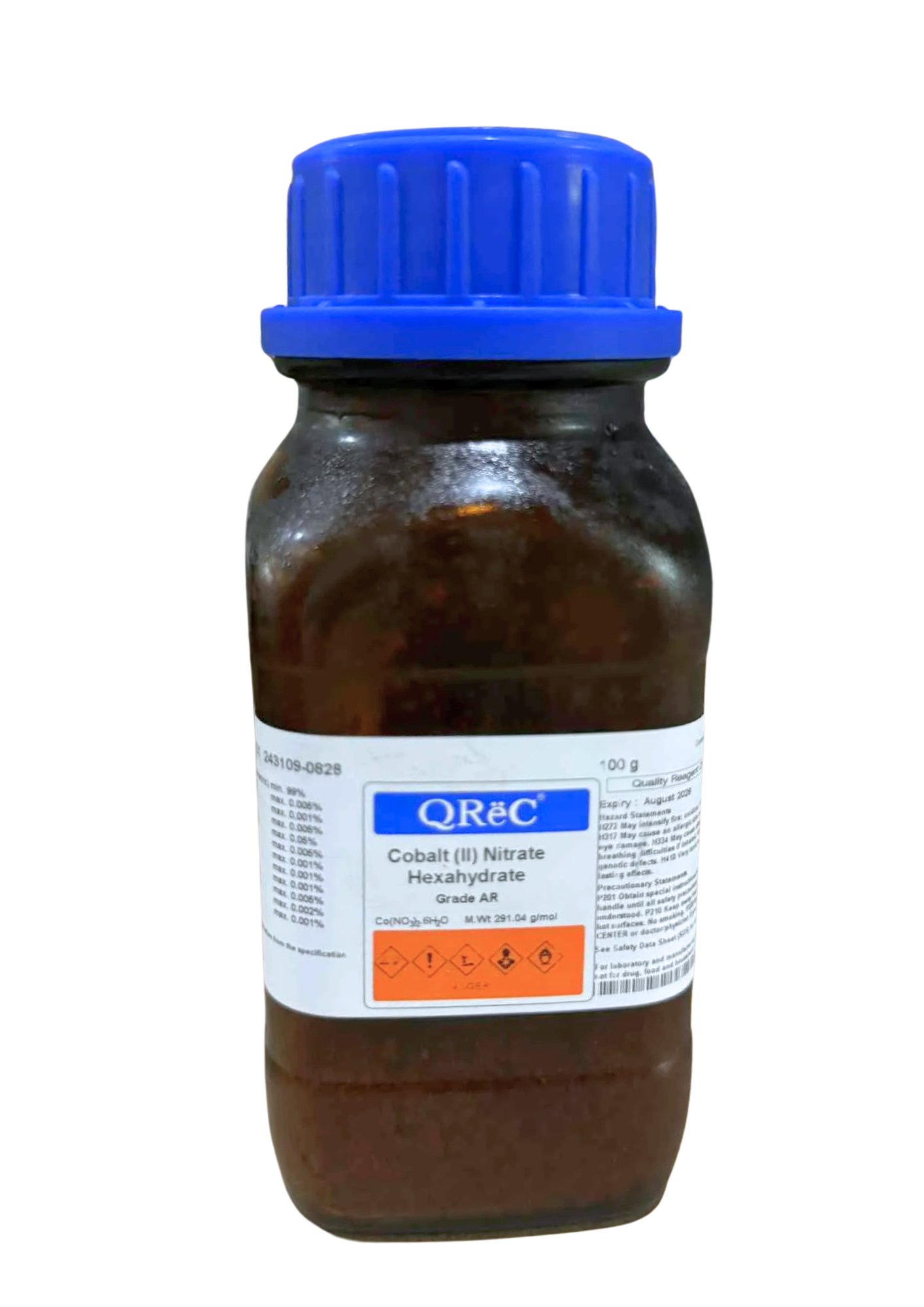
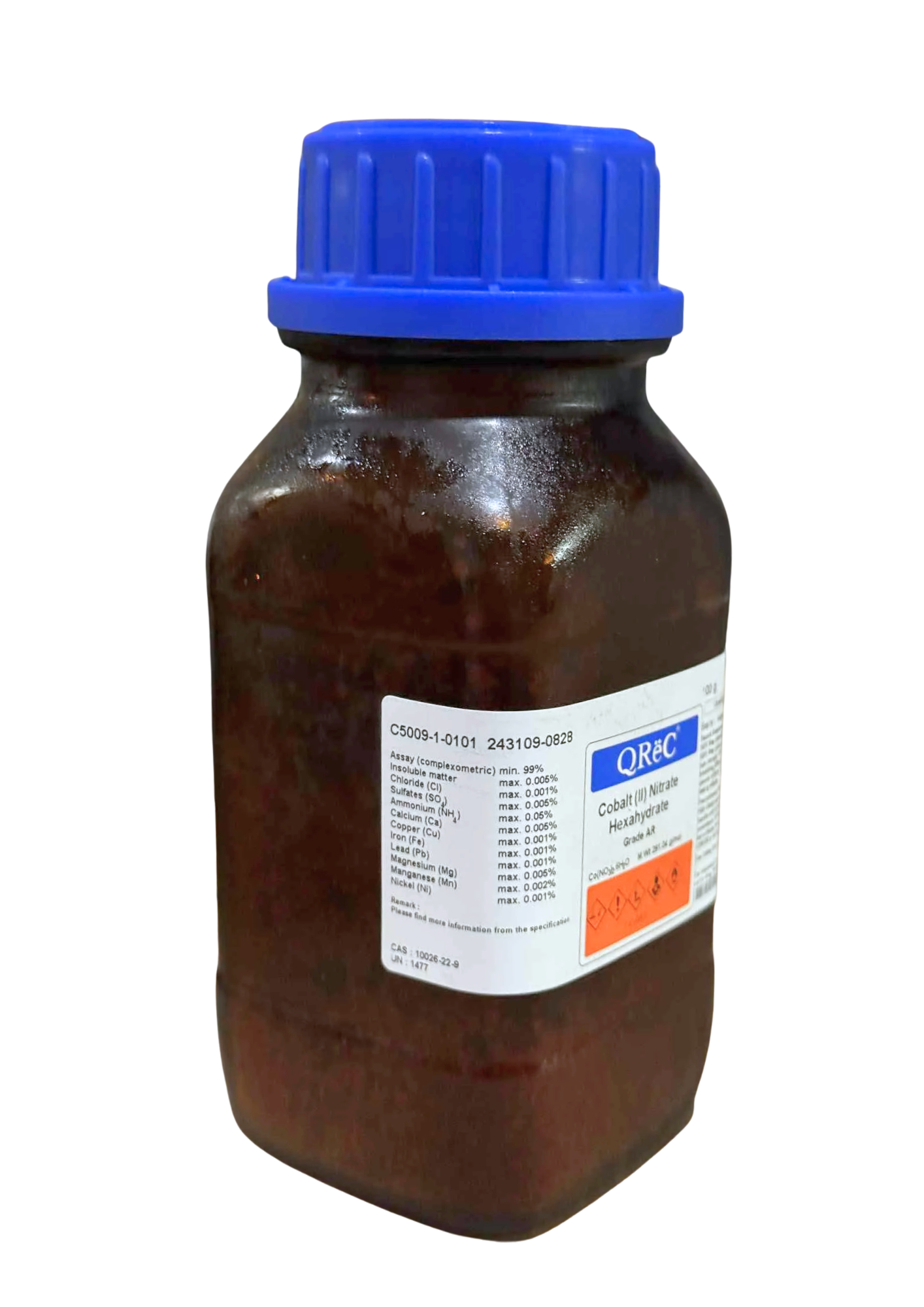
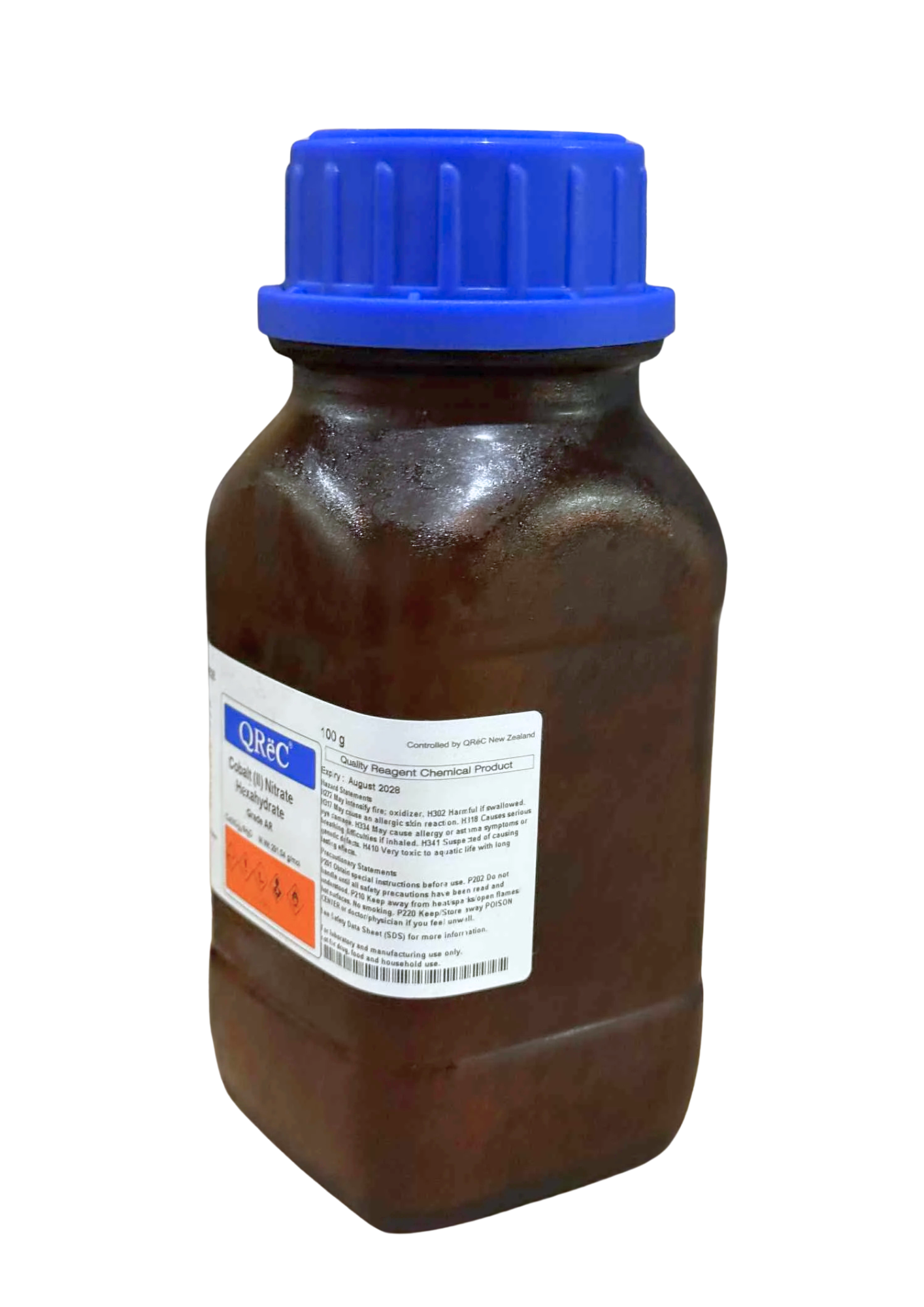
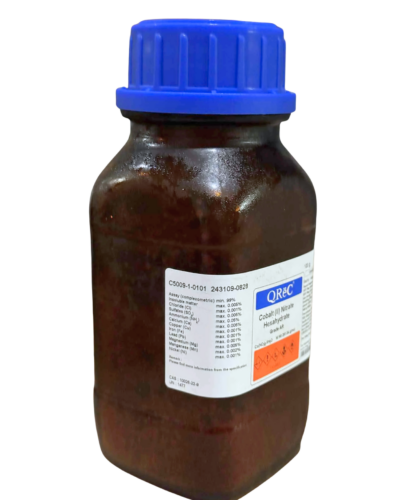
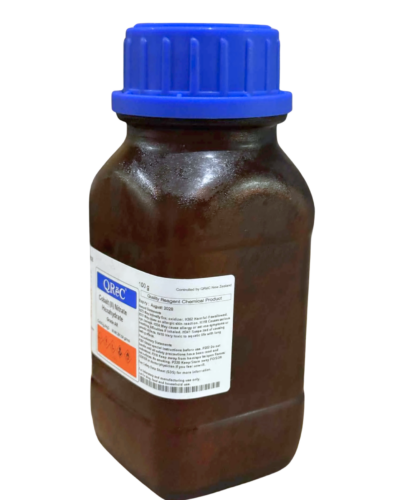
Cobaltous nitrate hexahydrate or Cobalt dinitrate or Nitric acid cobalt (2+) salt hexahydrate
Product Overview & Quality
- Product Name: Cobalt (II) nitrate hexahydrate 99% or Cobaltous nitrate hexahydrate or Cobalt dinitrate hexahydrate or Nitric acid cobalt (2+) salt hexahydrate
- Brand: QReC (Product Code: QR-C5009-1-0101)
- Grade: Analytical Reagent High Purity Grade (AR Grade / ACS Grade) featuring a certified chemical assay of not less than 99.0 percent in a 100 g laboratory package. Multi-crystallized and purified under strict QReC global laboratory specifications without anti-caking conditioning additives, strictly maintaining stoichiometric hexahydrate crystalline hydration. Strictly tested to enforce minimal water-insoluble matter (strictly below 0.005 percent), alongside ultra-low ppm limits of chloride, sulfate, ammonium compounds, calcium, magnesium, sodium, and potassium. Foreign transition metal impurities (such as iron, nickel, copper, zinc, and lead) are rigorously maintained at minimal parts-per-million levels. Dry, uniform deep red-pink monoclinic prisms dissolve cleanly and rapidly in water and organic solvents to yield crystal-clear, sediment-free solutions. Packaged in a heavy-duty, moisture-barrier light-protective container equipped with an airtight double hermetic seal.
- Physical Properties: Deep red to ruby-red or brownish-pink monoclinic crystals or crystalline powder. Faint, characteristic nitric odor. Deliquescent under ambient atmospheric humidity, readily absorbing moisture to liquefy. Low melting point of approximately 55 to 57 degrees Celsius (melts in its own water of crystallization upon heating); thermally decomposes at approximately 100 to 105 degrees Celsius, liberating toxic brown nitrogen dioxide fumes and converting to cobalt oxides. Non-combustible solid, but functions as an oxidizing agent (Oxidizing Solids Category 2) that can accelerate the combustion of flammable materials. Aqueous solutions exhibit a brilliant pink coloration and are acidic (pH approximately 3.5 to 4.5 for a 5 percent aqueous solution at room temperature).
- Solubility: Readily and highly soluble in water (approximately 130 to 134 grams per 100 milliliters at 20 degrees Celsius, producing a clear pink-to-red solution); freely soluble in ethanol, methanol, acetone, and glycerol; slightly soluble in diethyl ether.
- Key Use: Universally utilized as a premier inorganic precursor for synthesizing cobalt coordination complexes, organometallic compounds, and supported cobalt catalysts (notably for Fischer-Tropsch hydrocarbon synthesis, hydrodesulfurization, and industrial gas purification research). Extensively applied as an essential high-purity cobalt micronutrient supplement in plant tissue culture media formulations (such as Murashige and Skoog / MS medium) and microbial fermentation broths to stimulate nitrogen fixation and cobalamin (Vitamin B12) biosynthesis. Heavily employed as the active color-changing moisture indicator in compounding humidity-indicating silica gel, which transitions reversibly from deep blue in anhydrous conditions to vivid pink upon moisture uptake. Serves as a standard chemical precursor for synthesizing ceramic cobalt blue pigments, decorative glass colorants, and advanced cobalt oxide nanostructures for cathode materials in lithium-ion battery research. Widely used as a qualitative and quantitative analytical reagent in specialized photometric and gravimetric testing.
Safety & Hazards (Carcinogen, Mutagen, Reprotoxic, Oxidizer, Sensitizer & Aquatic Hazard)
- Classification: May intensify fire; oxidizer (Oxidizing Solids Category 2). May cause cancer by inhalation (Carcinogenicity Category 1B). May cause genetic defects (Germ Cell Mutagenicity Category 2). May damage fertility or the unborn child (Reproductive Toxicity Category 1B). May cause allergy or asthma symptoms or breathing difficulties if inhaled (Respiratory Sensitisation Category 1). May cause an allergic skin reaction (Skin Sensitisation Category 1). Harmful if swallowed (Acute Toxicity Oral Category 4). Very toxic to aquatic life with long lasting effects (Aquatic Acute/Chronic Category 1).
- Health Risks: Direct ocular contact triggers acute chemical stinging, conjunctival erythema, corneal irritation, and lacrimation. Dermal contact produces localized erythema, dryness, burning sensations, and skin irritation. Critical Sensitization and Chronic Toxicological Hazards: Repeated skin or respiratory contact triggers severe immunological sensitization, inducing chronic allergic contact dermatitis (“cobalt itch“) and severe occupational asthma. Inhalation of particulate dust presents documented carcinogenic risks to human respiratory tissues, alongside mutagenic and teratogenic reproductive hazards. Inhalation of dust irritates the mucous membranes of the respiratory tract, provoking coughing, sneezing, dyspnea, and bronchial constriction. Ingestion causes gastrointestinal irritation, burning oral and epigastric discomfort, nausea, vomiting, abdominal pain, diarrhea, hypotension, and potential myocardial or thyroid dysfunction.
- First Aid Measures: Immediately flush affected eyes with an abundant stream of clean flowing water for at least 15 minutes while stripping contaminated clothing; remove contact lenses promptly and seek immediate ophthalmological care. Wash exposed skin thoroughly with soap and water for at least 15 minutes. In case of dust inhalation, rapidly relocate the victim to fresh air; keep warm and at rest in a position comfortable for breathing, and seek immediate emergency medical evaluation if respiratory distress or wheezing develops. If accidentally swallowed, do NOT induce vomiting; thoroughly rinse mouth, administer moderate quantities of fresh water to dilute, and transport to an emergency medical facility immediately.
Handling & Storage
- Storage: Regulated Carcinogen, Reproductive Toxin, Strong Oxidizer, and Deliquescent Salt. Atmospheric humidity induces rapid liquefaction, and contact with combustibles creates severe fire hazards. Must be preserved in its original, tightly closed QReC container within a dedicated, locked hazardous chemical storage cabinet. Store in a clean, strictly dry, cool, and well-ventilated dedicated chemical store at controlled temperatures (below 25 degrees Celsius), sheltered from atmospheric humidity, open flames, sparks, and direct sunlight. “Critical Segregation Mandate: Store strictly segregated from combustible materials, flammable organic solvents, reactive metal powders, strong reducing agents, concentrated mineral acids, and strong caustic alkalis.”
- Precautions: Comprehensive specialized PPE is mandatory, including protective nitrile gloves, splash-proof safety goggles, a certified particulate respirator (HEPA/N95 rated), and a protective lab coat. “Mandatory Handling Protocol: Dispense, weigh, and handle cobalt nitrate powder exclusively and strictly inside a certified laboratory fume hood to prevent airborne particulate dispersal and eliminate occupational inhalation of carcinogenic and sensitizing dust.” Re-seal container cap tightly immediately after sampling to prevent deliquescence. Never discharge cobalt-containing solutions into municipal drainage pipes; collect and dispose of strictly via certified hazardous heavy-metal waste streams.