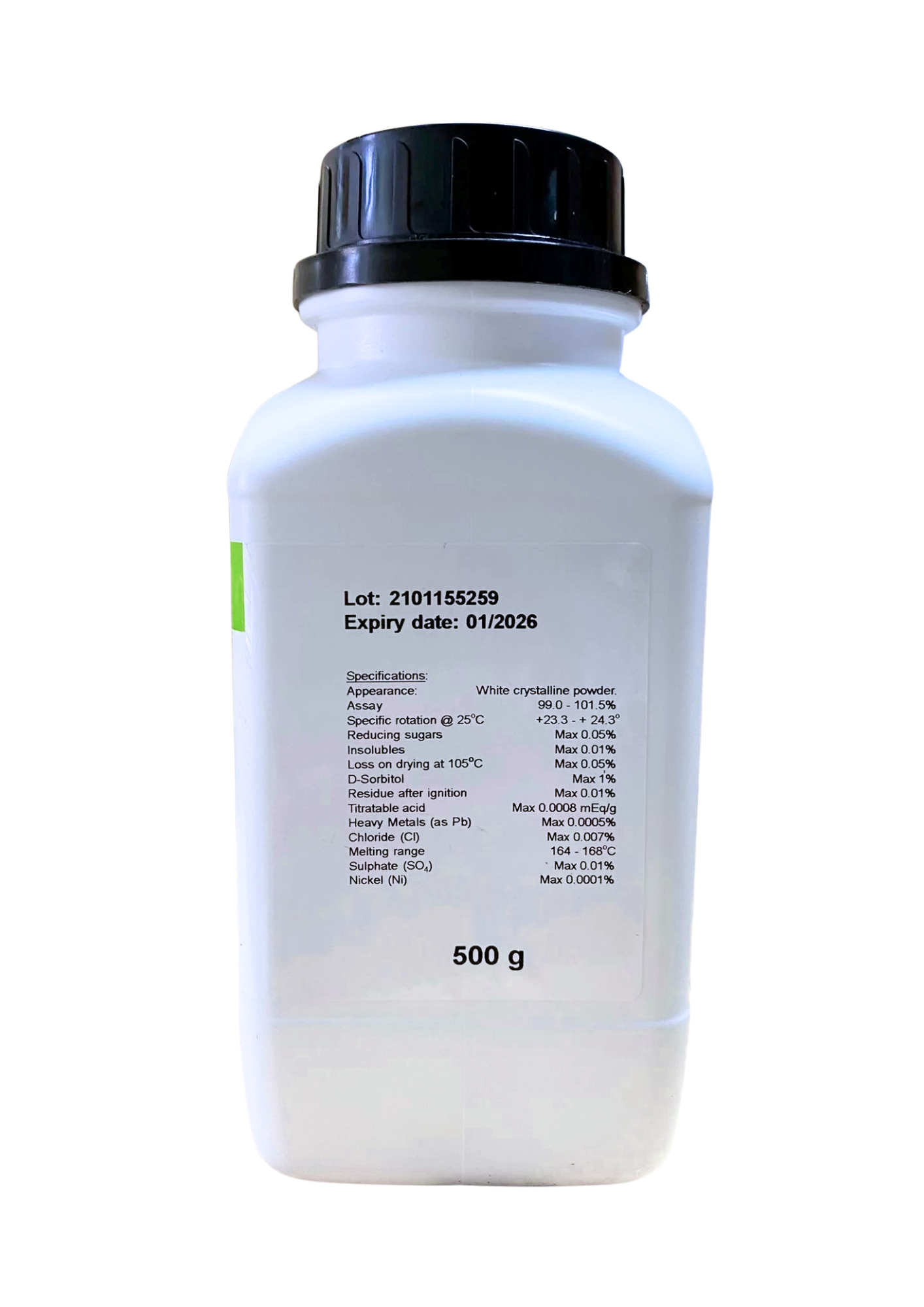

D-Mannitol (Mannitol)
Product Overview & Quality
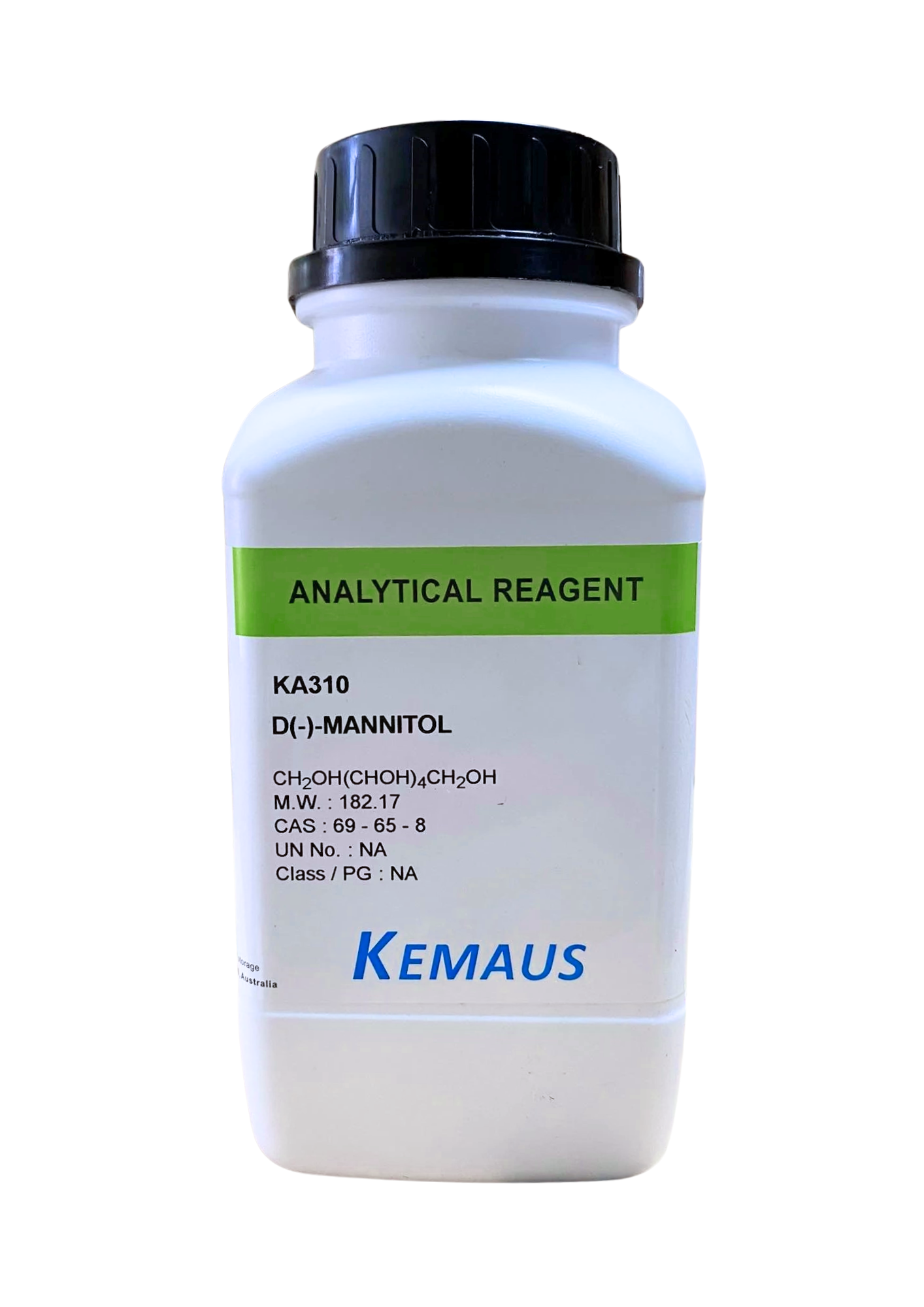
- Product Name: D-Mannitol (Mannitol)
- Brand: Kemaus (Product Code: KA-310)
- Grade: Analytical Reagent (AR Grade) with a premium purity of 99 percent or higher. Manufactured and tested under strict Kemaus laboratory quality control standards, ensuring exceptionally low trace levels of heavy metals, reducing sugars, and residue on ignition to maintain superior analytical baseline sensitivity.
- Physical Properties: Odorless, fine white crystalline powder or white granules with a mildly sweet, cooling taste.
- Solubility: Soluble in water (solubility increases significantly in hot water); slightly soluble in alcohol; insoluble in ether.
- Key Use: Heavily utilized in microbiology laboratories for preparing specialized culture media, notably Mannitol Salt Agar (MSA), used for the selective isolation and differentiation of pathogenic Staphylococcus species. Commonly applied as a reliable reference standard and stabilizer in biochemical assays and pharmaceutical formulation R&D. Also widely used in botany and plant physiology research as a non-permeable osmotic agent (osmoticum) to simulate drought stress conditions.
Safety & Hazards
- Classification: Not classified as a hazardous substance according to GHS regulations. It features an excellent safety profile with non-toxic tissue reactions. Acts as a mild physical and mechanical dust irritant.
- Health Risks: Direct eye contact with large amounts of fine dust may cause minor, temporary mechanical irritation, watering, or short-term redness. Inhalation of airborne dust particles may trigger minor coughing or sneezing.
- First Aid Measures: Flush eyes immediately with plenty of flowing water. Seek medical advice if irritation develops or persists.
Handling & Storage
- Storage: Store in the original, tightly sealed Kemaus container. Keep in a cool, dry, and well-ventilated space at stable room temperature (below 30 degrees Celsius). Extremely stable under normal environmental storage conditions, but shield from high humidity to prevent physical caking or clumping.
- Precautions: Wear standard personal protective equipment (PPE), including laboratory gloves, safety glasses, and a particulate dust mask. Avoid generating large airborne dust clouds during routine handling.