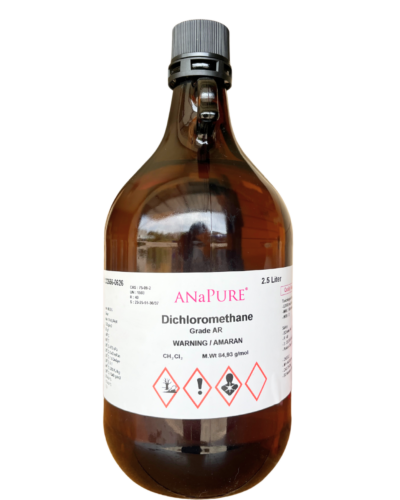
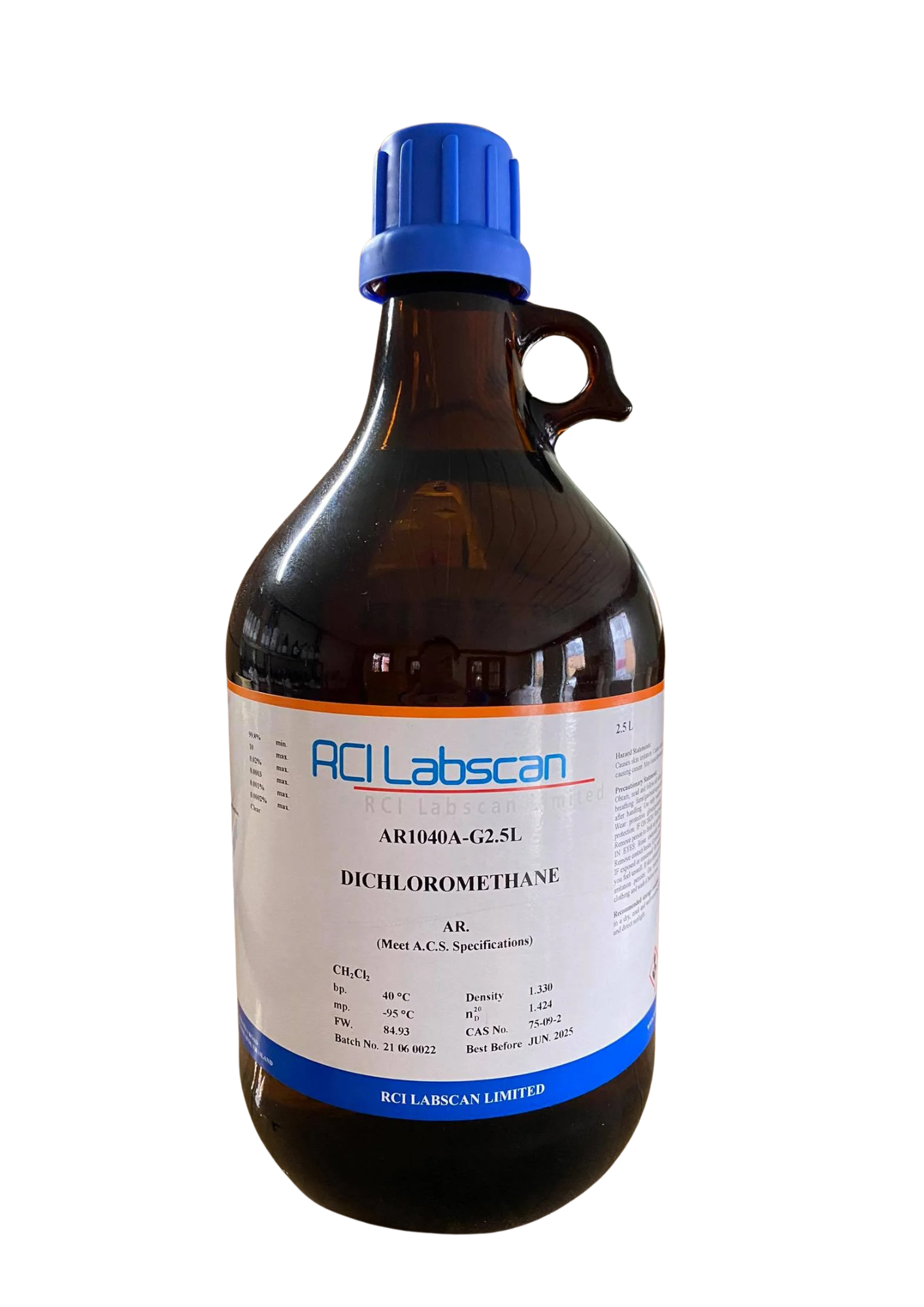


Dichloromethane or Methylene chloride or DCM
Product Overview & Quality
- Product Name: Dichloromethane or Methylene chloride or DCM
- Brand: RCI LABSCAN (Product Code: LA-AR1040A-G2.5L)
- Grade: Analytical Reagent (AR Grade) featuring a certified premium high purity of 99.8 percent or higher. Manufactured and quality-verified under RCI LABSCAN strict global laboratory specifications to ensure exceptionally low ppm thresholds of water content, non-volatile matter, and free acidity. Stabilized with an optimized trace inhibitor setup to preserve matrix integrity and prevent atmospheric oxidation, delivering outstanding reliability and clean chemical baselines for quantitative analysis.
- Physical Properties: Clear, colorless, highly volatile, low-viscosity liquid with a distinctive, sweetish ether-like chemical odor. It possesses a high specific gravity (sinks rapidly beneath water layers) and is non-flammable under standard handling temperatures.
- Solubility: Very slightly soluble in water (approximately 1.3 percent at room temperature, readily forming a bottom organic layer upon separation); completely miscible in all proportions with common organic solvents including ethanol, acetone, ether, chloroform, and ethyl acetate.
- Key Use: Heavily utilized as a premier solvent for extracting and isolating active compounds, pharmaceuticals, oils, caffeine, and organic phytochemical complexes in analytical testing laboratories. Widely applied as a crucial component of the mobile phase matrix in thin-layer chromatography (TLC) and column separations. Commonly used as a powerful reaction medium in advanced organic chemical synthesis, and functions as an effective degreasing fluid for removing stubborn organic residues from specialized laboratory glassware.
Safety & Hazards (Critical & Toxic)
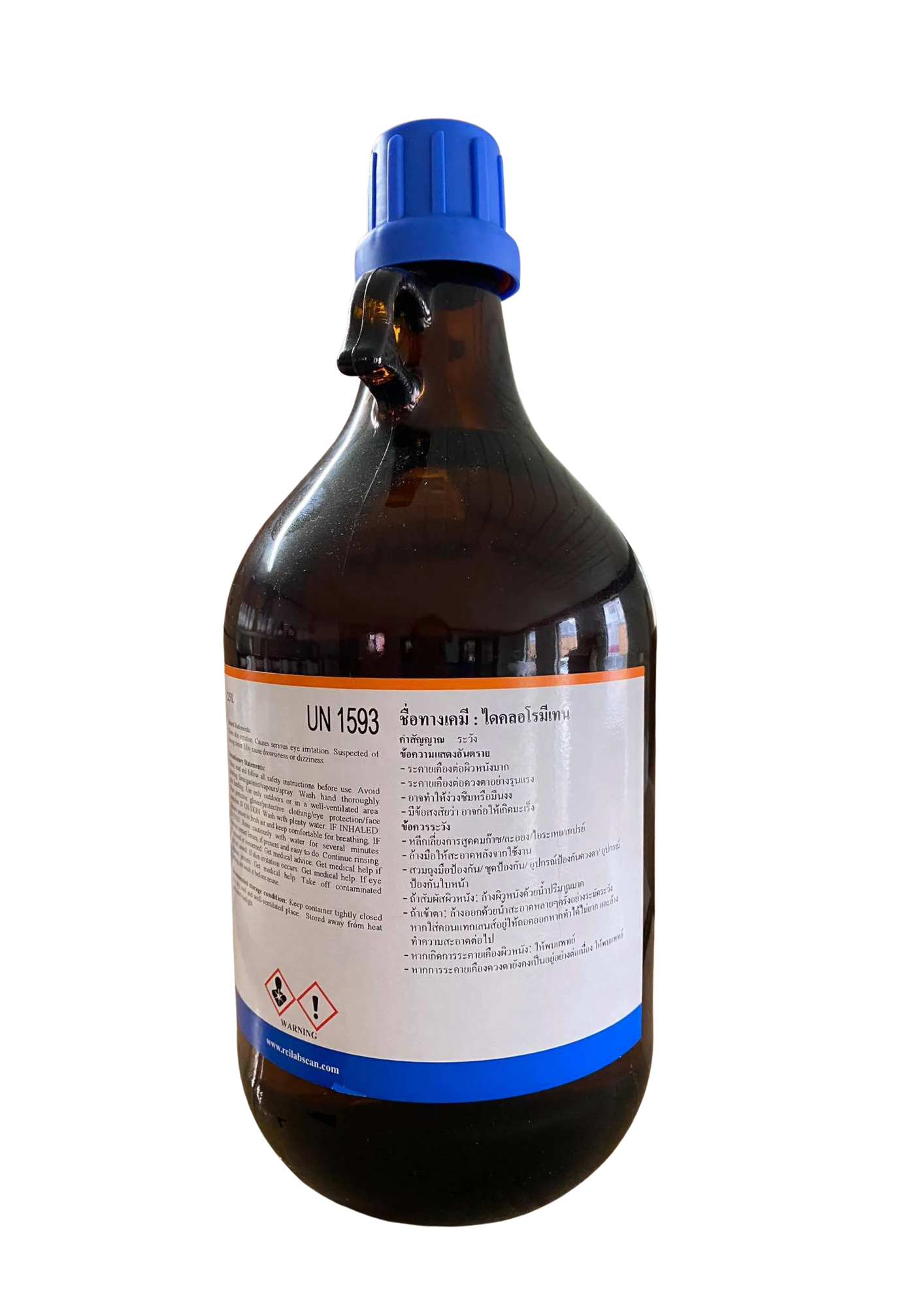
- Classification: Causes skin irritation. Causes serious eye irritation. May cause drowsiness or dizziness. Suspected of causing cancer (Carcinogen). May cause damage to organs (Central nervous system, Liver, and Kidneys) through prolonged or repeated exposure.
- Health Risks: Direct eye contact triggers immediate stinging irritation, watering, and temporary tissue redness. Prolonged dermal exposure strips natural skin lipids, leading to dry discomfort, cracking, or severe irritation. Inhalation of concentrated volatile vapors suppresses the central nervous system, inducing headaches, dizziness, nausea, drowsiness, or anesthesia; high concentration exposure in enclosed spaces poses fatal risks as metabolized DCM generates carboxyhemoglobin within the bloodstream.
- First Aid Measures: Flush affected eyes or skin immediately with plenty of flowing water for at least 15 minutes while removing contaminated garments. If vapors are inhaled, promptly move the victim to fresh air. Seek prompt medical evaluation.
Handling & Storage
- Storage: Highly Volatile Liquid with a Low Boiling Point. Internal vapor pressure can build up easily inside closed containers when exposed to thermal environments. Must be stored in its original, tightly sealed RCI LABSCAN container inside a cool, dry, and excellently ventilated dedicated chemical safety cabinet (ideally maintained below 25 to 30 degrees Celsius, completely away from direct sunlight). Keep strictly isolated from active metals (such as aluminum or magnesium powder), strong bases, and strong oxidizing agents.
- Precautions: Comprehensive specialized PPE is mandatory, including thick chemical-resistant gloves, splash-proof safety goggles, a protective lab coat, and an organic vapor respirator. Handle exclusively and strictly within a properly functioning laboratory fume hood. Open the container cap slowly and with extreme caution to safely vent any built-up internal vapor pressure.