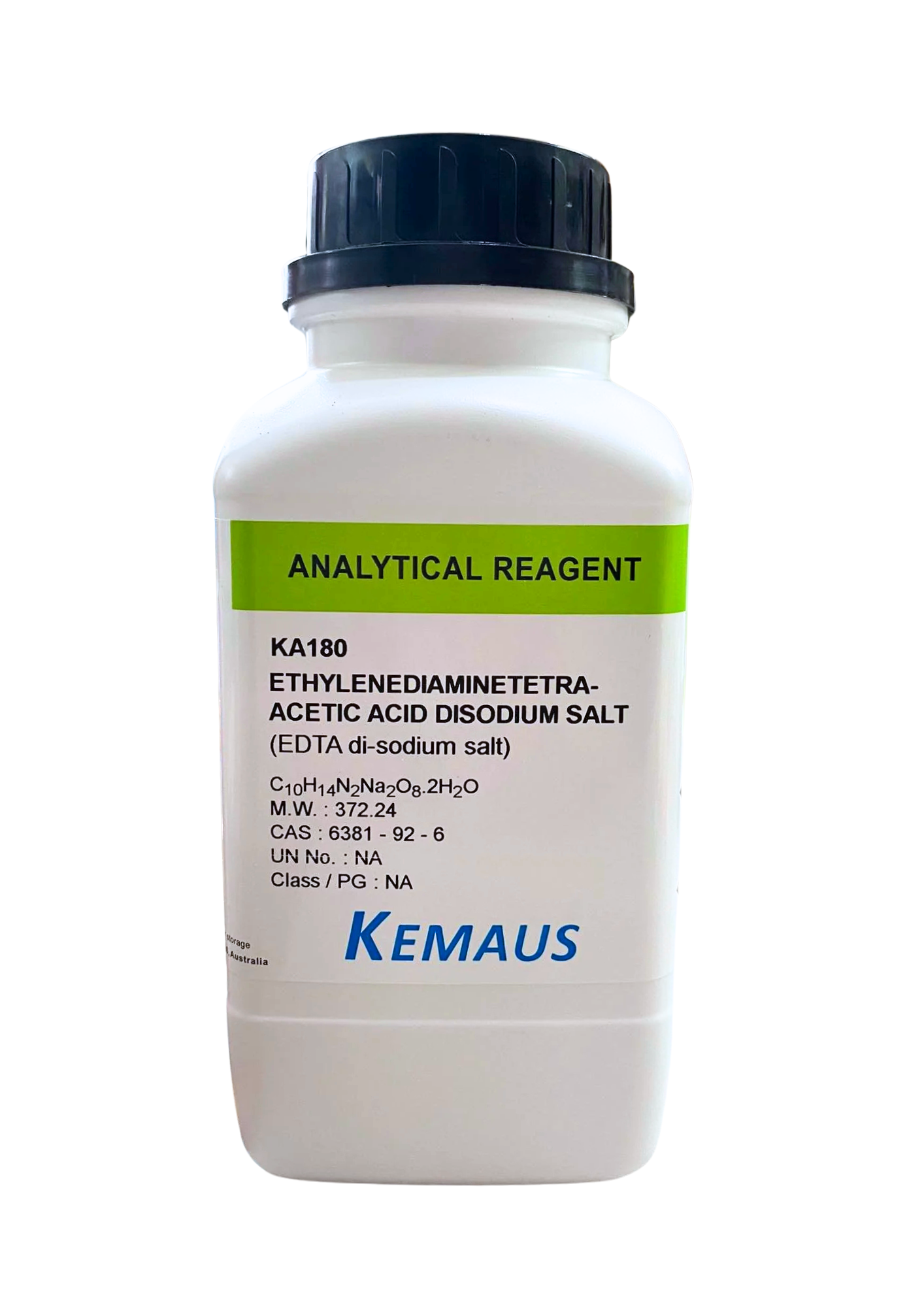

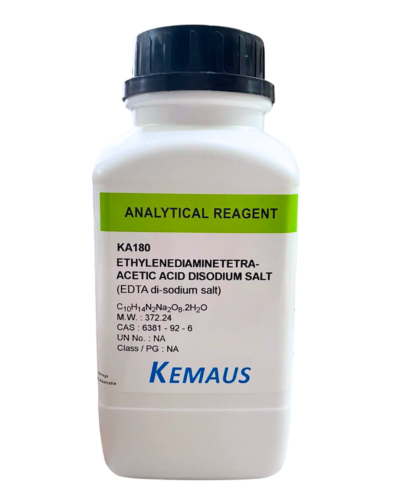
EDTA disodium salt dihydrate (Ethylenediaminetetraacetic acid disodium salt)
Product Overview & Quality
- Product Name: EDTA disodium salt dihydrate (Ethylenediaminetetraacetic acid disodium salt)
- Brand: Kemaus (Product Code: KA-180)
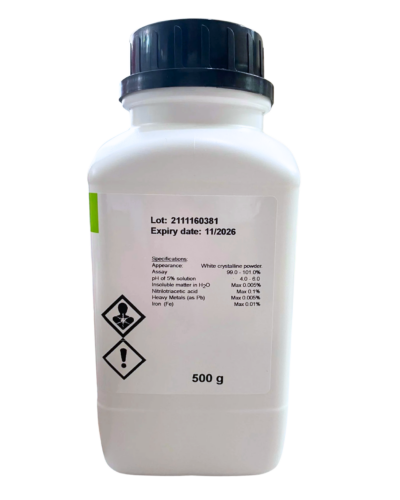
- Grade: Analytical Reagent (AR Grade) with premium purity of 99 percent or higher. Rigorously tested under Kemaus standards to ensure exceptionally low background trace levels of heavy metals and free cations, crucial for accurate complexometric procedures.
- Physical Properties: Odorless, white crystalline powder.
- Solubility: Moderately soluble in water; solubility enhances significantly as the pH of the solution becomes alkaline. Yields a slightly acidic aqueous solution.
- Key Use: Heavily utilized as a core chelating reagent in complexometric titrations, such as determining water hardness (calcium and magnesium quantification). Frequently used in biochemistry and molecular biology assays to inhibit metal-dependent enzymes, and acts as a stabilizer in various analytical buffers to prevent metal precipitation.
Safety & Hazards
- Classification: Harmful if inhaled. Causes serious eye irritation. May cause damage to organs (Respiratory Tract) through prolonged or repeated exposure via inhalation.
- Health Risks: Direct eye contact causes significant irritation and redness. Inhalation of fine dust causes discomfort to the nasal passages, throat, and mucous membranes.
- First Aid Measures: Flush eyes immediately with plenty of flowing water for at least 15 minutes. Wash affected skin with soap and water. If inhaled, move the victim to fresh air and seek medical advice if symptoms persist.
Handling & Storage
- Storage: Store in the original, tightly sealed Kemaus container. Keep in a cool, dry, and well-ventilated space at stable room temperature (below 30 degrees Celsius). Protect from excessive moisture.
- Precautions: Wear standard personal protective equipment (PPE), including chemical-resistant laboratory gloves, safety glasses, and a particulate dust mask to prevent inhalation of dust.