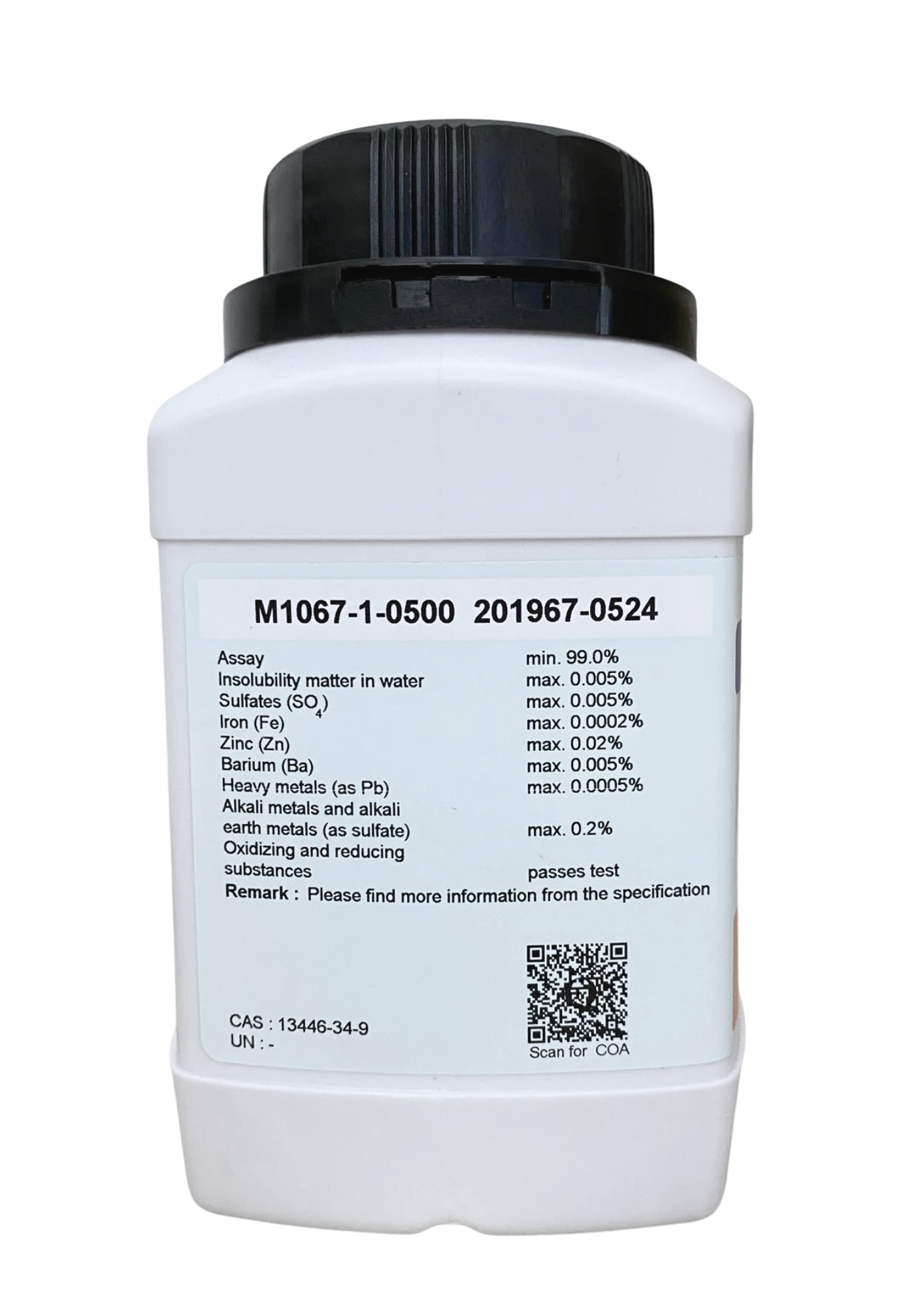
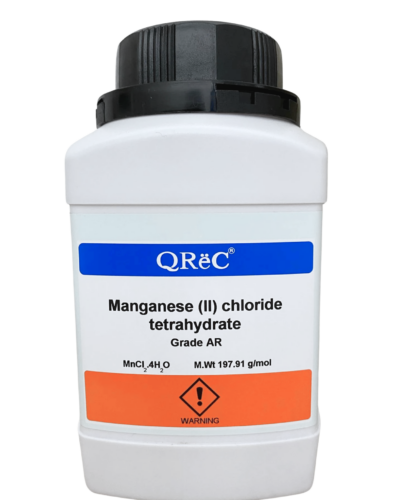
Manganous chloride tetrahydrate or Manganese dichloride tetrahydrate or Hydrochloric acid manganese (II) salt tetrahydrate
Product Overview & Quality
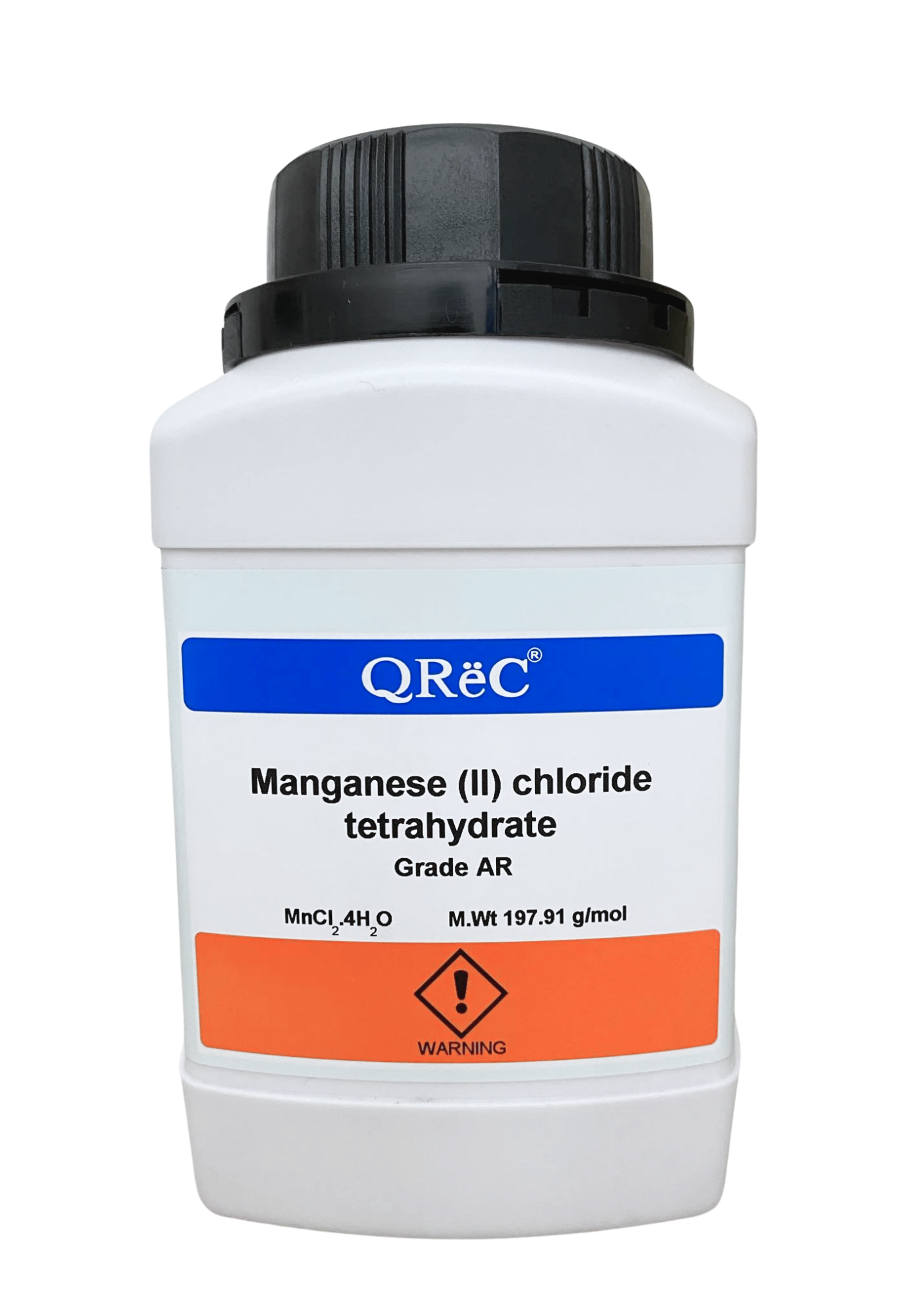
- Product Name: Manganese (II) chloride tetrahydrate 99% or Manganous chloride tetrahydrate or Manganese dichloride tetrahydrate or Hydrochloric acid manganese (II) salt tetrahydrate
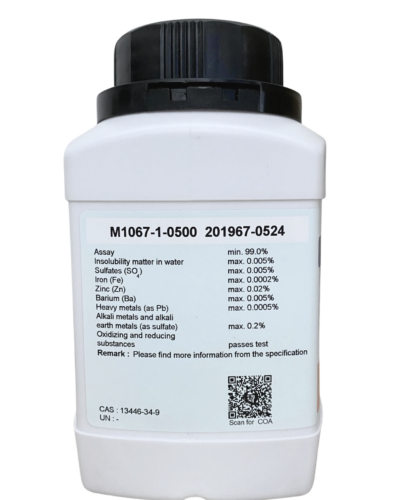
- Brand: QReC (Product Code: QR-M1067-1-0500)
- Grade: Analytical Reagent High Purity Grade (AR Grade) featuring a certified chemical assay of not less than 99.0 percent in a 500 g laboratory container. Manufactured and multi-crystallized under strict QReC global laboratory specifications, maintaining stoichiometric tetrahydrate crystalline hydration. Strictly analyzed to enforce minimal water-insoluble matter (strictly below 0.005 percent), along with ultra-low ppm limits of sulfate, nitrate, ammonium, calcium, magnesium, potassium, sodium, and extraneous heavy metals (such as iron, lead, copper, zinc, nickel, and arsenic). Conforms to certified DNase and RNase-free specifications. Displays uniform, dry delicate pink-rose crystals that dissolve completely in water to yield crystal-clear, sediment-free pale pink solutions. Packaged in a heavy-duty, moisture-barrier polymer container equipped with an airtight hermetic seal to prevent ambient deliquescence.
- Physical Properties: Pale pink, rose-red, or reddish-orange monoclinic crystals or crystalline powder. Odorless. Highly deliquescent under ambient atmospheric conditions, rapidly absorbing moisture to liquefy. Melting point is approximately 58 degrees Celsius. Non-combustible inorganic solid. Aqueous solutions are mildly acidic (pH approximately 4.0 to 6.0 for a 5 percent aqueous solution at room temperature).
- Solubility: Readily and highly soluble in water (approximately 70 to 72 grams per 100 milliliters at 20 degrees Celsius, increasing to over 115 grams per 100 milliliters in boiling water, yielding pale pink solutions); freely soluble in ethanol, methanol, and glycerol; practically insoluble in diethyl ether.
- Key Use: Universally utilized as a crucial component in preparing chemically competent bacterial cells (such as Escherichia coli via the Hanahan / Inoue protocols) in molecular biology and genetic cloning, dramatically enhancing plasmid uptake and transformation efficiency. Extensively applied as a primary reagent for compounding manganous solutions used in determining Dissolved Oxygen (DO) in environmental water and wastewater matrices via the standard Winkler titration method. Serves as an essential divalent cofactor for numerous enzymes in biochemical research, including restriction endonucleases, DNA polymerases, arginase, and phosphoglucomutase. Heavily used as a bioavailable micronutrient source of manganese in plant tissue culture media formulations (such as Murashige and Skoog media) to facilitate photosynthesis and enzymatic activation. Functions as an inorganic precursor for synthesizing manganese oxide nanomaterials, magnetic ferrites, and coordination complexes in materials science.
Safety & Hazards (Specific Neurotoxin, Serious Eye Damage & Aquatic Hazard)
- Classification: May cause damage to organs (Central nervous system, brain) through prolonged or repeated exposure (Specific Target Organ Toxicity – Repeated Exposure Category 2). Harmful if swallowed (Acute Toxicity Oral Category 4). Causes serious eye damage (Eye Damage Category 1). Toxic to aquatic life with long lasting effects (Aquatic Chronic Category 2).
- Health Risks: Direct ocular contact triggers severe caustic stinging, intense conjunctival erythema, corneal ulceration, and potential irreversible visual impairment. Prolonged or repeated dermal contact can cause localized dryness, erythema, or superficial contact dermatitis. Inhalation of particulate dust irritates the mucous membranes of the respiratory tract, causing coughing, sneezing, and throat dryness. Critical Cumulative Neurotoxicity: Chronic inhalation or excessive systemic absorption leads to manganese neurotoxicity (manganism), a progressive central nervous system disorder marked by tremors, muscle rigidity, masked facial expressions, cognitive disturbances, emotional lability, and irreversible Parkinson-like neurological impairment. Ingestion induces acute gastrointestinal irritation, burning oral pain, abdominal cramping, nausea, vomiting, and diarrhea.
- First Aid Measures: Immediately flush affected eyes with an abundant stream of clean flowing water for at least 15 to 20 minutes while stripping contaminated clothing; remove contact lenses promptly and seek immediate emergency medical care. Wash exposed skin thoroughly with soap and water. In case of dust inhalation, rapidly relocate the victim to fresh air; maintain complete rest and seek medical evaluation. If accidentally swallowed, do NOT induce vomiting; thoroughly rinse mouth, administer water in moderate amounts, and seek immediate medical attention.
Handling & Storage
- Storage: Highly Deliquescent Solid, Specific Neurotoxin, and Aquatic Pollutant. Ambient atmospheric exposure triggers rapid liquefaction within the container. Must be preserved in its original, tightly closed QReC container. Store in a clean, strictly dry, cool, and well-ventilated dedicated chemical store at controlled temperatures (below 25 to 30 degrees Celsius), sheltered from atmospheric humidity and direct sunlight. Keep strictly segregated from strong oxidizing agents, strong mineral acids, reactive metals (such as sodium, potassium, and zinc), and foodstuffs.
- Precautions: Full specialized PPE is mandatory, including protective nitrile gloves, splash-proof safety goggles, a certified particulate dust respirator, and a protective lab coat. Perform weighing, powder dispensing, and solution preparation inside a certified laboratory fume hood to prevent airborne particulate dispersal and chronic inhalation. Re-seal container cap tightly immediately after sampling. Never discharge concentrated manganese residues directly into municipal wastewater systems.