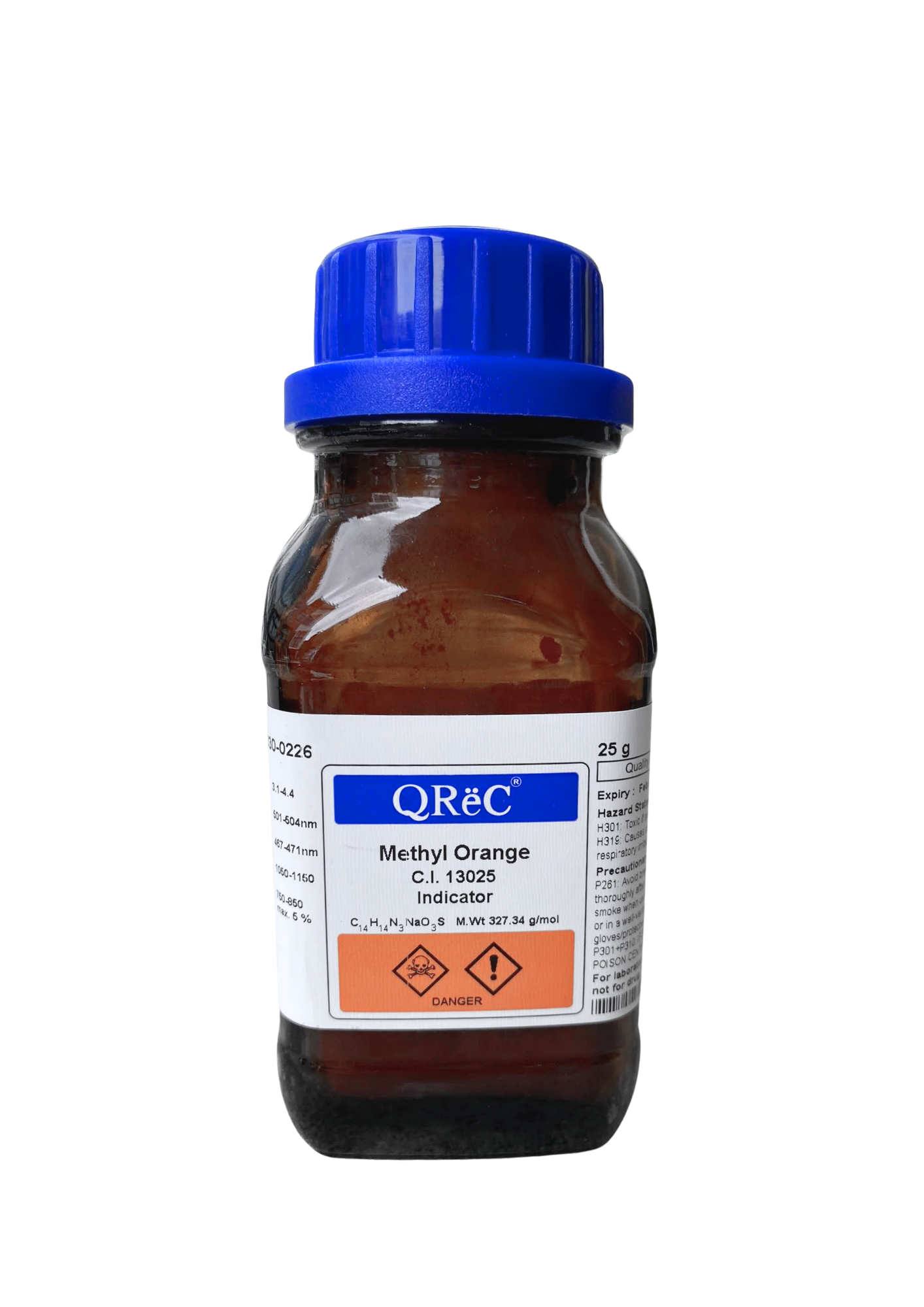
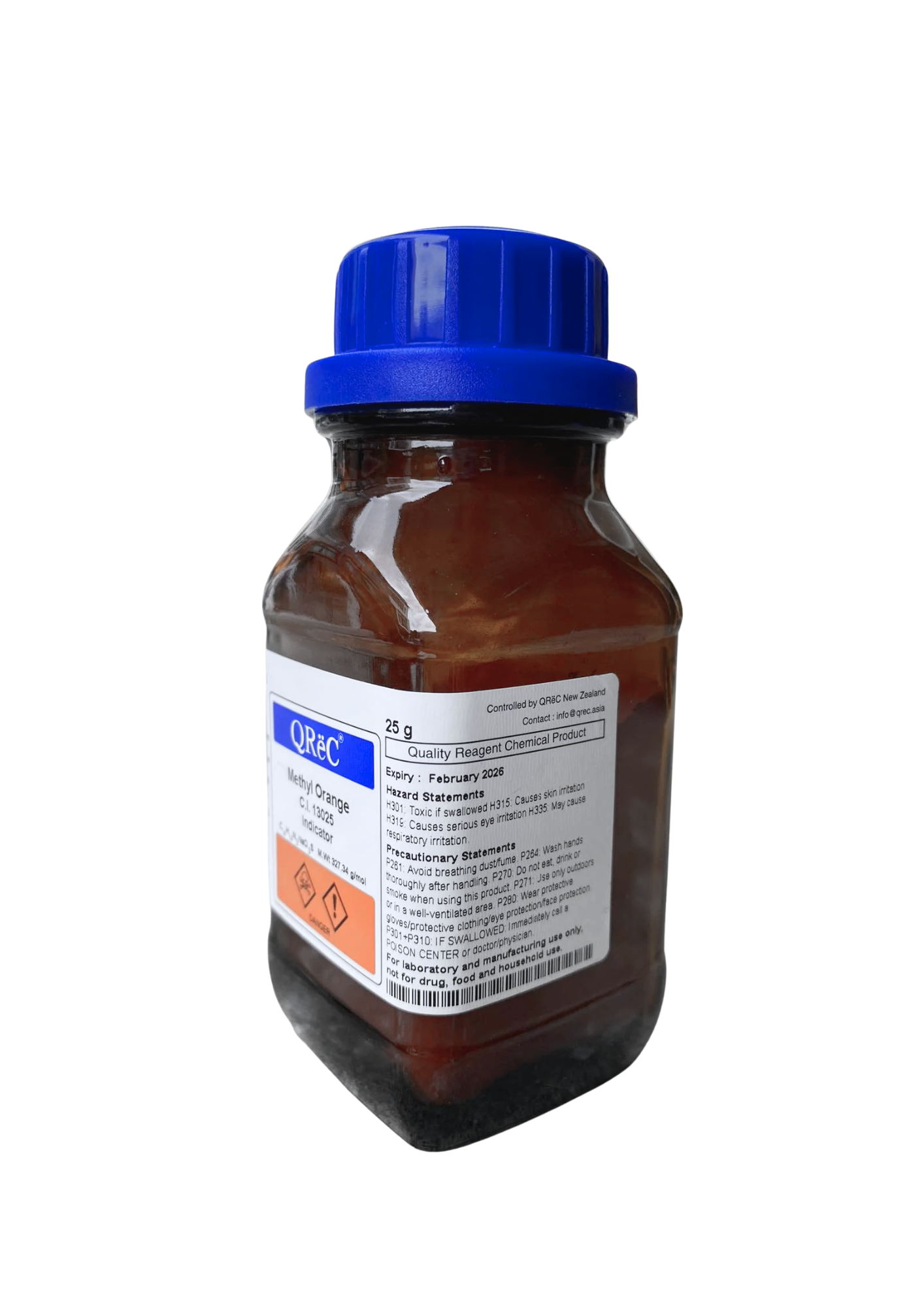
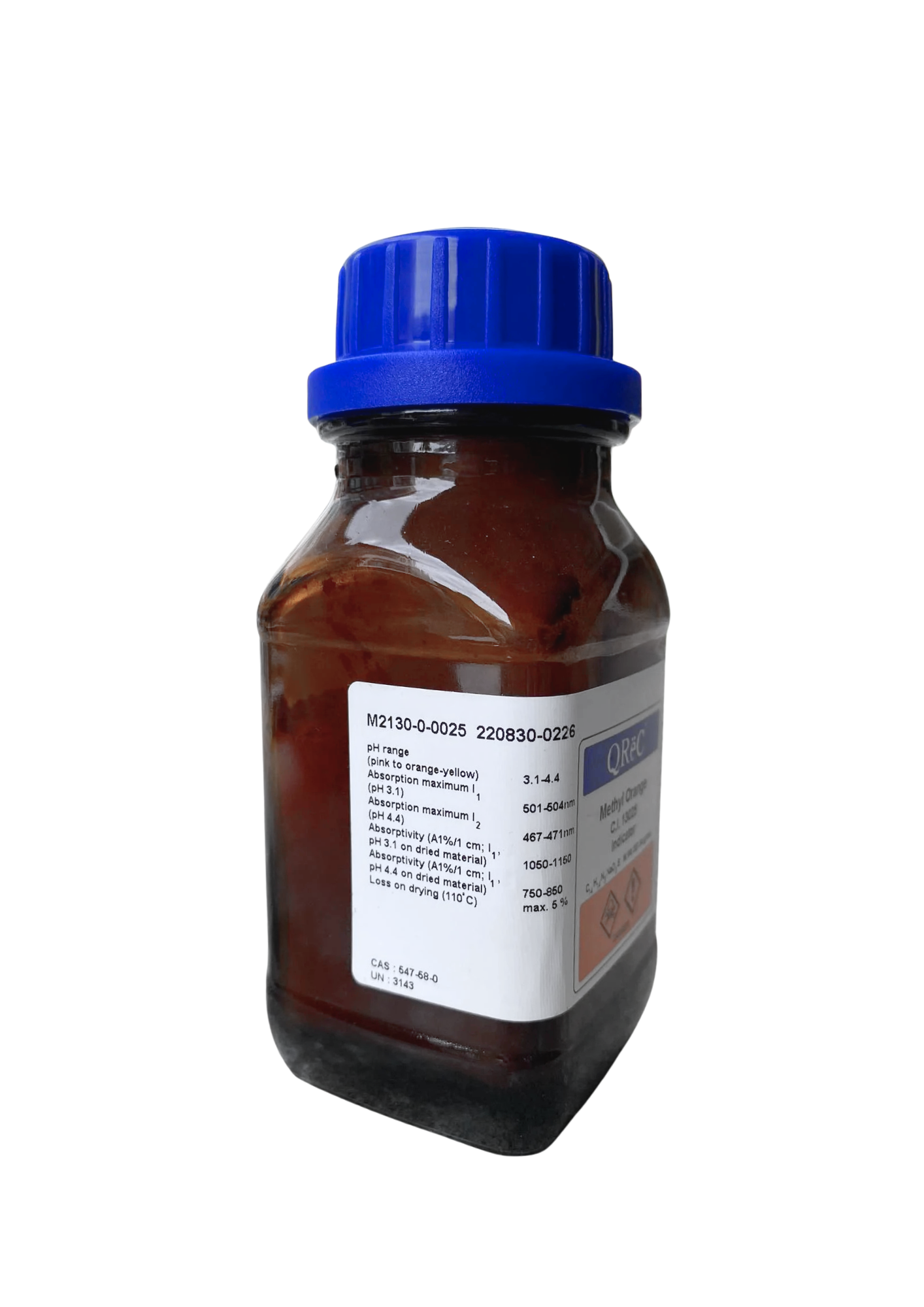
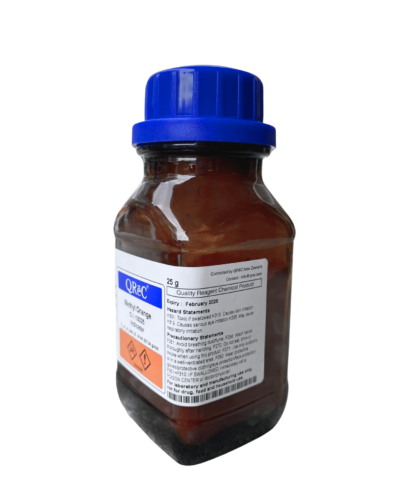
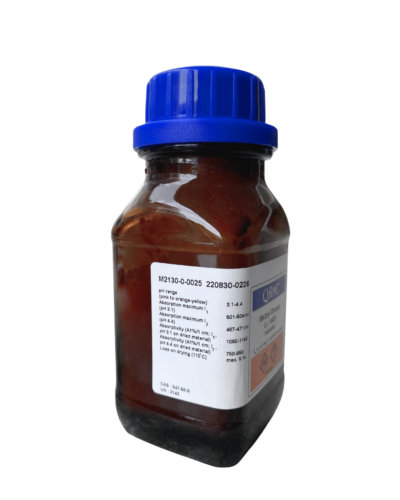
Helianthin or Sodium 4-dimethylaminoazobenzene-4-sulfonate or Acid Orange 52 or Methyl orange indicator
Product Overview & Quality
- Product Name: Methyl orange indicator or Sodium 4-dimethylaminoazobenzene-4-sulfonate or Helianthin or Acid Orange 52
- Brand: QReC (Product Code: QR-M2130-0-0025)
- Grade: Analytical Reagent and Indicator Grade (AR Grade) in a compact 25 g container. Synthesized and purified under strict QReC global laboratory specifications. Validated through rigorous indicator sensitivity and transition-interval conformity testing. Demonstrates a razor-sharp, distinct visual color transition across the pH range of 3.1 to 4.4 (transitioning unmistakably from clear red in acidic media through orange to orange-yellow in basic media). Strictly analyzed to maintain low loss on drying (strictly below 5.0 percent), water-insoluble matter below 0.1 percent, and minimal heavy metal thresholds. Uniform crystalline powder dissolving completely in warm water without insoluble residues. Packaged in a chemical-resistant, light-protective container equipped with an airtight hermetic seal.
- Physical Properties: Fine orange to reddish-orange crystalline powder or microcrystalline scales. Odorless. Thermodynamically stable in air under ambient storage conditions. Non-combustible solid. A 0.1 percent aqueous working solution exhibits a clear orange-yellow color. Visual transition range: pH 3.1 (red) to pH 4.4 (orange-yellow).
- Solubility: Sparingly to moderately soluble in water at room temperature (approximately 0.5 grams per 100 milliliters at 20 degrees Celsius; solubility increases significantly in hot or boiling water); slightly soluble in ethanol; practically insoluble in diethyl ether, chloroform, and non-polar organic solvents.
- Key Use: Universally utilized as a classical acid-base pH indicator in volumetric neutralization titrations, specifically optimal for titrating weak bases with strong mineral acids (such as titrating ammonia, sodium carbonate, or bicarbonate solutions against standard hydrochloric acid). Heavily employed in environmental water testing laboratories for determining Total Alkalinity (Methyl Orange Alkalinity / M-alkalinity) in potable water, boiler feed water, and wastewater streams at the pH 4.5 endpoint. Serves as a biological and histological counterstain for plant cytology and tissue specimens. Extensively used in diagnostic testing for residual active chlorine and oxidative bleaching agents (which induce rapid, irreversible decolorization). Applied as a standard chromophore in UV-Vis spectrophotometric method validation and colorimetric chemical sensor research.
Safety & Hazards (Toxic Ingestion, Staining & Mild Irritant)
- Classification: Toxic if swallowed (Acute Toxicity Oral Category 3). May cause mild skin, eye, and respiratory irritation.
- Health Risks: Direct ocular contact causes transient burning pain, conjunctival irritation, lacrimation, and persistent orange staining of ocular tissues. Dermal contact may induce localized dryness, irritation, or contact dermatitis, leaving stubborn yellowish-orange stains on the skin. Inhalation of particulate dust irritates the mucous membranes of the respiratory tract, provoking sneezing, coughing, and throat dryness. Critical Toxicological Risk: Acute oral toxicity. Ingestion can induce acute gastrointestinal toxicity, nausea, vomiting, abdominal cramping, diarrhea, and systemic toxicity resulting from the metabolic cleavage of azo linkages into aromatic amine derivatives.
- First Aid Measures: Immediately flush affected eyes with an abundant stream of clean flowing water for at least 15 minutes while stripping contaminated clothing; remove contact lenses promptly. Wash exposed skin thoroughly with soap and water. In case of dust inhalation, rapidly relocate the victim to fresh air. If accidentally swallowed, do NOT induce vomiting; thoroughly rinse mouth, administer water in moderate amounts if conscious, and seek immediate, urgent emergency medical attention.
Handling & Storage
- Storage: Toxic Substance, Intense Colorant, and Photosensitive Dye. Must be preserved in its original, tightly closed QReC container within a dedicated, locked chemical storage cabinet. Store in a clean, strictly dry, cool, and well-ventilated dedicated chemical store at controlled temperatures (below 25 to 30 degrees Celsius), sheltered from humidity and direct sunlight. Keep strictly segregated from strong oxidizing agents (such as peroxides, permanganates, and chlorates) and concentrated mineral acids.
- Precautions: Standard laboratory PPE is mandatory, including protective nitrile gloves, splash-proof safety goggles, a certified particulate dust mask, and a protective lab coat. Handle and weigh carefully to prevent dust dispersal and accidental stubborn staining of laboratory surfaces and skin. Prepare working solutions typically at 0.1 percent concentration in deionized water. Never discharge concentrated methyl orange rinsates or waste solutions directly into municipal wastewater systems.