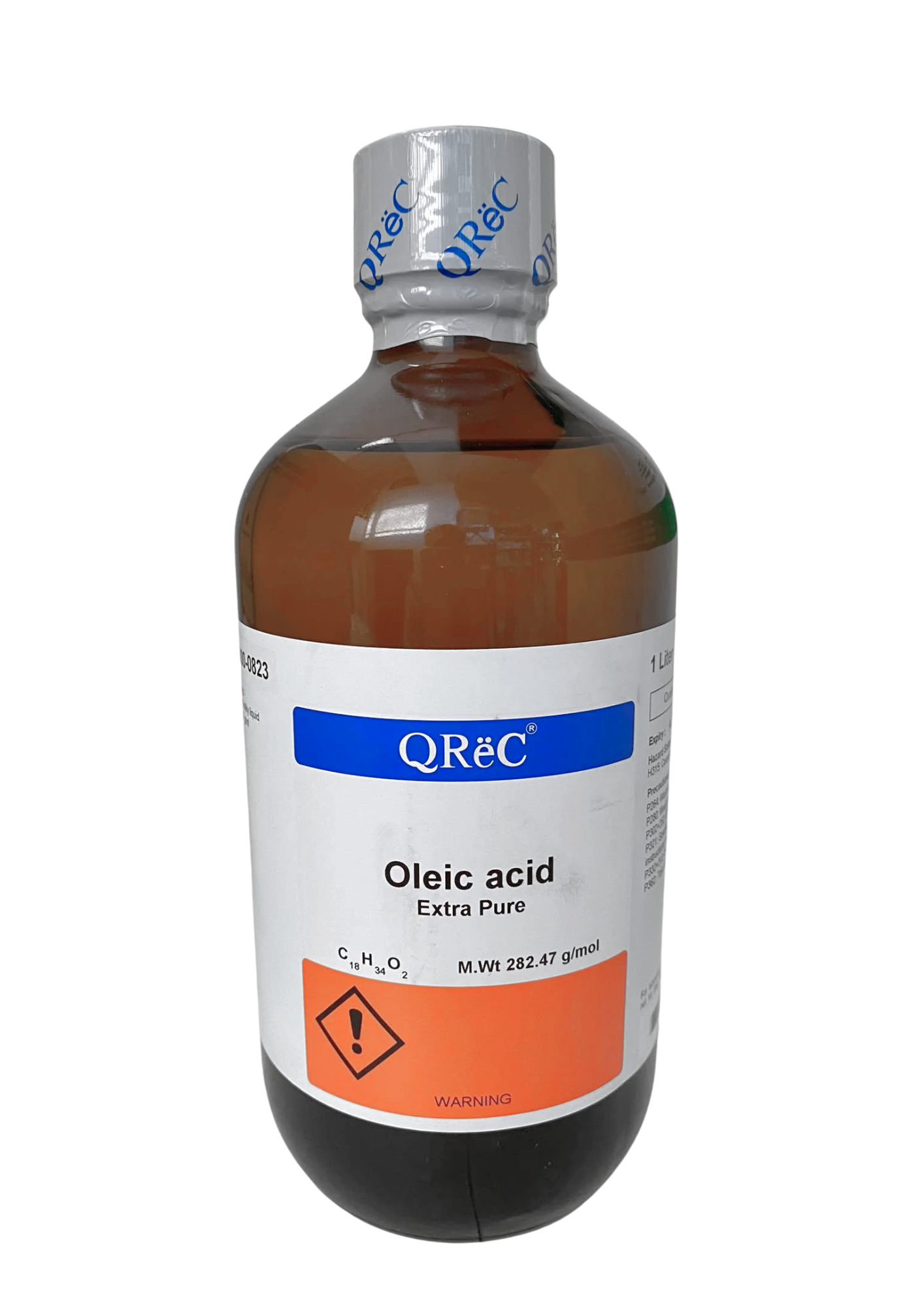
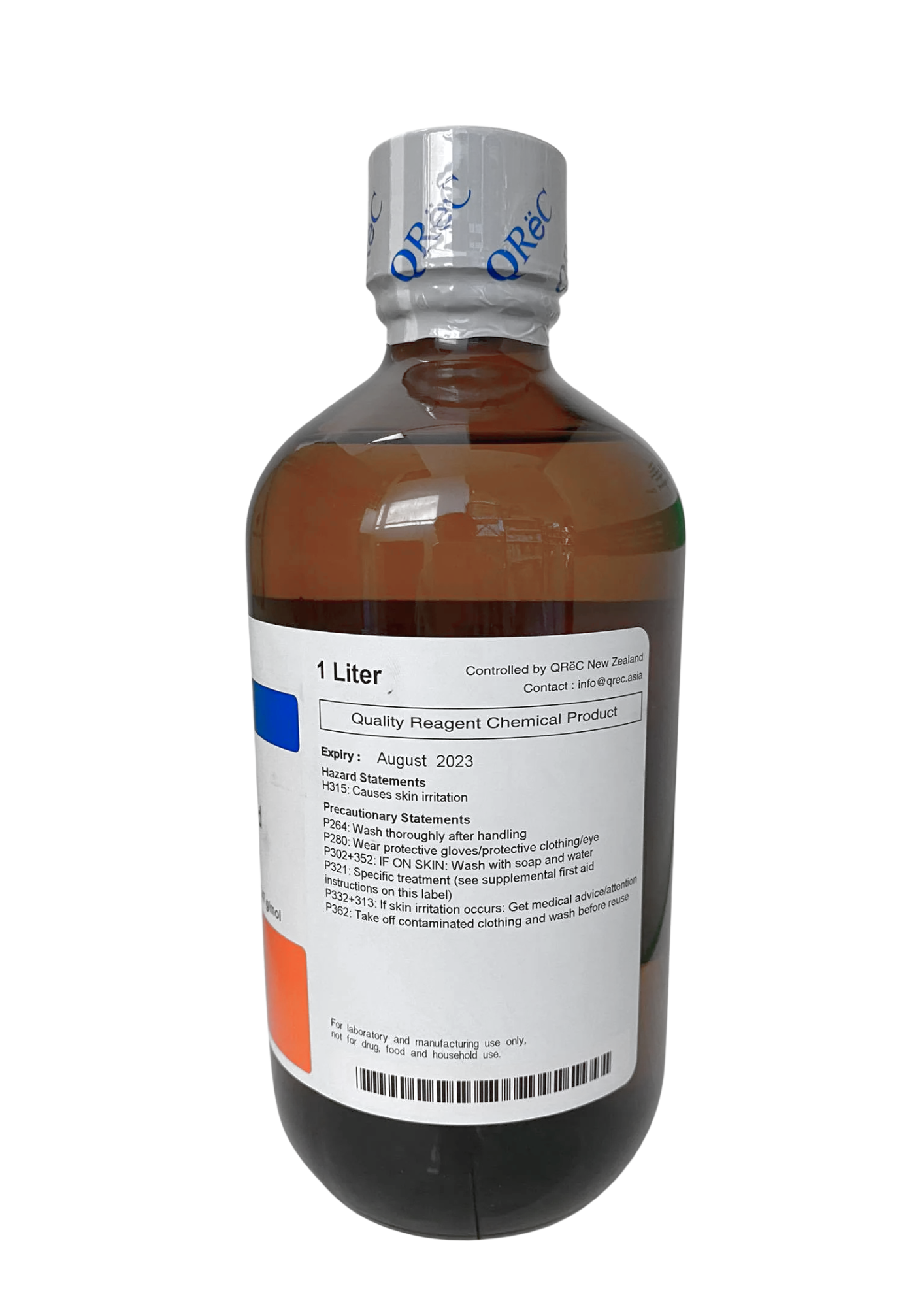
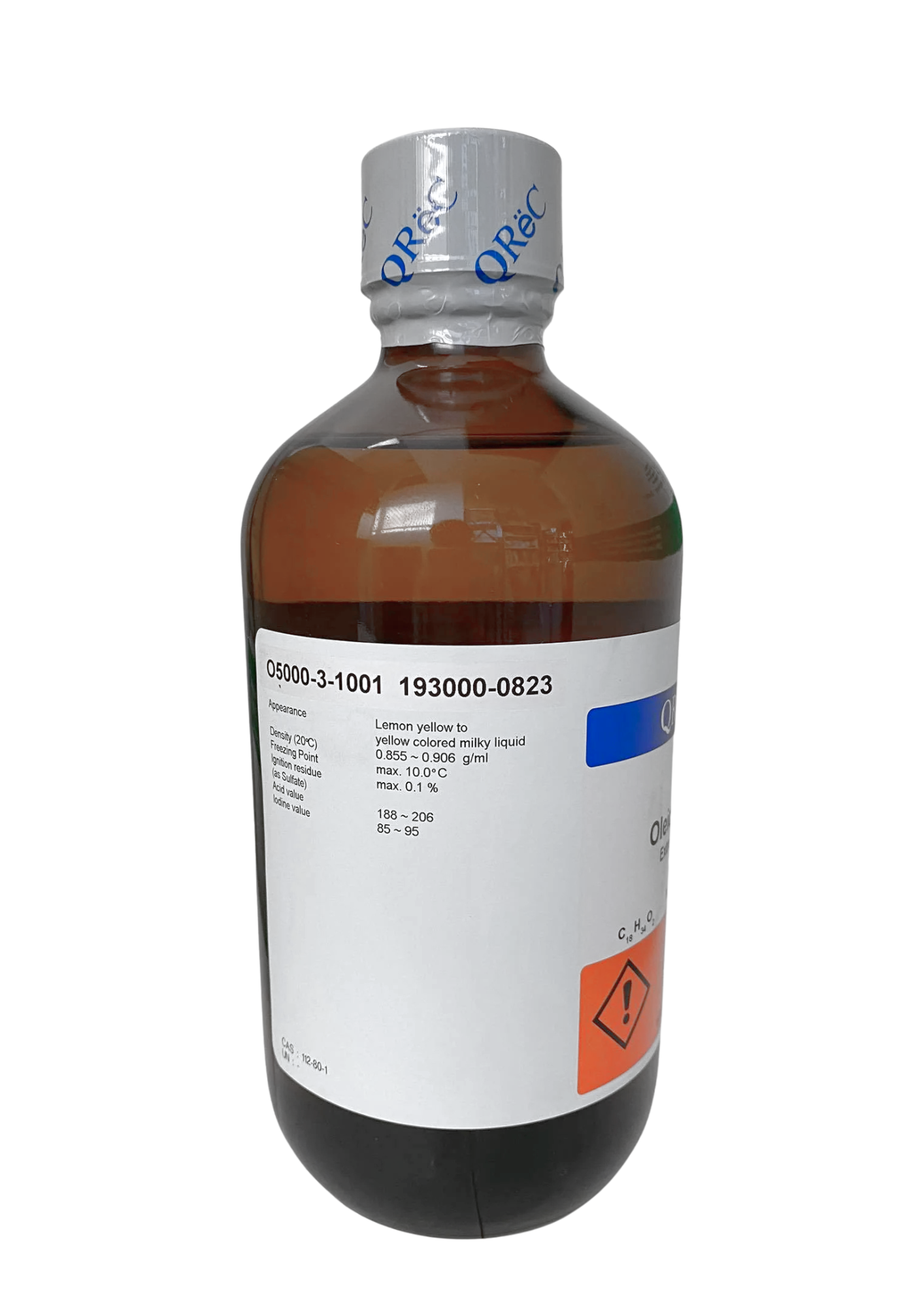
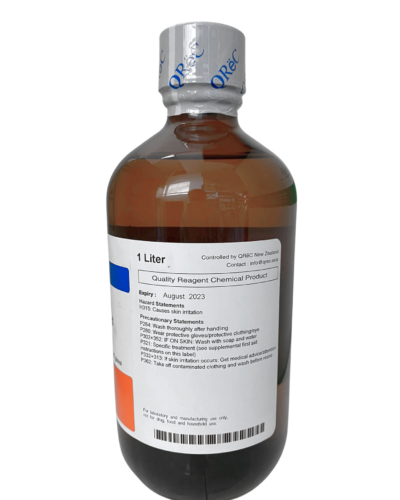
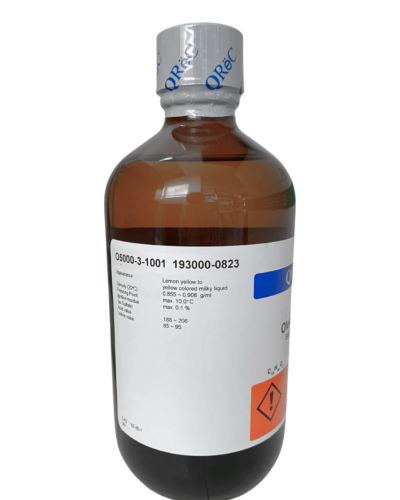
cis-9-Octadecenoic acid or Omega-9 fatty acid or Octadecenoic acid
Product Overview & Quality
- Product Name: Oleic acid extra pure or cis-9-Octadecenoic acid or Omega-9 fatty acid or Elaic acid or Octadec-9-enoic acid
- Brand: QReC (Product Code: QR-O5000-3-1001)
- Grade: Extra Pure Grade featuring a certified chemical assay of not less than 70.0 to 80.0 percent total oleic acid fraction (typical standard specification for technical and laboratory plant-derived unsaturated fatty acids) in a 1,000 mL (1 L) package. Fractionated, refined, and bleached under strict QReC global laboratory specifications to ensure consistent batch-to-batch performance. Acid value is tightly controlled within 195 to 205 mg KOH/g, with an iodine absorption value of 85 to 95 g I2/100g. Moisture content is restricted below 0.5 percent, and sulfated ash (residue on ignition) is held below 0.01 percent. Free from insoluble sediments, foreign resins, and heavy metals (such as iron, lead, copper, arsenic, and zinc, held to low ppm levels). Packaged in a heavy-duty, light-protective amber glass container fitted with an airtight hermetic seal to prevent auto-oxidation.
- Physical Properties: Pale yellow to clear light-amber oily liquid (gradually darkens to deep reddish-brown upon prolonged exposure to air and light due to oxidation). Characteristic, faint, pleasant fatty vegetable-oil odor; free of rancidity. Freezing/titer point is approximately 13 to 16 degrees Celsius (readily solidifies into a cloudy white semi-solid fat in cold laboratories). High boiling point of approximately 360 degrees Celsius. Combustible liquid under high thermal stress with a flash point exceeding 180 degrees Celsius. Non-corrosive, insoluble lipid forming an oily meniscus on aqueous surfaces with weakly acidic characteristics.
- Solubility: Practically insoluble in water; completely miscible in all proportions with virtually all common organic solvents, including ethanol, methanol, diethyl ether, chloroform, acetone, benzene, hexane, and petroleum ether; dissolves freely in dilute aqueous alkali hydroxide solutions to yield water-soluble oleate soap salts.
- Key Use: Universally utilized as a premier surface-capping ligand and colloidal surfactant in advanced materials science and nanotechnology for the controlled hydrothermal and thermal-decomposition synthesis of monodisperse colloidal nanocrystals (such as quantum dots, core-shell semiconductors, and superparamagnetic iron oxide nanoparticles/SPIONs for magnetic resonance imaging contrast agents). Extensively applied as an emulsifier, penetrating agent, and lipid excipient in pharmaceutical preformulation studies, cosmetic cream stabilization, and topical transdermal drug delivery systems. Serves as a versatile monounsaturated organic intermediate for synthesizing specialized oleate esters, bio-based plasticizers, epoxy oleate lubricants, and industrial azelaic/pelargonic acid precursors via oxidative cleavage. Heavily employed in tribological testing and green chemical engineering as a biodegradable bio-lubricant base and corrosion-inhibiting additive. Routinely used as an analytical chromatographic reference standard for calibrating GC-FID, GC-MS, and HPLC instruments in lipidomics and edible oil authentication.
Safety & Hazards (Mild Skin & Eye Irritant)
- Classification: Non-hazardous substance under standard international GHS criteria in routine laboratory handling. Low acute toxicity profile; non-toxic, non-corrosive lipid. May cause mild transient mechanical irritation to ocular and dermal tissues.
- Health Risks: Direct ocular contact may cause mild burning discomfort, mechanical irritation, conjunctival injection, and temporary visual haziness due to the greasy film. Prolonged dermal contact can produce mild localized dryness, redness, or comedogenic follicular clogging in sensitive individuals. Inhalation of mists or thermal decomposition vapors generated at elevated processing temperatures irritates the respiratory tract, inducing coughing and throat discomfort. Ingestion of excessive quantities produces mild gastrointestinal upset, nausea, abdominal discomfort, and mechanical osmotic diarrhea.
- First Aid Measures: Flush affected eyes thoroughly with clean running water for at least 15 minutes while stripping contaminated clothing; remove contact lenses promptly and seek medical attention if irritation persists. Wash exposed skin thoroughly with warm water and degreasing soap. In case of inhalation of heated vapors or mists, relocate the individual to fresh air. If accidentally swallowed in substantial amounts, rinse mouth thoroughly, administer water to drink, and seek medical advice if discomfort persists.
Handling & Storage
- Storage: Air-Sensitive, Light-Sensitive Unsaturated Lipid. Actinic radiation, elevated temperatures, and atmospheric oxygen accelerate double-bond auto-oxidation, yielding rancid odors, darkening, and peroxide generation. Must be preserved in its original, tightly closed QReC amber glass bottle. Store in a clean, strictly dry, cool, and well-ventilated dedicated chemical store at controlled temperatures (between 15 and 25 degrees Celsius, or refrigerated for long-term lipid integrity), sheltered from atmospheric oxygen and direct solar radiation. Keep strictly segregated from strong oxidizing agents (such as perchlorates, permanganates, hydrogen peroxide, and nitric acid), strong caustic alkalis, and catalytic transition metal powders.
- Precautions: Standard laboratory PPE is mandatory, including protective nitrile gloves, safety glasses, and a protective lab coat. “Technical Handling Note: If solidification or cloudiness occurs during cold storage, warm the bottle gently in a 25 to 30 degrees Celsius warm-water bath until clear; shake gently before dispensing without compromising analytical quality.” Re-seal container cap tightly immediately after dispensing. Never discharge oily residues directly into municipal drainage pipes to prevent plumbing encrustation.