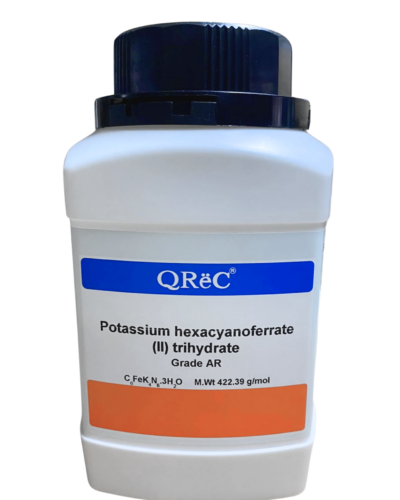
Potassium ferrocyanide 99% or Potassium hexacyanoferrate (II) trihydrate or Yellow prussiate of potash or Tetrapotassium hexacyanoferrate trihydrate
Product Overview & Quality
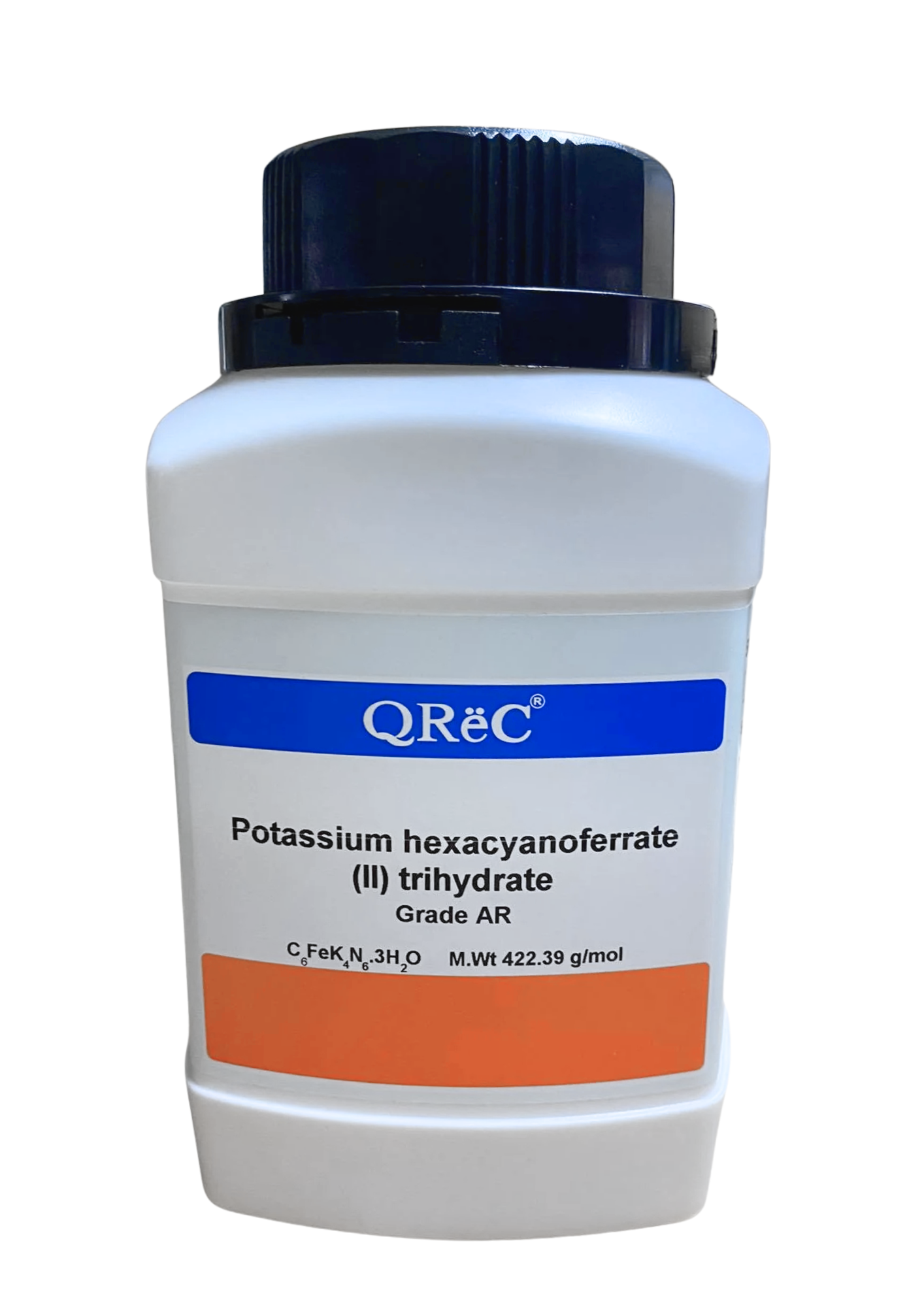
- Product Name: Potassium ferrocyanide 99% or Potassium hexacyanoferrate (II) trihydrate or Yellow prussiate of potash or Tetrapotassium hexacyanoferrate trihydrate
- Brand: QReC (Product Code: QR-P5117-1-0500)
- Grade: Analytical Reagent (AR Grade) featuring a certified chemical assay of not less than 99.0 percent. Manufactured and multi-crystallized under strict QReC global laboratory specifications, maintaining stoichiometric trihydrate hydration. Strictly analyzed to enforce minimal water-insoluble matter (strictly below 0.005 percent), alongside ultra-low ppm limits of chloride, sulfate, ammonium, potassium ferricyanide impurities, and trace heavy metals (such as lead, copper, arsenic, zinc, calcium, magnesium, and sodium). Exhibits uniform, dry lemon-yellow crystals dissolving completely in water to yield clear, particulate-free solutions. Packaged in a heavy-duty, moisture-barrier polymer container equipped with a hermetic seal.
- Physical Properties: Vivid lemon-yellow crystalline powder or translucent monoclinic crystals. Odorless. Thermodynamically stable in ambient air, but slightly efflorescent under warm, desiccating conditions (loses water of crystallization above 60 degrees Celsius). Non-combustible inorganic complex. Aqueous solutions are practically neutral to very weakly basic (pH approximately 7.0 to 8.5 at room temperature).
- Solubility: Readily and highly soluble in water (approximately 28 to 30 grams per 100 milliliters at 20 degrees Celsius; solubility escalates dramatically with temperature, exceeding 90 grams per 100 milliliters in boiling water); practically insoluble in ethanol, methanol, and diethyl ether.
- Key Use: Universally utilized as a standard analytical reagent for qualitative ferric iron (Fe3+) detection, reacting instantaneously to produce the intensely dark blue insoluble coordination pigment Prussian Blue (ferric ferrocyanide). Heavily applied as the primary constituent of Carrez Solution I (paired with Carrez Solution II zinc acetate) for standard protein, fat, and colloidal clarification during food, beverage, and dairy sample preparation prior to sugar and vitamin chromatographic analysis (HPLC). Widely used as a reversible, one-electron outer-sphere redox couple (Ferrocyanide / Ferricyanide) in electrochemistry for electrode surface characterization, cyclic voltammetry calibration, and biosensor research. Employed as an analytical precipitant for quantifying transition metal cations (such as zinc, copper, nickel, and cobalt). Serves as an industrial chemical intermediate for synthesizing iron-based pigments, tempering salts, and specialized electroplating baths.
Safety & Hazards (Critical Acid Incompatibility & Aquatic Hazard)
- Classification: Low acute toxicity under standard conditions (cyanide is strongly coordinated to the iron center). Harmful to aquatic life with long lasting effects. May cause mild ocular or respiratory irritation. “Critical Danger Mandate: Contact with strong mineral acids liberates extremely toxic, lethal hydrogen cyanide gas (HCN).”
- Health Risks: Direct ocular contact may cause mild mechanical stinging, conjunctival redness, or lacrimation. Dermal contact is generally non-irritating, though prolonged exposure may produce superficial dryness. Inhalation of particulate dust can cause minor sneezing or coughing. Ingestion of typical amounts exhibits low systemic toxicity because the hexacyanoferrate complex is metabolically stable; however, ingestion of massive quantities can induce gastrointestinal discomfort, nausea, vomiting, or diarrhea. Critical Fatal Hazard: Inhalation of toxic hydrogen cyanide fumes generated upon accidental acidification halts cellular mitochondrial respiration, causing rapid asphyxiation, convulsions, circulatory failure, and death.
- First Aid Measures: Flush affected eyes with clean running water for at least 15 minutes. Wash exposed skin with soap and water. In case of dust inhalation, relocate the individual to fresh air. If toxic cyanide gas generated from acid contact is inhaled, evacuate the area immediately, administer supplemental oxygen, and seek urgent emergency medical resuscitation. If accidentally swallowed, rinse mouth, drink water, and seek medical attention.
Handling & Storage
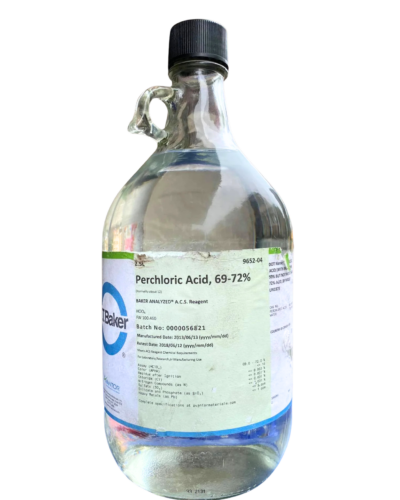
- Storage: Stable Complex Salt with Critical Acid Incompatibility. Must be preserved in its original, tightly closed QReC container. Store in a clean, strictly dry, cool, and well-ventilated dedicated chemical store at controlled temperatures (below 25 to 30 degrees Celsius), sheltered from atmospheric humidity and direct sunlight. “Absolute Storage Mandate: Keep strictly segregated from all strong mineral acids (such as hydrochloric acid, sulfuric acid, and nitric acid) to prevent the lethal generation of hydrogen cyanide gas.” Keep away from strong oxidizing agents.
- Precautions: Standard laboratory PPE is mandatory, including protective nitrile gloves, safety glasses, and a protective lab coat. “Never expose or mix this chemical with acidic solutions outside of a certified, functioning laboratory fume hood.” Re-seal container cap tightly immediately after sampling. Never discharge concentrated solutions directly into municipal wastewater systems.