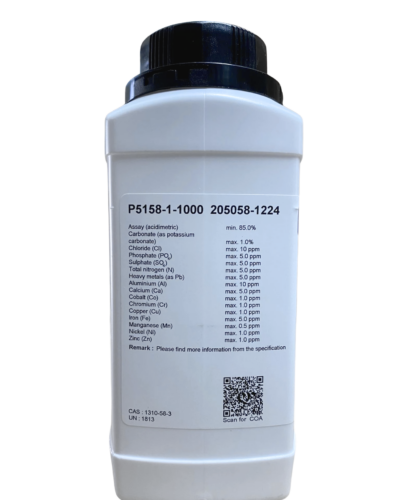
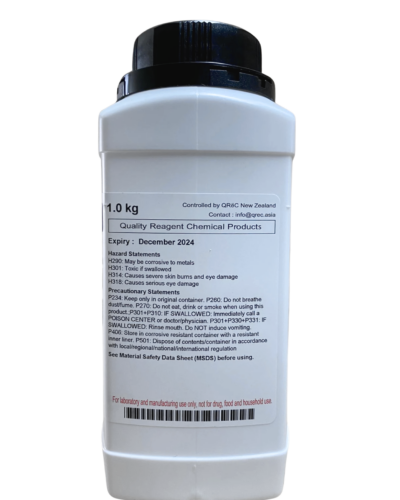
Potassium hydroxide pellets 85% or Caustic potash or Potassium hydrate
Product Overview & Quality
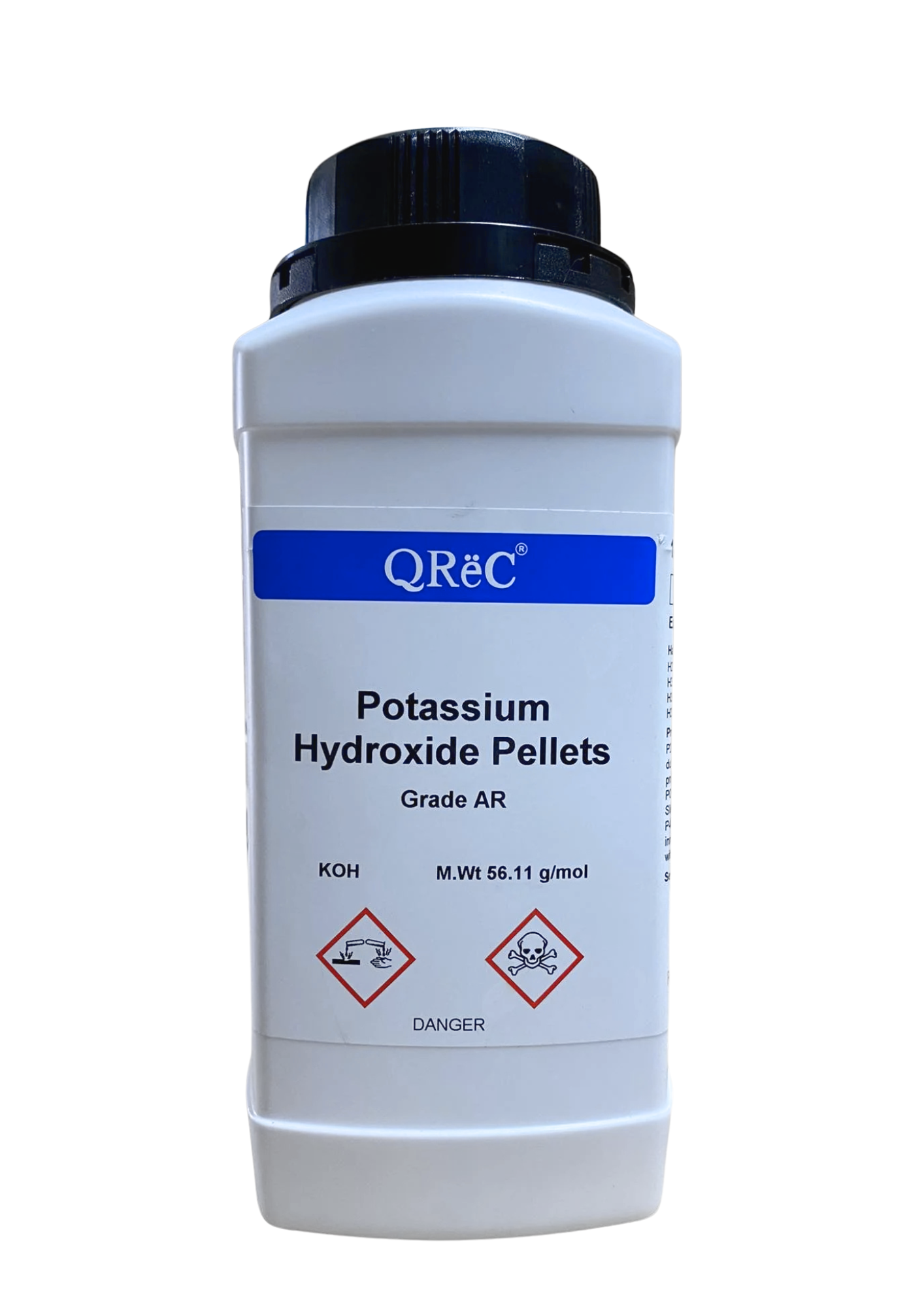
- Product Name: Potassium hydroxide pellets 85% or Caustic potash or Potassium hydrate
- Brand: QReC (Product Code: QR-P5158-1-1000)
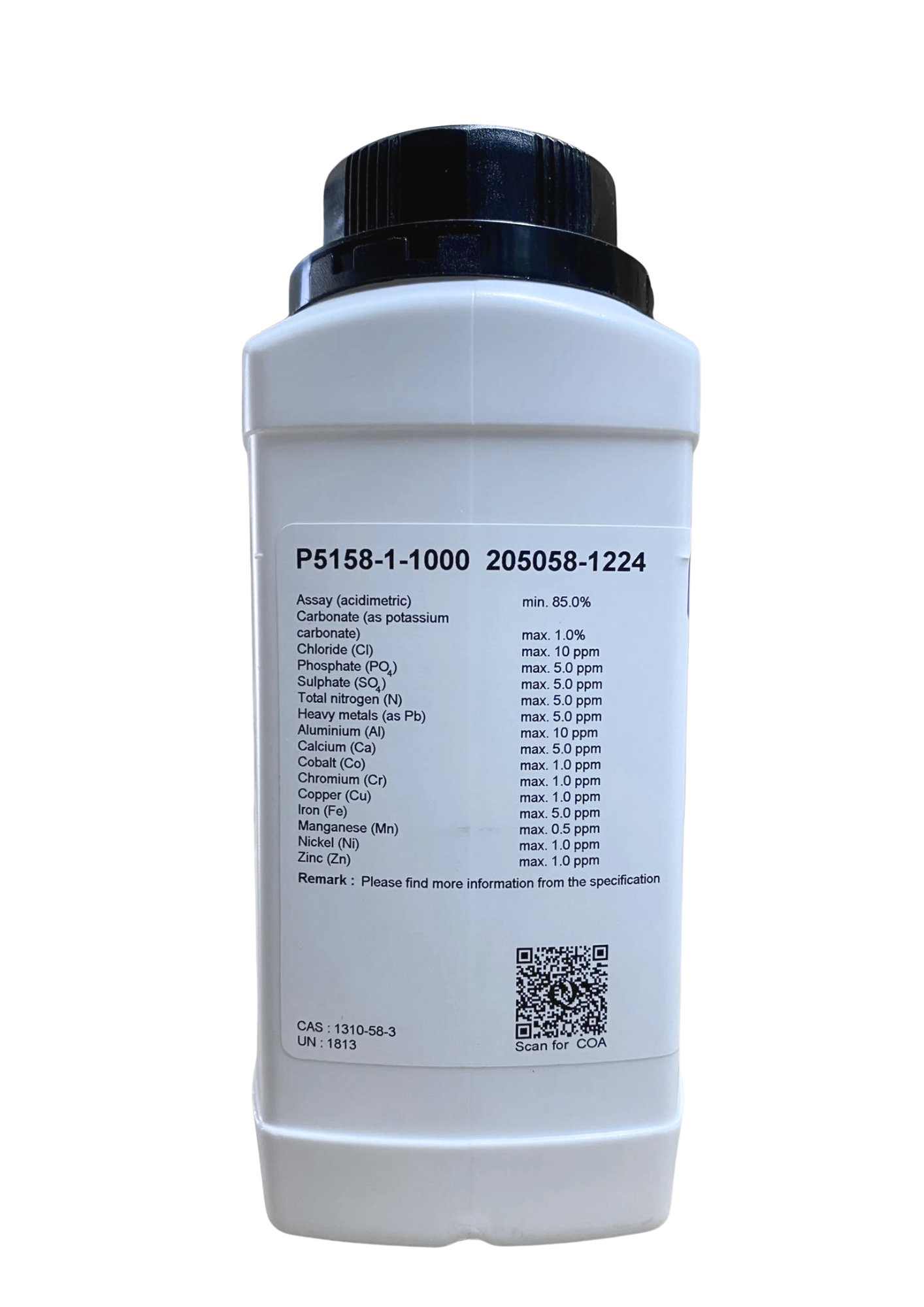
- Grade: Analytical Reagent (AR Grade) featuring a certified total alkali assay of not less than 85 percent (the definitive international standard purity for analytical and technical potassium hydroxide due to intrinsically bound stoichiometric water). Manufactured and pelletized under strict QReC global laboratory specifications. Rigorously analyzed to maintain ultra-low carbonate levels (potassium carbonate strictly below 1 to 2 percent). Enforces minimal ppm thresholds of chloride, sulfate, phosphate, total nitrogen, silicate, alkaline earth metals (calcium and magnesium), and trace heavy metals (such as iron, lead, nickel, copper, and arsenic). Dry, uniform, hard pellets dissolve cleanly and completely in water, producing crystal-clear, sediment-free alkaline solutions. Packaged in a heavy-duty, high-density polyethylene container equipped with an airtight double-seal closure to block ambient moisture and carbon dioxide uptake.
- Physical Properties: White, opaque, hemispherical or oval-shaped pellets. Odorless. Extremely deliquescent, rapidly absorbing atmospheric moisture and carbon dioxide upon air exposure to form a concentrated caustic liquid film. Non-combustible alone. Aqueous solutions are strongly basic, slippery to the touch, and exert aggressive, destructive corrosive action on biological tissues and light metals.
- Solubility: Extremely soluble in water (approximately 110 grams per 100 milliliters at room temperature; dissolution is a violently exothermic process releasing intense heat); freely soluble in ethanol, methanol, and glycerol; practically insoluble in diethyl ether.
- Key Use: Heavily utilized in preparing standardized ethanolic potassium hydroxide solutions (Alcoholic KOH) for quantitative analytical determinations of Saponification Value and Acid Value in oils, fats, waxes, and petroleum products. Extensively applied in clinical dermatology and diagnostic mycology for the KOH preparation (KOH mount), rapidly digesting background epidermal keratin in skin, nail, and hair specimens to facilitate clear microscopic examination of fungal hyphae and spores. Widely used as a standardized primary alkaline titrant in volumetric acid-base titrations and for pH adjustments where sodium ions must be excluded. Serves as an efficient carbon dioxide absorbent in closed gas analysis loops, an active alkaline electrolyte in alkaline batteries and fuel cells, and an aggressive base catalyst in organic dehydrohalogenation reactions.
Safety & Hazards (Critical, Severe Corrosive & Tissue Destruction)
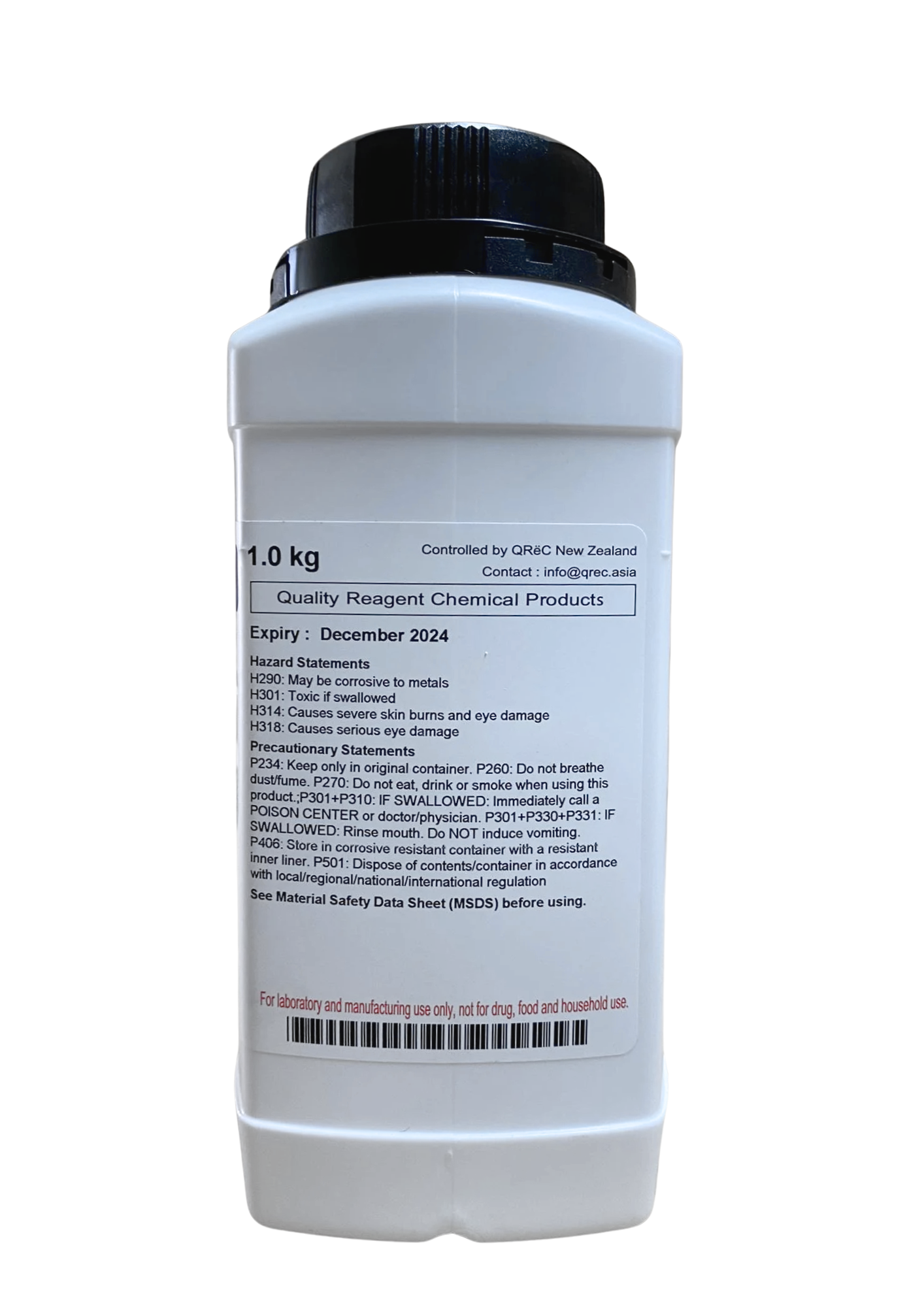
- Classification: Causes severe skin burns and eye damage. Causes serious eye damage. May be corrosive to metals. Harmful if swallowed.
- Health Risks: As an aggressive strong alkali, potassium hydroxide induces severe liquefactive necrosis by saponifying membrane lipids and hydrolyzing proteins, permitting deep, rapid tissue penetration. Direct ocular exposure causes instantaneous corneal opacification, deep ulceration, conjunctival destruction, and permanent blindness. Dermal exposure produces deep, penetrating caustic burns, necrotic sloughing, severe ulceration, and intractable pain. Inhalation of particulate dust or caustic mists aggressively corrodes the respiratory tract, causing violent coughing, choking, dyspnea, chemical bronchitis, and acute pulmonary edema. Ingestion induces catastrophic caustic destruction of the mouth, pharynx, esophagus, and stomach, accompanied by massive internal hemorrhaging, perforation, cardiovascular shock, and death.
- First Aid Measures: Immediately flush affected eyes or skin with an abundant stream of clean flowing water for at least 15 to 20 minutes while stripping all contaminated garments. In case of dust inhalation, rapidly relocate the victim to fresh air. If accidentally swallowed, do NOT induce vomiting and do NOT attempt acid neutralization; thoroughly rinse mouth, administer water in moderate amounts if conscious, and seek immediate, urgent emergency medical attention.
Handling & Storage
- Storage: Extremely Deliquescent and Aggressive Alkaline Corrosive. Readily liquefies upon atmospheric exposure and absorbs carbon dioxide to form carbonates. Must be preserved in its original, tightly closed QReC plastic container. Store in a cool, strictly dry, and well-ventilated dedicated chemical store at stable room temperature (below 30 degrees Celsius), sheltered from humidity. Keep strictly segregated from atmospheric moisture, water, strong mineral acids, strong oxidizers, and reactive metals (such as aluminum, zinc, tin, and lead, with which it reacts aggressively to liberate highly flammable hydrogen gas).
- Precautions: Full specialized PPE is mandatory, including heavy alkali-resistant rubber or nitrile gloves, splash-proof safety goggles, a full-face safety shield, and an impervious protective lab coat. “Critical Dissolution Protocol: Always add potassium hydroxide pellets slowly and incrementally to water with continuous stirring; NEVER pour water onto solid pellets, as localized boiling and violent splashing will occur due to intense exothermic heat generation.” Re-seal container tightly immediately after sampling.