Potassium monoiodide or Hydroiodic acid potassium salt or Potassium salt of hydroiodic acid
Product Overview & Quality
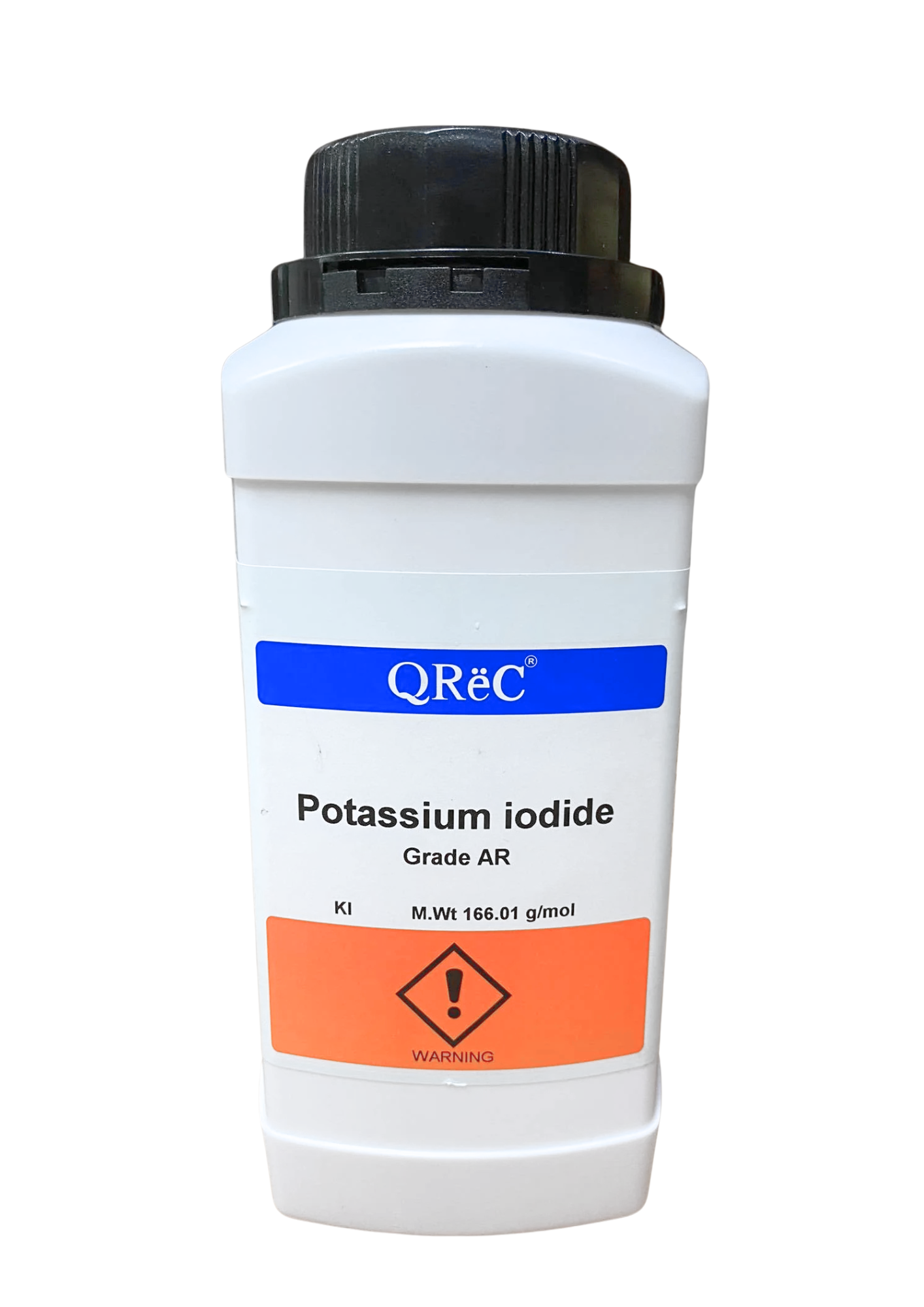
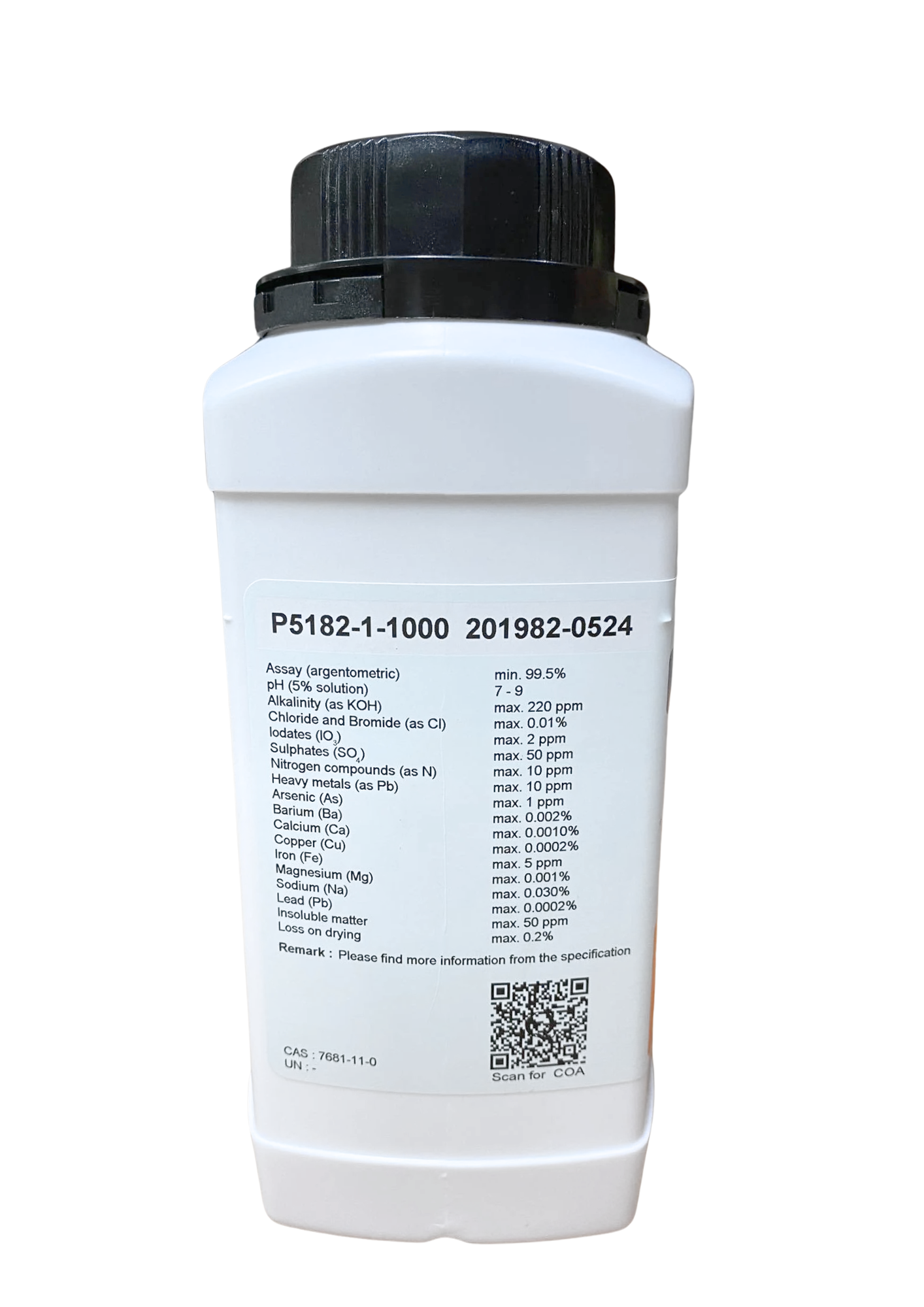
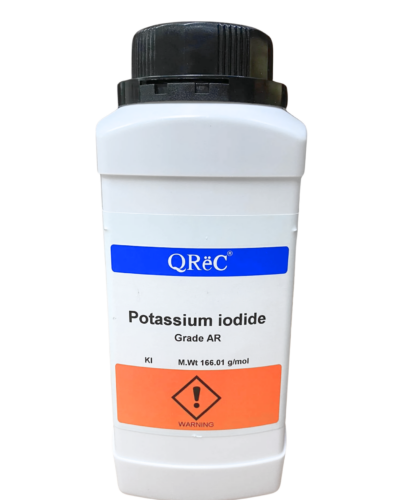
- Product Name: Potassium iodide 99.5% or Potassium monoiodide or Hydroiodic acid potassium salt
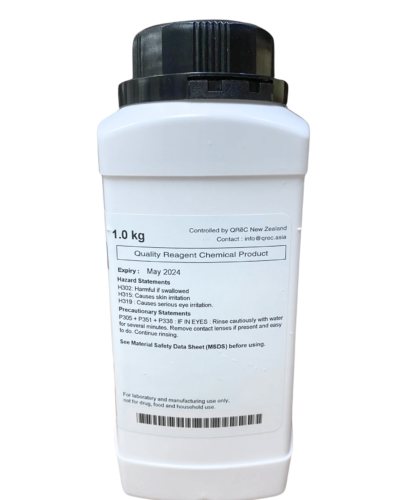
- Brand: QReC (Product Code: QR-P5182-1-1000)
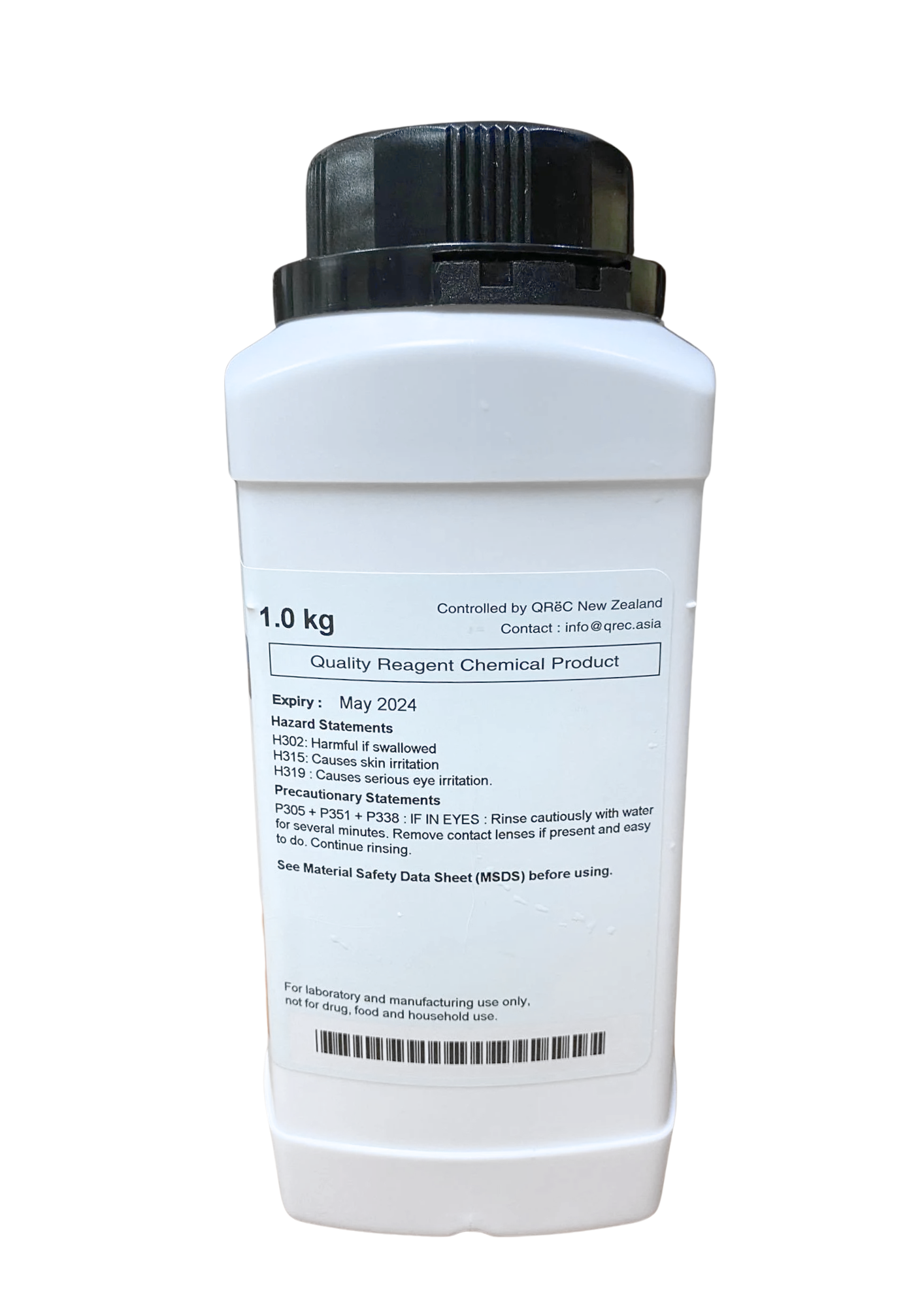
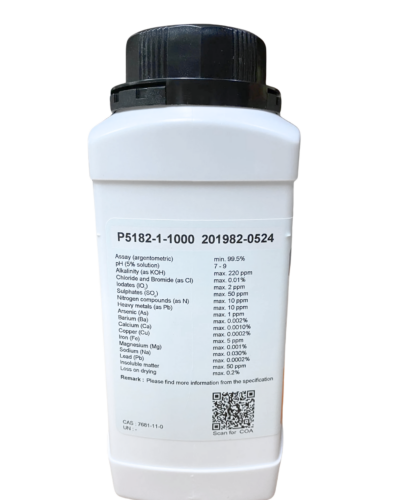
- Grade: Analytical Reagent High Purity Grade (AR Grade / ACS Grade) featuring an exceptional certified chemical assay of not less than 99.5 percent in a 1,000 g (1 kg) laboratory package. Multi-recrystallized and processed under strict QReC global laboratory specifications without anti-caking additives. Moisture content and loss on drying are tightly controlled below 0.2 percent. Strictly analyzed to enforce minimal water-insoluble matter (below 0.005 percent), alongside ultra-low ppm limits of iodate, chloride, bromide, sulfate, phosphate, total nitrogen, calcium, magnesium, and sodium. Trace heavy metals (such as iron, lead, copper, zinc, arsenic, and barium) are strictly maintained at minimal parts-per-million thresholds. Dry, uniform cubic crystals dissolve cleanly and rapidly in water to yield crystal-clear, neutral-to-basic solutions free of particulate matter. Packaged in a heavy-duty, light-protective opaque polymer container fitted with an airtight double hermetic seal.
- Physical Properties: Colorless transparent cubic crystals or fine white crystalline powder. Odorless with an astringent, pungent, bitter-saline taste. Thermodynamically stable in completely dry air; photosensitive and air-sensitive in humid environments, undergoing slow aerial oxidation to yield elemental iodine, imparting a faint yellow-to-brownish discoloration. Non-combustible inorganic solid. Aqueous solutions are practically neutral to weakly alkaline (pH approximately 6.0 to 9.0 for a 5 percent aqueous solution at room temperature). Dissolution in water is endothermic, absorbing enthalpy and causing a rapid decrease in solution temperature.
- Solubility: Readily and highly soluble in water (approximately 140 to 144 grams per 100 milliliters at 20 degrees Celsius, increasing to over 200 grams per 100 milliliters in boiling water; strongly endothermic dissolution); freely soluble in glycerol; soluble in ethanol and methanol; practically insoluble in diethyl ether.
- Key Use: Universally utilized as a primary solubilizing complexant for elemental iodine (forming the highly soluble triiodide anion complex) in preparing Lugol’s iodine solution, Gram’s iodine mordant in microbiology, and standardized volumetric iodine titrants in iodimetry and iodometry. Extensively applied as an analytical reducing agent and iodide donor in redox iodometric titrations for the precise determination of strong oxidizers, dissolved oxygen (the classic Winkler titration in environmental water testing), residual chlorine, ozone, and cupric ions. Heavily employed as an essential bioavailable iodine micronutrient in plant tissue culture media formulations (such as Murashige and Skoog / MS medium) and microbiological broths. Serves as a versatile nucleophilic iodide donor in organic synthetic transformations, including Finkelstein halide-exchange reactions to synthesize alkyl iodides. Used as an ionic component in electrochemical sensing and radiation quenching research.
Safety & Hazards (Specific Target Organ Toxicity / Thyroid Hazard & Skin/Eye Irritant)
- Classification: Causes damage to organs (Thyroid gland) through prolonged or repeated exposure (Specific Target Organ Toxicity – Repeated Exposure Category 1). Causes skin irritation (Skin Irritation Category 2). Causes serious eye irritation (Eye Irritation Category 2).
- Health Risks: Direct ocular contact causes transient mechanical and chemical stinging, conjunctival injection, and lacrimation. Prolonged dermal contact can cause localized dryness, erythema, or superficial contact irritation. Inhalation of particulate dust irritates the mucous membranes of the respiratory tract, inducing coughing, sneezing, and throat irritation. Critical Chronic Target Organ Toxicity: Chronic systemic absorption or excessive occupational ingestion directly disrupts thyroid homeostasis, inducing thyroid dysfunction (hypothyroidism or hyperthyroidism), goiter, and systemic iodism (manifested by rhinorrhea, conjunctivitis, metallic taste, headache, salivary gland enlargement, and severe acneiform skin eruptions). Acute ingestion of massive quantities causes gastrointestinal irritation, burning epigastric pain, nausea, vomiting, and diarrhea.
- First Aid Measures: Immediately flush affected eyes with an abundant stream of clean flowing water for at least 15 minutes while stripping contaminated clothing; remove contact lenses promptly and seek medical attention if irritation persists. Wash exposed skin thoroughly with soap and water. In case of dust inhalation, relocate the individual to fresh air. If accidentally swallowed in substantial amounts, rinse mouth thoroughly, administer water in moderate amounts, and seek prompt medical evaluation.
Handling & Storage
- Storage: Light-Sensitive, Moisture-Sensitive Analytical Iodide Salt. Actinic radiation, atmospheric oxygen, and moisture accelerate oxidation to free iodine. Must be preserved in its original, tightly closed QReC light-protective container. Store in a clean, strictly dry, cool, and well-ventilated dedicated chemical store at controlled temperatures (below 25 to 30 degrees Celsius), sheltered from atmospheric humidity and direct sunlight. Keep strictly segregated from strong oxidizing agents (such as perchlorates, permanganates, hydrogen peroxide, and nitric acid), concentrated mineral acids (which liberate toxic hydrogen iodide and iodine vapor), silver salts, and diazonium salts.
- Precautions: Standard laboratory PPE is mandatory, including protective nitrile gloves, safety glasses, and a protective lab coat. “Technical Handling Recommendation: Store compounded aqueous potassium iodide solutions in amber glass bottles away from actinic light, and prepare freshly if noticeable yellow discoloration occurs to ensure analytical accuracy in redox titrations.” Re-seal container cap tightly immediately after sampling. Minimize dust generation during weighing and dispensing.