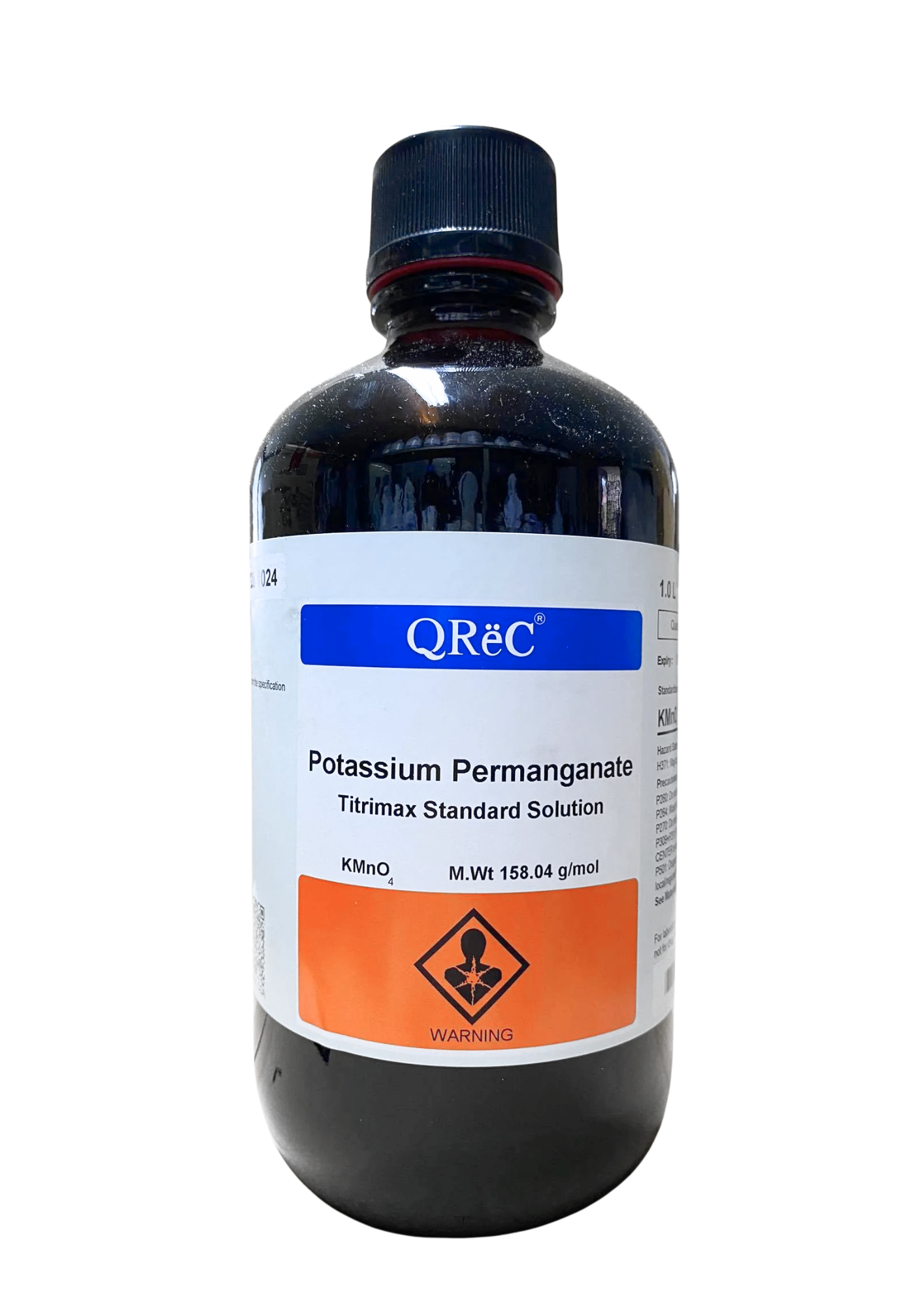
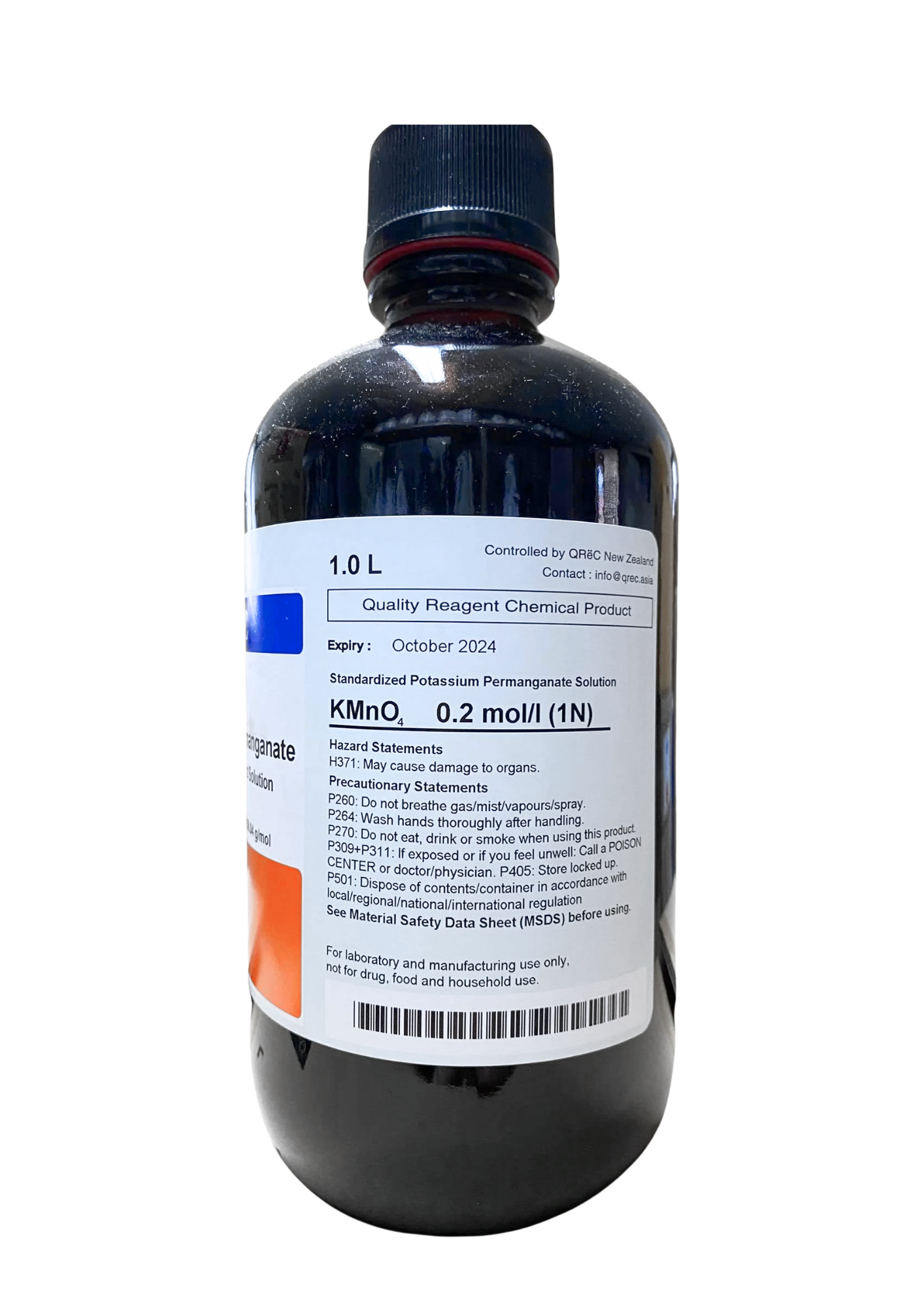
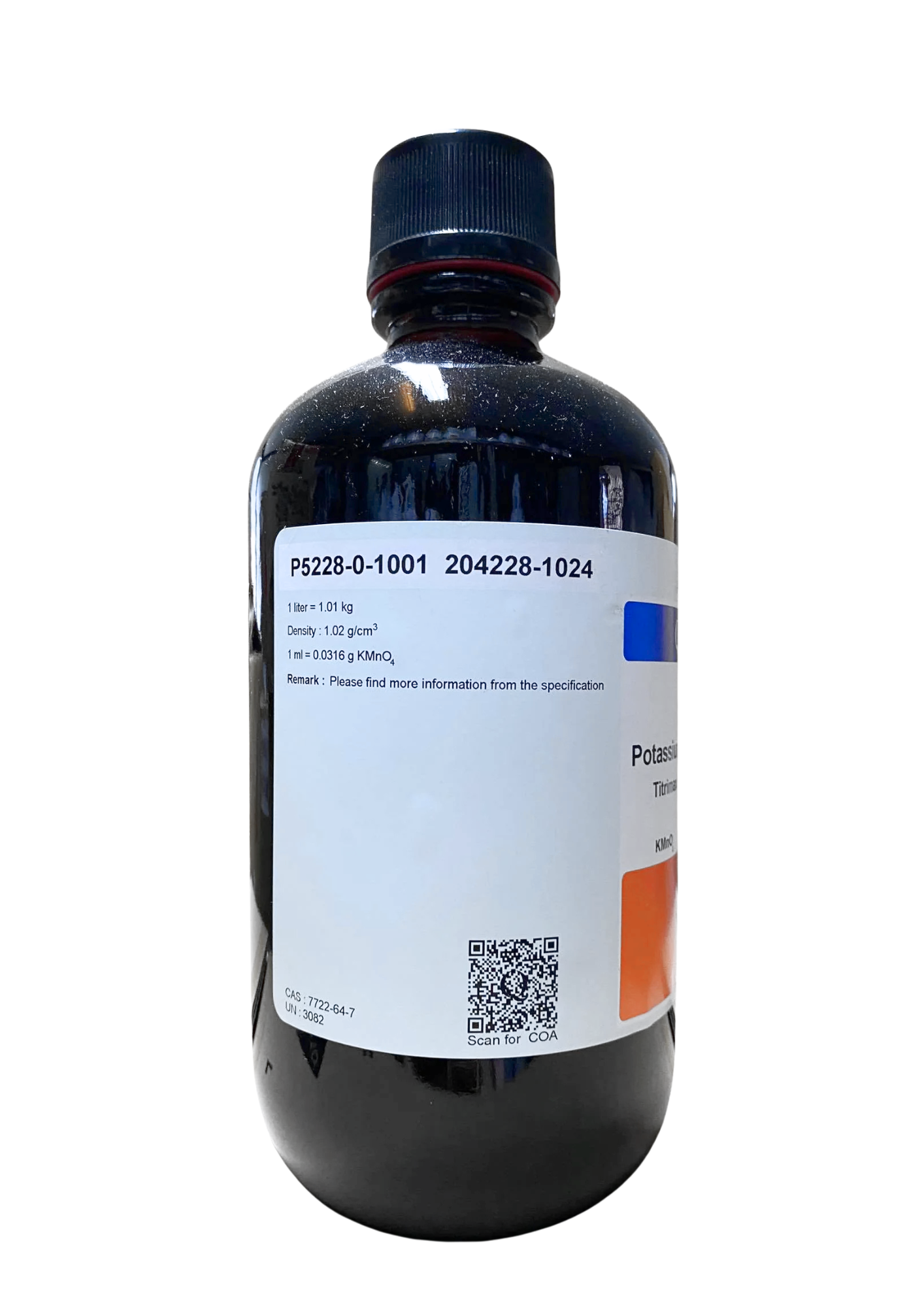
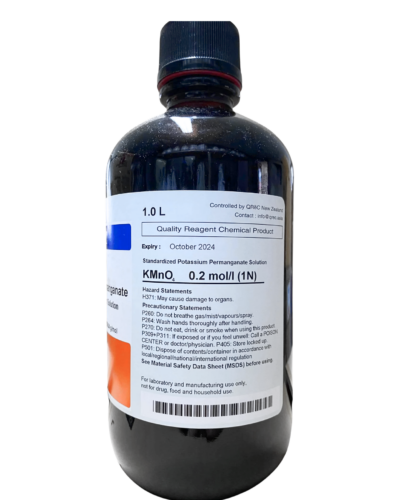
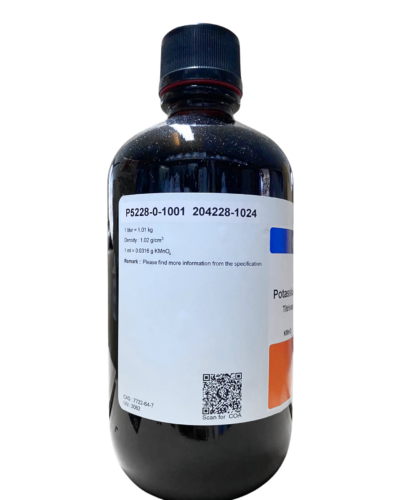
Potassium permanganate solution 0.2 mol/L or Standard permanganate solution 1N or Concentrated potassium permanganate standard solution for titration
Product Overview & Quality
- Product Name: Potassium permanganate solution 1N or 0.2 mol/L or Standard Volumetric Potassium Permanganate Solution 1 Normal or Concentrated volumetric permanganate solution
- Brand: QReC (Product Code: QR-P5228-1-1001)
- Grade: Volumetric Standard Analytical Grade (AR Grade) precisely standardized to an exact titer factor within 0.999 to 1.001 at 20 degrees Celsius, certified to four decimal places. Formulated and quality-controlled under strict QReC global laboratory specifications, directly traceable to National Institute of Standards and Technology (NIST) primary sodium oxalate reference material. Compounded from high-purity crystalline potassium permanganate and high-resistivity deionized water, followed by aging and thorough filtration to completely eliminate insoluble manganese dioxide traces that autocatalyze decomposition. Trace impurities of chloride, sulfate, and heavy metals are strictly maintained at ultra-low thresholds. Clear, intensely concentrated purple volumetric solution packaged in a heavy-duty, light-protective 1,000 mL (1 L) amber glass bottle fitted with an airtight tamper-evident safety closure.
- Physical Properties: Clear, intensely deep violet-black, opaque liquid with a strong bronze-metallic reflective sheen. Odorless. Thermodynamically stable in dark, airtight glass containers under controlled storage, but undergoes photolytic and thermal decomposition upon prolonged exposure to actinic light, elevated temperatures, or organic impurities, precipitating insoluble brown manganese dioxide. Non-combustible inorganic aqueous solution possessing strong, concentrated oxidizing properties (ten times more concentrated than standard 0.1N solutions). Neutral to weakly acidic in aqueous matrix (pH approximately 6.0 to 8.0 at room temperature). Readily produces persistent dark brown manganese dioxide stains on organic substrates and skin.
- Solubility: Fully miscible with water in all proportions; strictly incompatible with organic solvents due to vigorous and potentially violent exothermic redox reactions.
- Key Use: Universally utilized as a concentrated standard stock solution for precise volumetric dilution to prepare working titrants (such as 0.1N, 0.05N, or 0.02N) in redox permanganometry titrations across analytical laboratories. Extensively applied as a concentrated titrant for analyzing high-strength industrial wastewater effluents, spent liquors, and metallurgical process streams containing substantial concentrations of oxidizable chemical species. Heavily employed in environmental chemistry and analytical sample preparation for wet oxidative digestion to break down complex organic matrices prior to trace elemental spectroscopy. Serves as a strong stoichiometric oxidizing agent in organic synthetic workflows, including the conversion of alkylbenzenes to aromatic carboxylic acids and the selective oxidation of alcohols. Used in specialized laboratory glassware decontamination protocols (paired with dilute sulfuric acid) to destroy tenacious organic residues.
Safety & Hazards (Target Organ Toxicity, Strong Oxidizing Liquid, Aquatic Pollutant & Irritant)
- Classification: Causes damage to organs (Central nervous system, brain) through prolonged or repeated exposure (Specific Target Organ Toxicity – Repeated Exposure Category 2). Harmful if swallowed (Acute Toxicity Oral Category 4). Causes skin irritation (Skin Irritation Category 2). Causes serious eye irritation (Eye Irritation Category 2). Toxic to aquatic life with long lasting effects (Aquatic Chronic Category 2).
- Health Risks: Because of its high molar concentration, direct ocular contact causes immediate and severe chemical stinging, conjunctival ulceration, corneal irritation, lacrimation, and dark brown staining of ocular tissues. Dermal contact causes stinging, localized irritation, epidermal drying, superficial chemical burns, and tenacious dark brown stains of insoluble manganese dioxide. Inhalation of airborne mists aggressively irritates the mucous membranes of the respiratory tract, provoking coughing, sneezing, choking, and dyspnea. Critical Chronic Neurotoxic Hazard: Repeated or long-term systemic exposure to bioavailable manganese compounds induces manganism (chronic manganese neurotoxicity), clinically resembling Parkinson’s disease, manifested by speech disturbances, tremor, motor impairment, and psychiatric symptoms. Ingestion provokes severe gastrointestinal irritation, burning pain in the mouth, esophagus, and stomach, nausea, vomiting, abdominal cramping, and metabolic acidosis.
- First Aid Measures: Immediately flush affected eyes with an abundant stream of clean flowing water for at least 15 to 20 minutes while stripping contaminated clothing; remove contact lenses promptly and seek immediate ophthalmological attention. Wash exposed skin thoroughly with soap and water for at least 15 minutes (stubborn brown stains can be reduced and cleared using dilute ascorbic acid or oxalic acid solution). In case of mist inhalation, rapidly relocate the victim to fresh air. If accidentally swallowed, do NOT induce vomiting; thoroughly rinse mouth, administer moderate quantities of fresh water to dilute, and transport to an emergency medical facility immediately.
Handling & Storage
- Storage: Light-Sensitive, Concentrated Strong Oxidizing Solution. Actinic radiation, ambient heat, and organic matter induce rapid titer degradation and manganese dioxide precipitation. Must be preserved in its original, tightly closed QReC amber glass bottle. Store in a clean, strictly dry, cool, and well-ventilated dedicated chemical store at controlled temperatures (between 15 and 25 degrees Celsius), sheltered from direct sunlight and heat sources. Keep strictly segregated from strong reducing agents, flammable organic solvents, concentrated hydrochloric acid (contact instantaneously liberates hazardous, suffocating chlorine gas), concentrated sulfuric acid, ammonium salts, and hydrogen peroxide.
- Precautions: Full protective PPE is mandatory, including protective nitrile gloves, splash-proof safety goggles, a mist-protective respirator, and a protective lab coat. “Technical Handling Recommendation: Protect volumetric delivery systems from actinic radiation using amber burettes, and avoid organic stopcock greases or rubber tubings that reduce permanganate.” Re-seal container cap tightly immediately after dispensing. Never discharge concentrated permanganate solutions directly into municipal sewers; chemically neutralize with mild reducing agents (such as sodium bisulfite) prior to certified hazardous waste disposal.