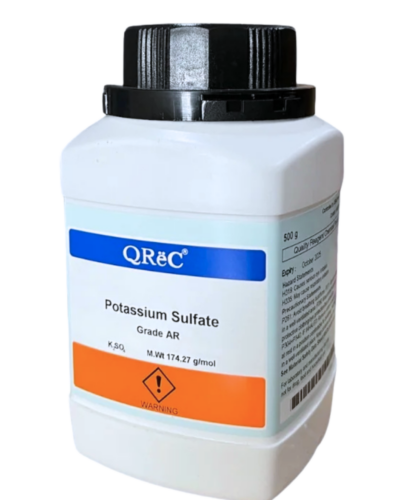
Dipotassium sulfate or Sulfuric acid potassium salt or Sulfate of potash or Arcanite
Product Overview & Quality
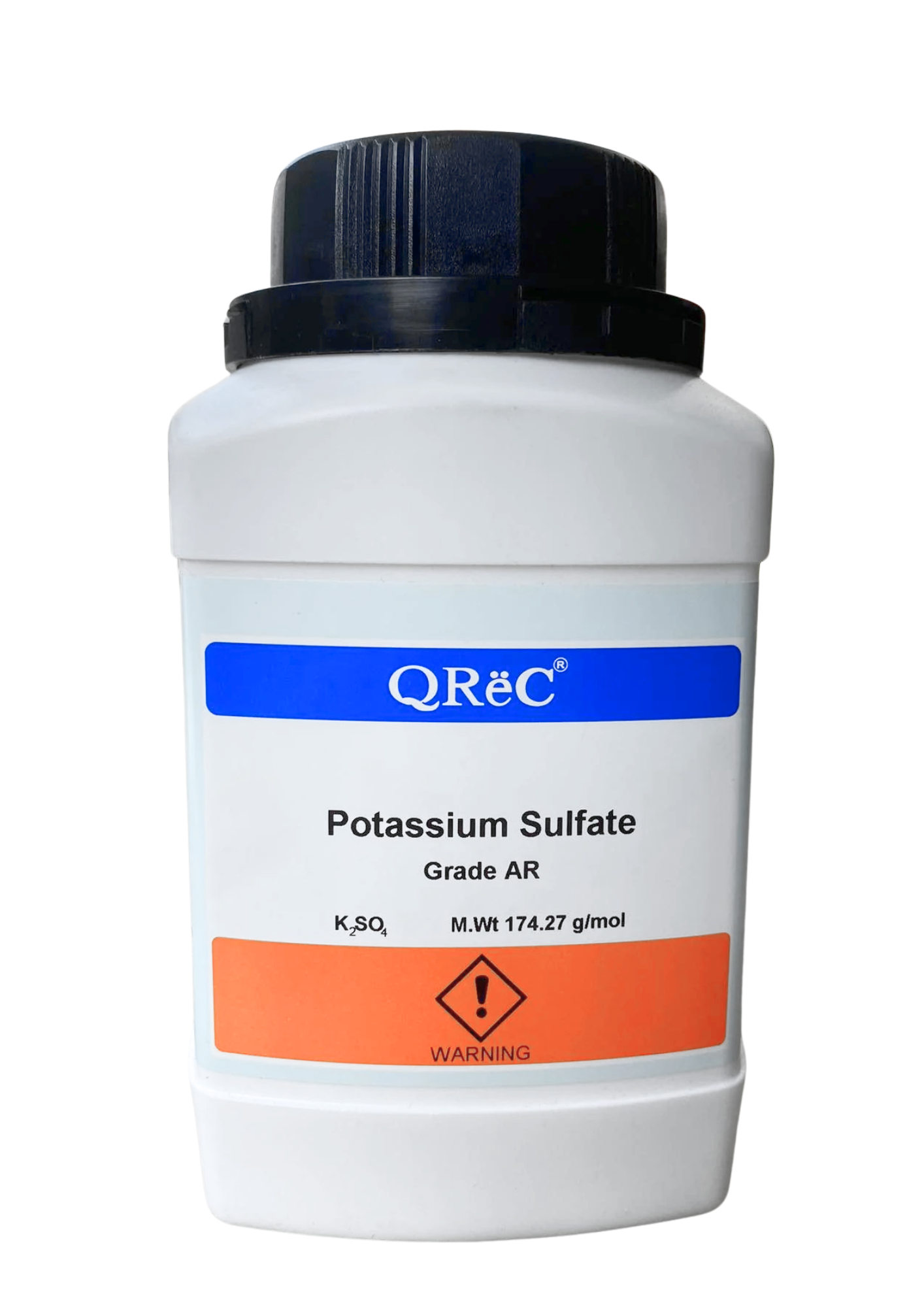
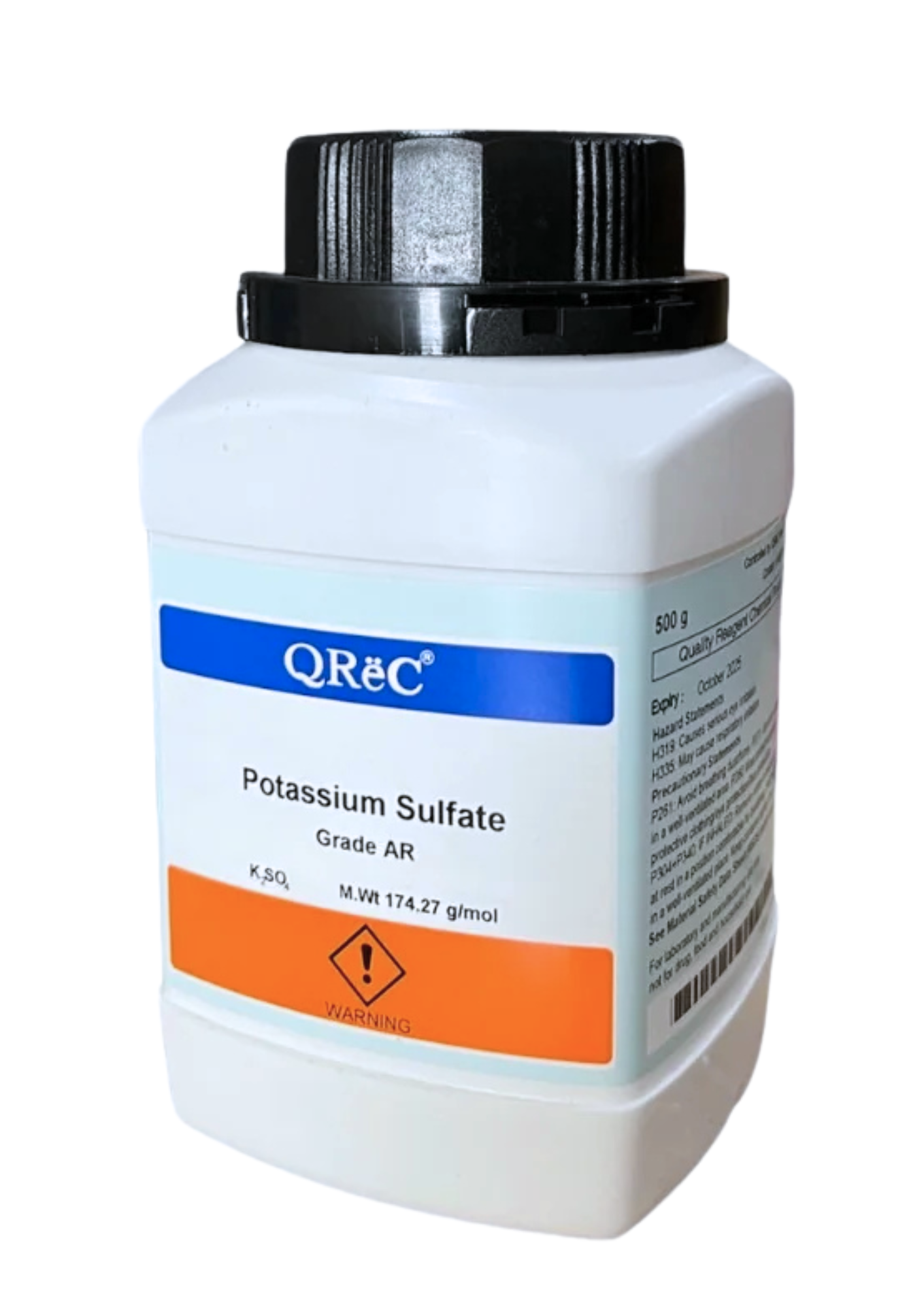
- Product Name: Potassium sulfate 99% or Dipotassium sulfate or Sulfate of potash or Arcanite or Sulfuric acid dipotassium salt
- Brand: QReC (Product Code: QR-P5249-1-1000)
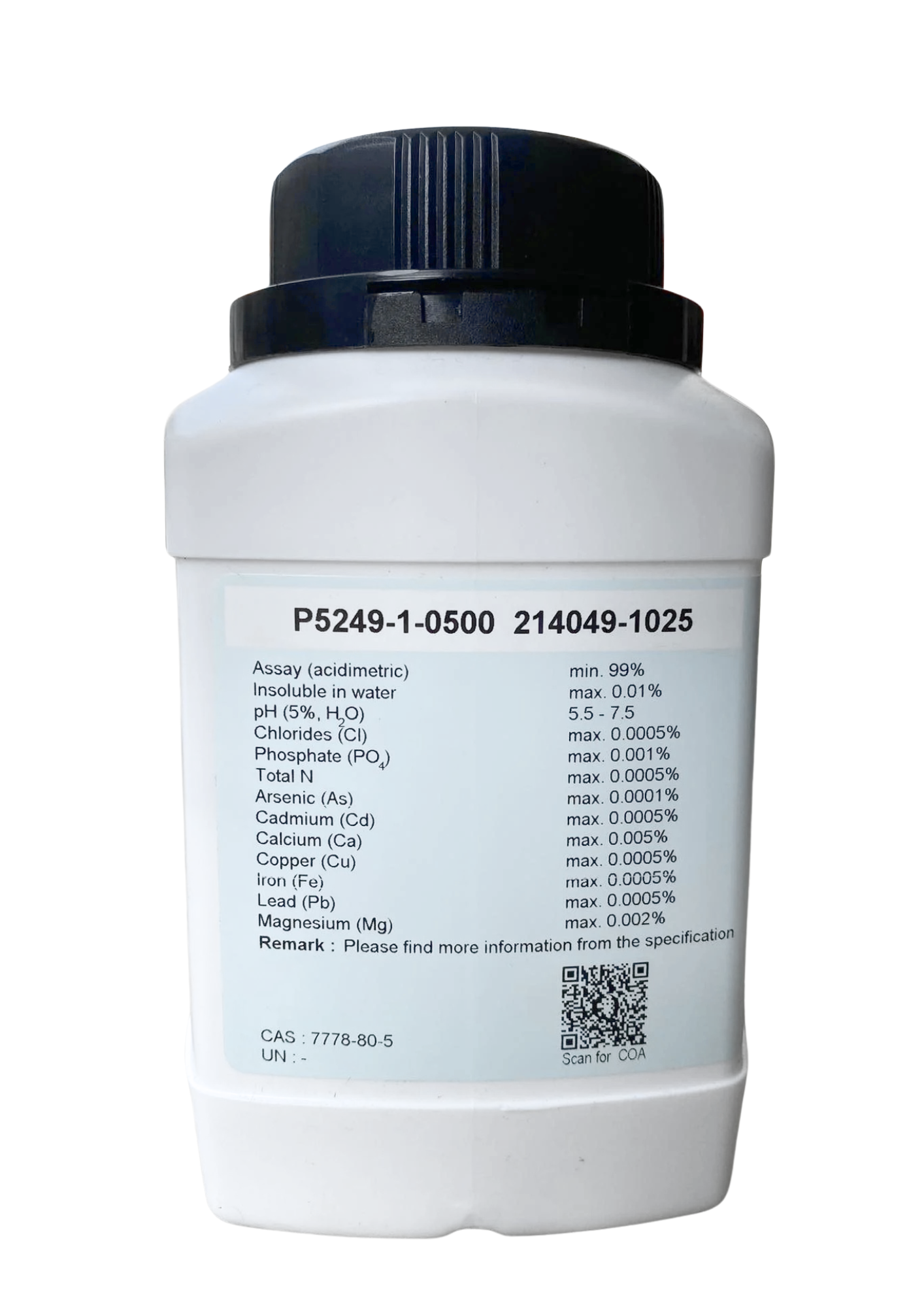
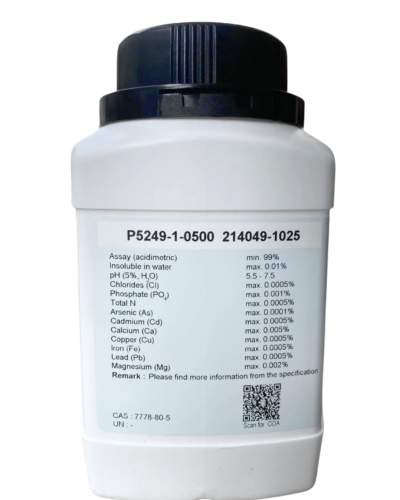
- Grade: Analytical Reagent High Purity Grade (AR Grade / ACS Grade) featuring a certified chemical assay of not less than 99.0 percent in a 1,000 g (1 kg) laboratory package. Manufactured, multi-crystallized, and purified under strict QReC global laboratory specifications without anti-caking conditioning additives. Moisture content and loss on drying are tightly controlled below 0.2 percent. Strictly tested to enforce minimal water-insoluble matter (strictly below 0.005 percent), alongside ultra-low ppm limits of chloride (chloride-free nutrient profile), nitrate, phosphate, nitrogen compounds, calcium, magnesium, and sodium. Trace heavy metals (such as iron, lead, copper, zinc, arsenic, and barium) are strictly maintained at minimal parts-per-million levels. Dry, uniform rhombic crystals dissolve cleanly in water to yield crystal-clear, neutral, particulate-free solutions. Packaged in a heavy-duty, moisture-barrier polymer container fitted with an airtight double hermetic seal.
- Physical Properties: Colorless transparent rhombic crystals or fine white crystalline powder. Odorless with a faint, bitter-saline taste. Thermodynamically stable in air under ambient conditions; non-hygroscopic and non-volatile solid. Extremely high melting point of approximately 1,067 to 1,069 degrees Celsius. Non-combustible inorganic salt. Aqueous solutions are practically neutral (pH approximately 5.5 to 8.5 for a 5 percent aqueous solution at room temperature).
- Solubility: Moderately soluble in water at room temperature (approximately 11 to 12 grams per 100 milliliters at 20 degrees Celsius; solubility escalates significantly in boiling water, exceeding 24 grams per 100 milliliters); soluble in glycerol; practically insoluble in ethanol, acetone, and carbon disulfide.
- Key Use: Universally utilized as the quintessential boiling-point elevating salt component (often formulated alongside copper sulfate or selenium catalysts in digestion salt tablets) in the classical Kjeldahl digestion method for total nitrogen and crude protein determinations across food, feed, grain, soil, and fertilizer testing; elevates the boiling temperature of concentrated sulfuric acid from 338 degrees Celsius up to 370 to 380 degrees Celsius, enabling rapid and complete oxidative digestion of refractory organic nitrogen matrices. Extensively applied as a premium, high-purity chloride-free potassium and sulfur nutrient donor in plant tissue culture media formulations (such as Murashige and Skoog / MS medium) and microbiological broths for chloride-sensitive crops and biological tissues. Heavily employed as an analytical salting-out precipitant for fractionating and recovering proteins, globulins, and enzymes in biochemical protocols. Serves as an analytical reference standard, background ionic strength regulator, and inorganic precursor for synthesizing potassium alum crystals and specialty potassium coordination compounds.
Safety & Hazards
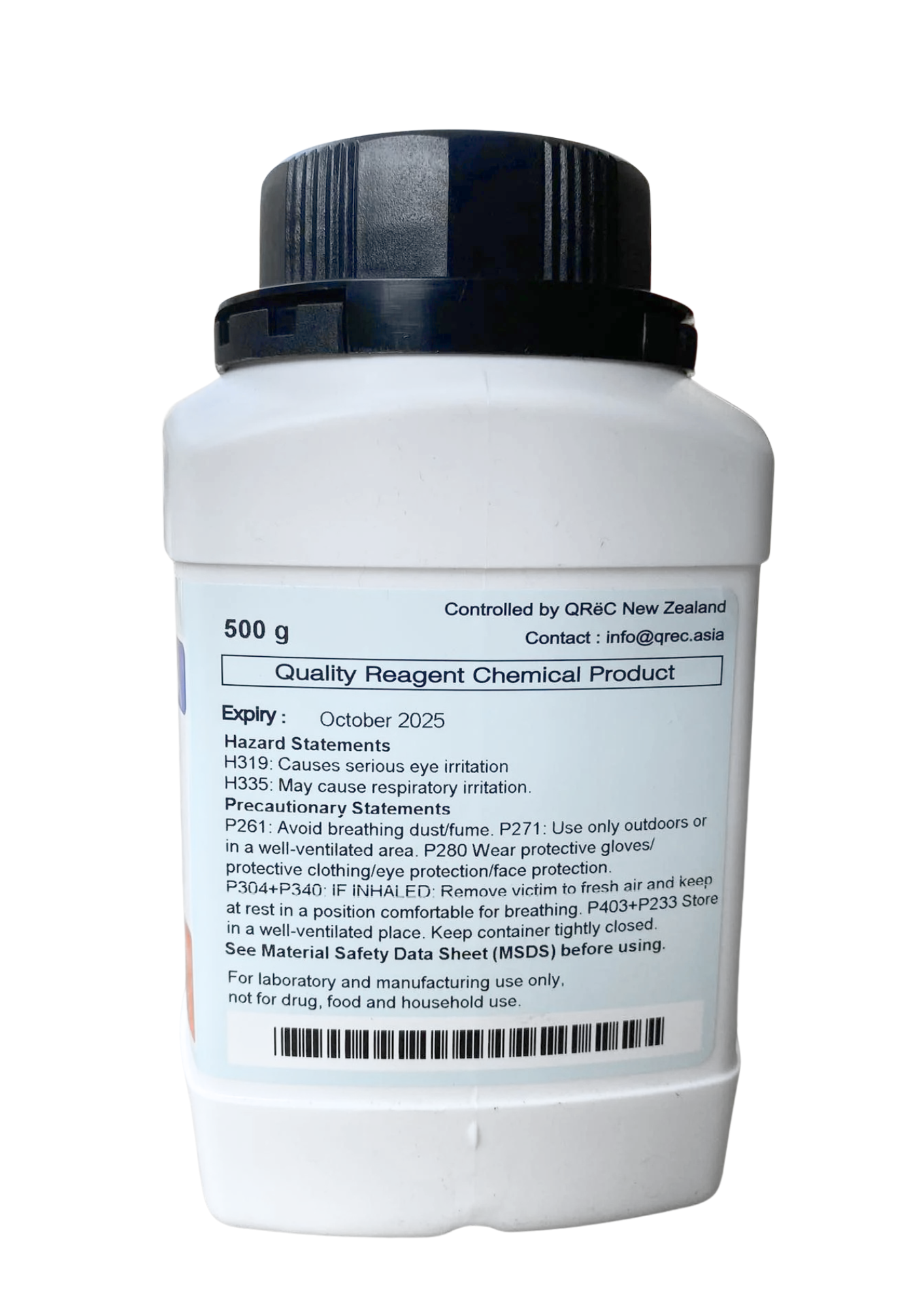
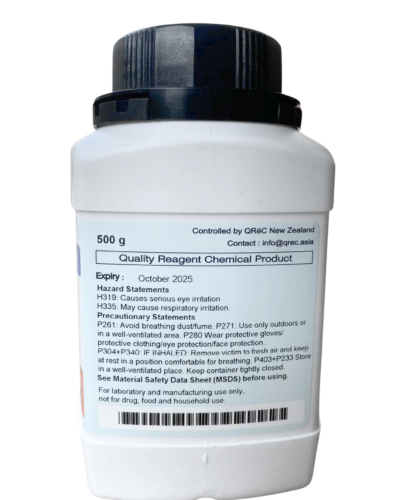
- Classification: Non-hazardous substance under standard international GHS criteria in routine laboratory handling. Exceptionally low acute toxicity profile; non-corrosive, non-volatile, and non-flammable solid. Particulate dust may exert mild mechanical irritation to ocular, dermal, and upper respiratory tissues.
- Health Risks: Direct ocular contact causes transient mechanical stinging, conjunctival redness, and tearing. Prolonged dermal contact can cause minor dryness or superficial skin irritation. Inhalation of airborne dust irritates the mucous membranes of the respiratory tract, inducing coughing and sneezing. Ingestion of excessive quantities may provoke gastrointestinal irritation, abdominal discomfort, nausea, vomiting, and mild osmotic saline diarrhea characteristic of sulfate salts.
- First Aid Measures: Flush affected eyes thoroughly with clean running water for at least 10 to 15 minutes while stripping contaminated clothing; remove contact lenses promptly and seek medical advice if irritation persists. Wash exposed skin with soap and water. In case of dust inhalation, relocate the individual to fresh air. If accidentally swallowed in substantial amounts, rinse mouth thoroughly, administer water in moderate amounts, and seek medical attention if gastric discomfort persists.
Handling & Storage
- Storage: Exceptionally Stable Analytical Inorganic Salt. Must be preserved in its original, tightly closed QReC container. Store in a clean, strictly dry, cool, and well-ventilated dedicated chemical store at controlled temperatures (below 25 to 30 degrees Celsius), sheltered from atmospheric humidity and direct sunlight. Keep strictly segregated from strong oxidizing agents, strong mineral acids, and heavy metal cations that precipitate insoluble sulfates (such as barium, lead, strontium, and calcium).
- Precautions: Standard laboratory PPE is mandatory, including protective gloves, safety glasses, and a protective lab coat. Re-seal container cap tightly immediately after sampling to prevent airborne contamination. Minimize dust generation during weighing and dispensing.