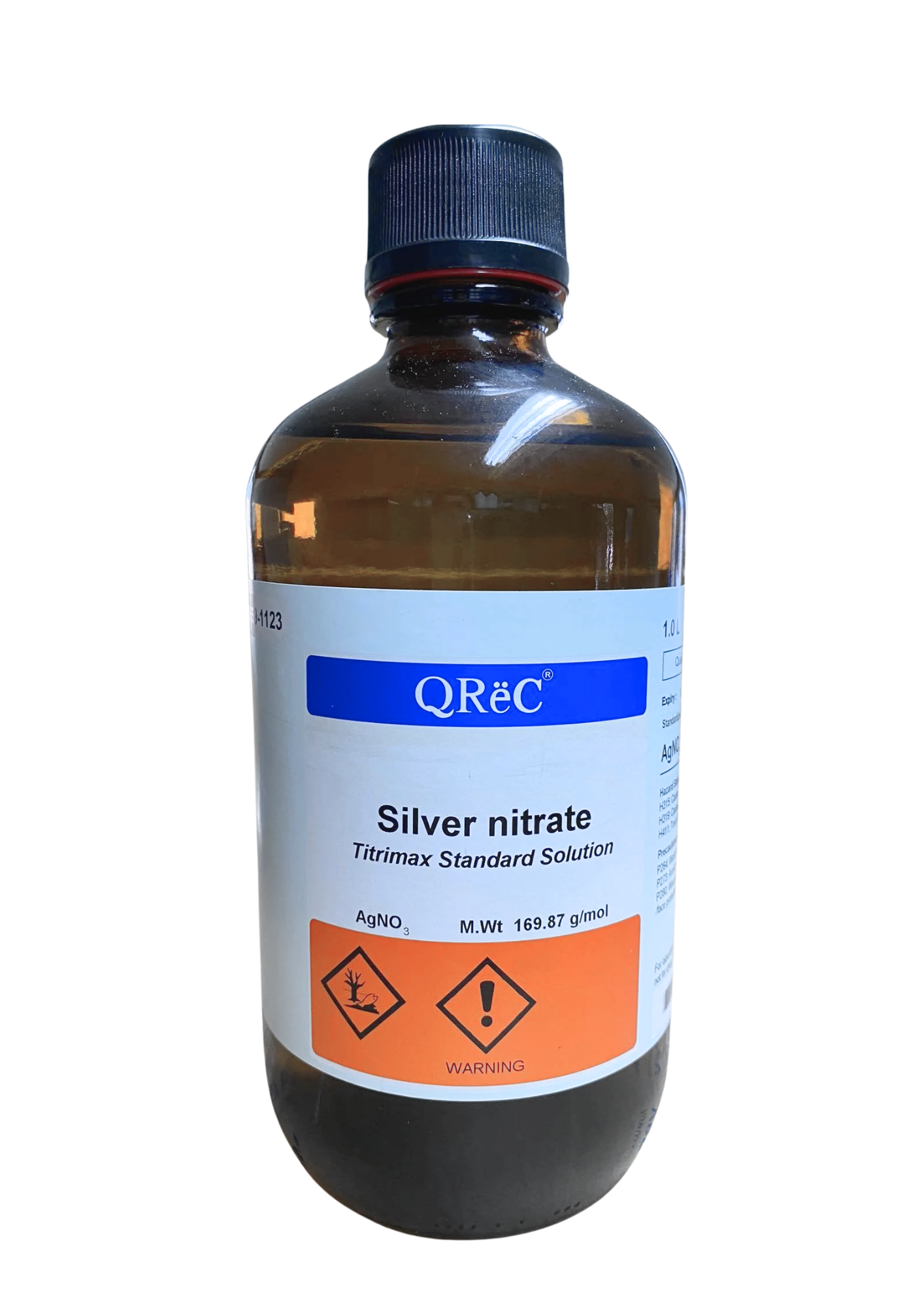
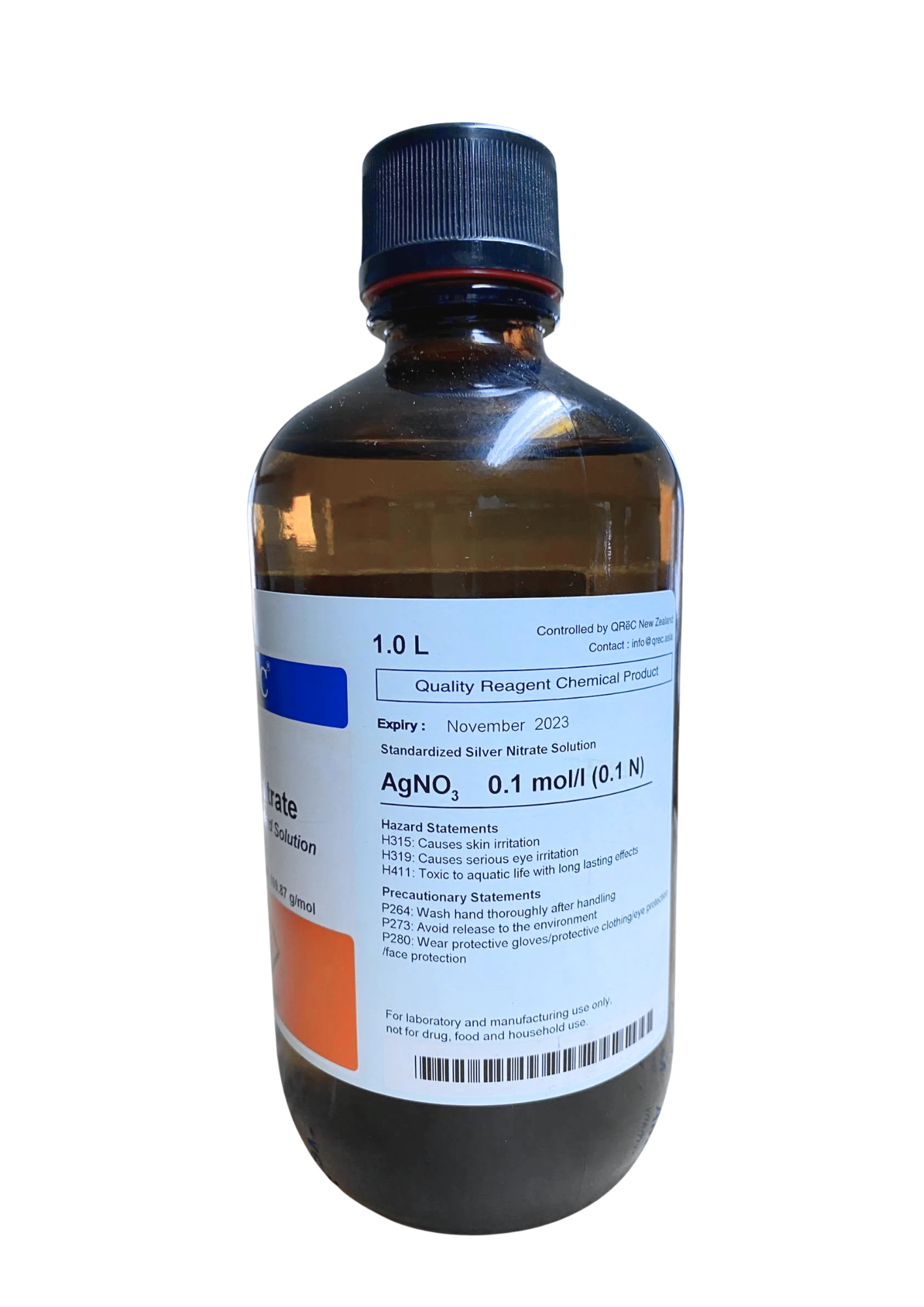
Silver nitrate solution 0.1N (0.1 mol/L) or Standard volumetric silver nitrate solution
Product Overview & Quality
- Product Name: Silver nitrate solution 0.1N (0.1 mol/L) or Standard volumetric silver nitrate solution
- Brand: QReC (Product Code: QR-S3059-0-1001)
- Grade: Certified Volumetric Standard Solution (AR Grade) formulated from high-purity analytical reagent silver nitrate crystals and ultrapure deionized water. Standardized and calibrated under strict QReC global laboratory specifications at a controlled reference temperature of 20 degrees Celsius. Directly traceable to certified Primary Standard Reference Materials (NIST Traceable sodium chloride). Features a certified normality factor strictly maintained within 0.999 to 1.001, printed on the batch certificate and label. Enforces ultra-low ppm limits of foreign heavy metals, copper, sulfate, and photoreactive impurities. Delivers immediate, ready-to-use volumetric accuracy, eliminating labor-intensive powder weighing and standardization against primary standards. Packaged in a heavy-duty, light-protective amber glass bottle equipped with a hermetic seal.
- Physical Properties: Clear, colorless liquid. Odorless. Highly photosensitive; exposure to ambient actinic light or organic matter catalyzes photochemical reduction of silver ions to metallic silver particulates, gradually turning the solution gray, purple-brown, or black. Non-flammable. Aqueous solution is slightly acidic to neutral (pH approximately 4.5 to 6.0). Corrosive to metals and irritating to biological tissues.
- Solubility: Completely miscible in all proportions with water (instantaneously reacts with dissolved chloride, bromide, or iodide anions to form dense, insoluble silver halide precipitates).
- Key Use: Universally utilized as the standard titrant in burettes for argentometric precipitation titrations to quantify chloride ions, total salinity, and sodium chloride content across food, dairy, meat products, processed foods, and animal feed. Extensively applied in water quality testing laboratories for measuring chloride concentrations in potable water, groundwater, industrial boiler feed, and wastewater streams via the Mohr method (potassium chromate indicator) or Fajans method (adsorption indicator). Routinely used in the Volhard titration method for indirect determination of halides and cyanides under acidic matrices. Serves as a calibration standard for verifying automated potentiometric titrators and chloride analyzers. Employed as an analytical reagent for qualitative halogen confirmation.
Safety & Hazards (Corrosive to Metals, Skin Staining & Severe Aquatic Toxicity)
- Classification: May be corrosive to metals. Causes skin irritation. Causes serious eye irritation. Very toxic to aquatic life with long lasting effects
- Health Risks: Direct ocular contact triggers acute burning stinging, conjunctival redness, corneal irritation, and lacrimation. Dermal contact produces localized irritation, dryness, and “Photochemical Argyria Staining: Contact with skin followed by light exposure reduces ionic silver into stubborn, indelible black or dark brown metallic silver stains on the epidermis, which cannot be washed away and persist until natural epithelial turnover occurs over 1 to 2 weeks.” Inhalation of mists causes upper respiratory tract irritation, coughing, and sneezing. Ingestion induces acute gastrointestinal irritation, caustic astringent metallic taste, severe abdominal pain, vomiting, diarrhea, and systemic argyria or renal complications upon massive absorption.
- First Aid Measures: Immediately flush affected eyes with an abundant stream of clean flowing water for at least 15 minutes while stripping contaminated clothing; remove contact lenses promptly. Wash exposed skin thoroughly with soap and water (black stains cannot be removed chemically once formed). In case of mist inhalation, relocate the individual to fresh air. If accidentally swallowed, do NOT induce vomiting; thoroughly rinse mouth, administer dilute sodium chloride solution (table salt water) or fresh water to precipitate ionic silver as insoluble silver chloride, and seek immediate medical attention.
Handling & Storage
- Storage: Extremely Photosensitive Volumetric Standard and Severe Aquatic Pollutant. Exposure to actinic light degrades titer concentration and causes black silver precipitation. Must be preserved in its original, tightly closed QReC amber glass container. Store in a dark, clean, dry, cool, and well-ventilated dedicated chemical store at controlled temperatures (between 15 and 25 degrees Celsius), sheltered from direct light and thermal sources. Keep strictly segregated from organic solvents, strong alkalis, ammonia solutions (alkaline ammoniacal silver mixtures can form explosive fulminating silver deposits upon drying), and strong reducing agents.
- Precautions: Standard laboratory PPE is mandatory, including protective nitrile gloves, splash-proof safety goggles, and a protective lab coat. “Critical Analytical Protocol: Utilize amber burettes during titrations to prevent light-induced decomposition during measurement, and NEVER return unused portions from burettes or transfer vessels back into the stock bottle.” Never discharge silver residues into municipal drains; collect all rinsates for certified silver recovery or hazardous metal waste disposal.