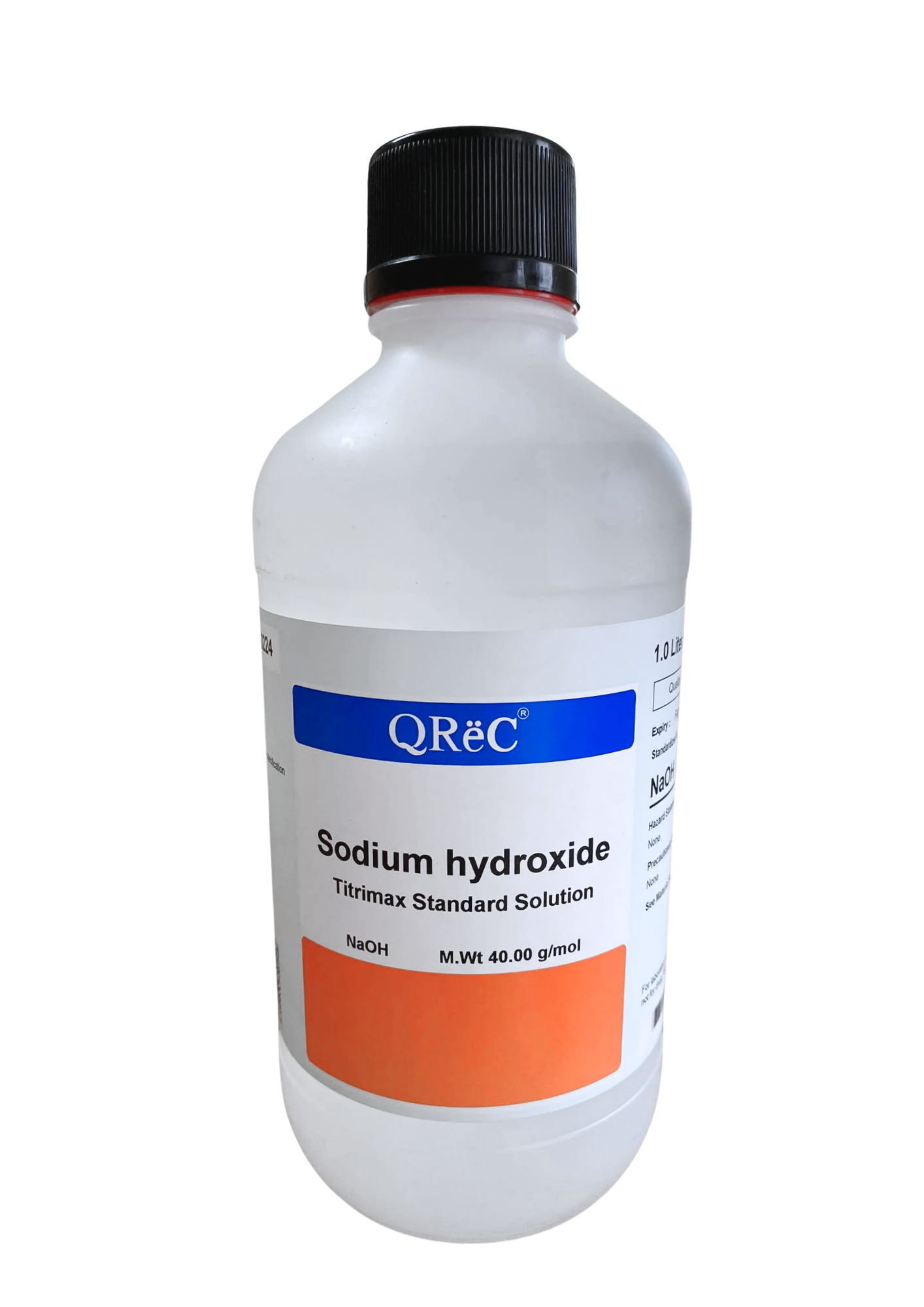
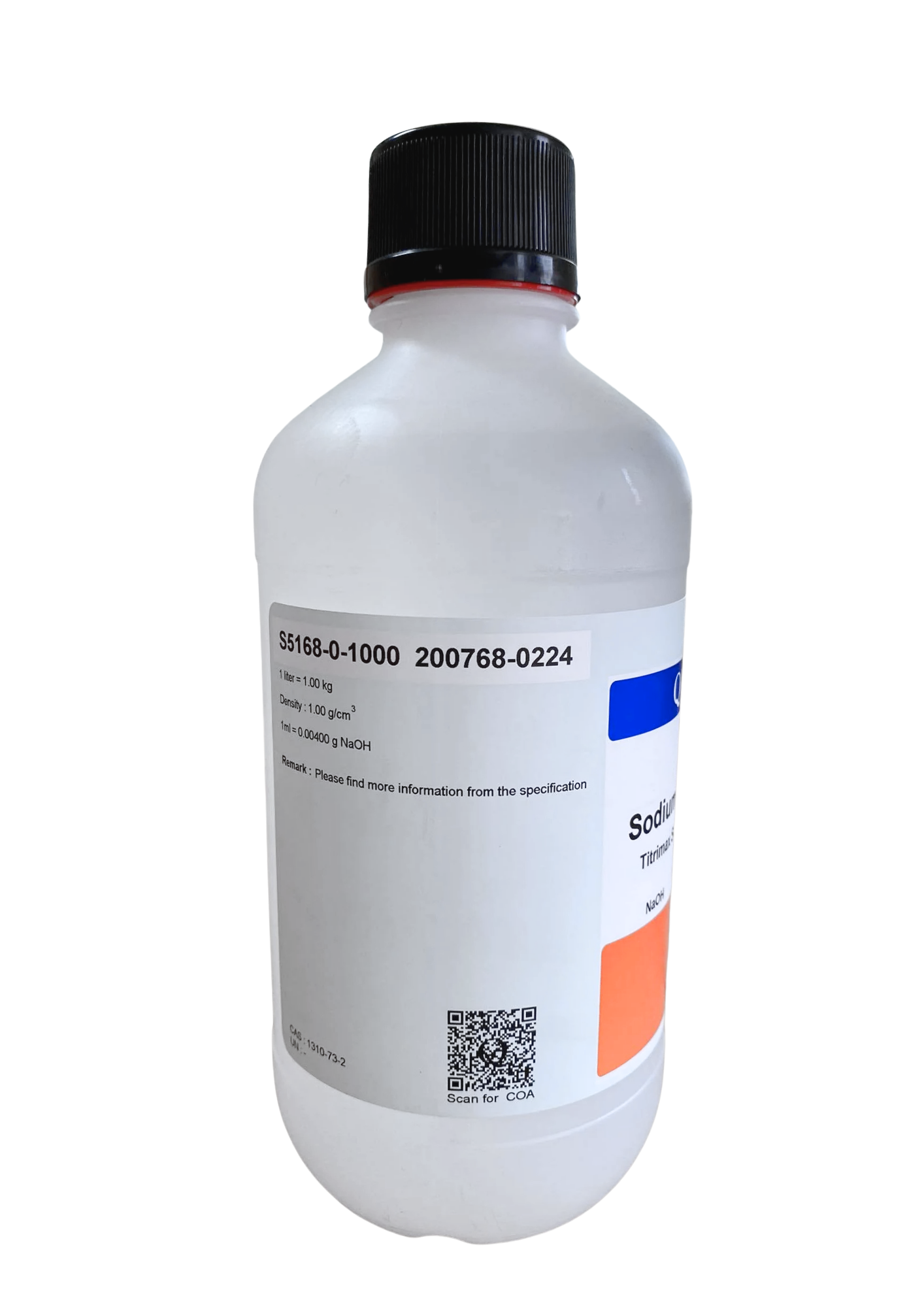
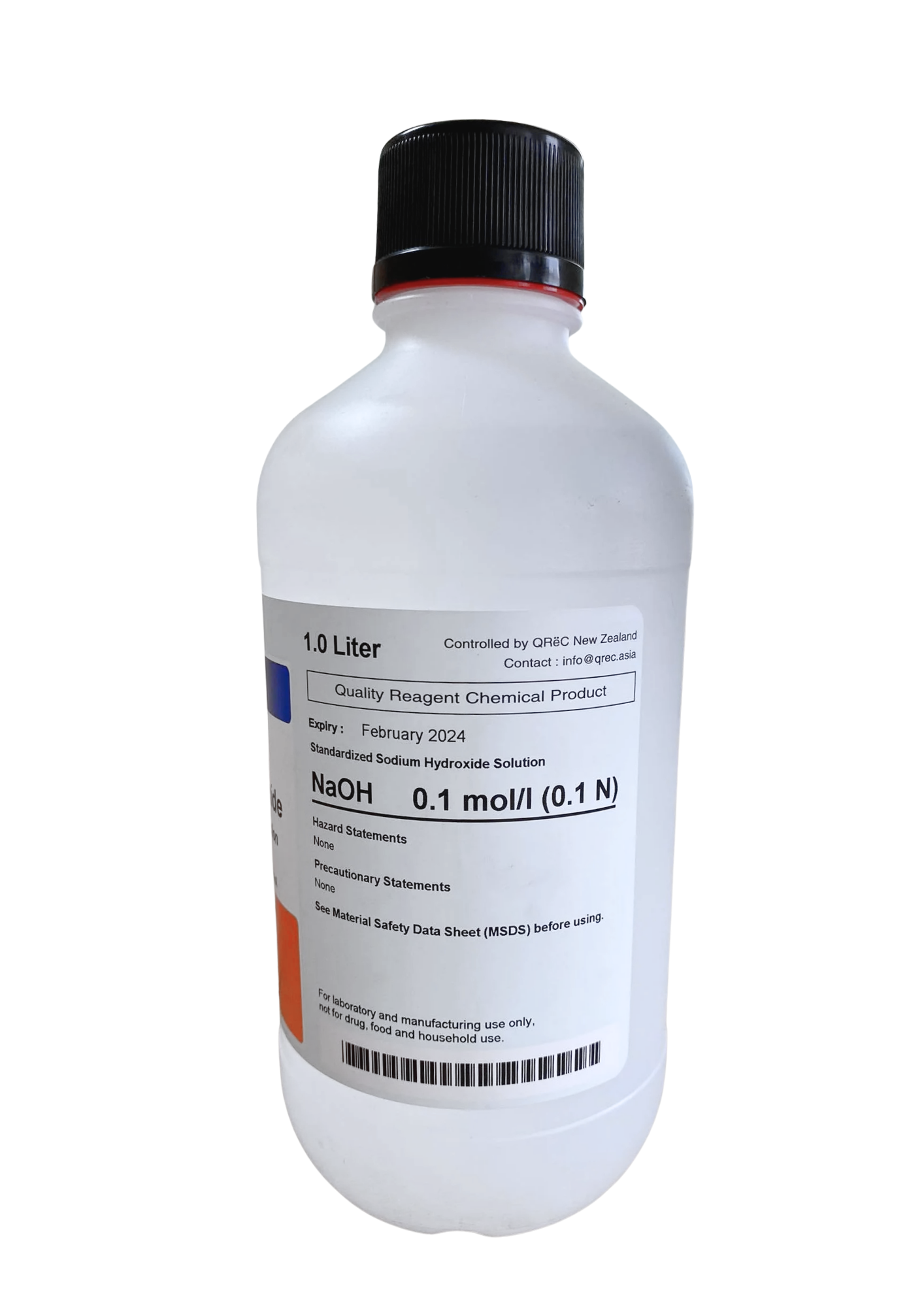
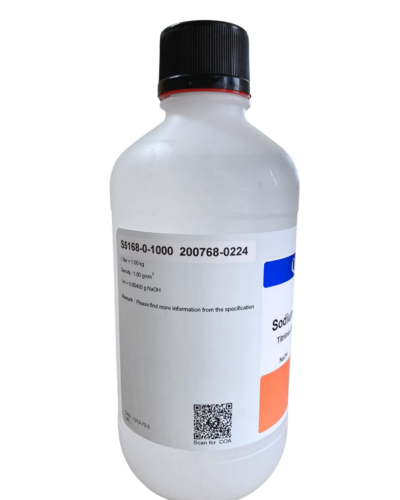
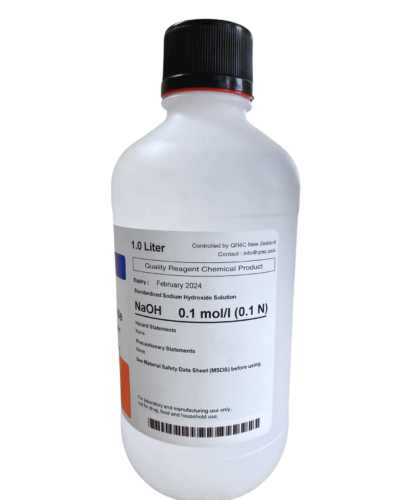
Sodium hydroxide solution 0.1 mol/L or Standard caustic soda solution or Standard sodium hydrate solution for titration
Product Overview & Quality
- Product Name: Sodium hydroxide solution 0.1N or 0.1 mol/L or Standard Volumetric Sodium Hydroxide Solution or Caustic soda volumetric solution 0.1 Normal
- Brand: QReC (Product Code: QR-S5168-0-1000)
- Grade: Volumetric Standard Analytical Grade (AR Grade) precisely standardized to an exact titer factor within 0.999 to 1.001 at 20 degrees Celsius, certified to four decimal places. Formulated and quality-controlled under strict QReC global laboratory specifications, directly traceable to National Institute of Standards and Technology (NIST) potassium hydrogen phthalate primary reference material. Compounded from high-purity, low-carbonate sodium hydroxide pellets and degassed, carbon dioxide-free deionized water. Carbonate contamination is rigorously minimized to prevent alkaline buffer errors. Trace heavy metals and silica are controlled at minimal parts-per-million levels. Clear, particulate-free volumetric solution packaged in a heavy-duty, alkali-resistant 1,000 mL (1 L) high-density polyethylene (HDPE) container fitted with an airtight tamper-evident hermetic seal to block atmospheric carbon dioxide uptake and eliminate glass leaching.
- Physical Properties: Clear, colorless, odorless, non-viscous liquid. Stable in airtight polymer containers under ambient conditions. Non-combustible aqueous solution. Strongly alkaline (pH approximately 13.0 at room temperature). Exhibits a characteristic slippery, soapy feel on skin contact and possesses corrosive action toward biological tissues and amphoteric metals (such as aluminum and zinc).
- Solubility: Fully miscible with water in all proportions; completely miscible with methanol and ethanol.
- Key Use: Universally utilized as the standard Primary Titrant in volumetric acid-base neutralization titrations for determining inorganic acids, organic acids, and Total Titratable Acidity (TTA) across foodstuffs, fruit juices, dairy products, wine, and vinegar using phenolphthalein indicator at the faint pink endpoint. Heavily applied in analyzing the Acid Value and free fatty acid content of edible oils, animal fats, biodiesel, and petroleum lubricants according to standardized ASTM and ISO methods. Extensively employed in environmental water testing laboratories for measuring total mineral and organic acidity in industrial effluents and environmental surface waters. Serves as a primary reference standard for standardizing secondary acid titrants (such as hydrochloric and sulfuric acid solutions). Widely used in pharmaceutical assay testing, compendial quality control, and calibration of automated potentiometric titration systems.
Safety & Hazards (Serious Eye Damage, Skin Irritant & Corrosive to Metals)
- Classification: Causes serious eye damage (Eye Damage Category 1). Causes skin irritation (Skin Irritation Category 2). May be corrosive to metals (Corrosive to Metals Category 1).
- Health Risks: Aqueous matrix is strongly basic. Direct ocular contact triggers rapid saponification of corneal lipids, severe chemical stinging, intense conjunctival erythema, corneal clouding, and risk of permanent visual loss. Dermal exposure hydrolyzes cutaneous keratin, causing a slippery feel, localized erythema, burning pain, cracking, and contact dermatitis. Inhalation of airborne mists irritates the mucous membranes of the respiratory tract, inducing coughing, sneezing, and throat irritation. Ingestion produces immediate chemical irritation and superficial caustic burns to the oral cavity, pharynx, esophagus, and stomach, accompanied by abdominal pain, nausea, vomiting, and diarrhea.
- First Aid Measures: Immediately flush affected eyes with an abundant, continuous stream of clean flowing water for at least 15 to 20 minutes while holding eyelids open and stripping contaminated garments; remove contact lenses promptly and seek immediate emergency ophthalmological care. Wash exposed skin thoroughly with running water for at least 15 minutes until the slippery feel is completely eliminated, then wash with mild soap. In case of mist inhalation, relocate the individual to fresh air. If accidentally swallowed, do NOT induce vomiting and never administer acidic neutralizers; thoroughly rinse mouth, administer moderate quantities of fresh water or milk to dilute, and seek prompt emergency medical attention.
Handling & Storage
- Storage: Carbon Dioxide-Sensitive Standard Alkaline Solution. Atmospheric carbon dioxide exposure results in carbonate formation, which alters the effective titer factor and compromises volumetric accuracy. Must be preserved in its original, tightly closed QReC HDPE container (never transfer to glass bottles with ground-glass stoppers, as caustic alkali will fuse the stopper shut). Store in a clean, strictly dry, cool, and well-ventilated dedicated chemical store at controlled temperatures (between 15 and 25 degrees Celsius), sheltered from atmospheric air and direct sunlight. Keep strictly segregated from strong mineral acids (violent exothermic neutralization occurs upon contact), strong oxidizers, aluminum, zinc, tin (which generate flammable hydrogen gas), and ammonium salts.
- Precautions: Standard laboratory PPE is mandatory, including protective nitrile gloves, splash-proof safety goggles, and a protective lab coat. “Technical Recommendation: When connecting to an automated titrator or benchtop reservoir burette, install an absorption tube filled with soda lime on the air vent to prevent atmospheric carbon dioxide absorption and preserve certified volumetric titer accuracy over time.” Re-seal container cap tightly immediately after dispensing. Neutralize alkaline residues prior to disposal; never discharge unneutralized caustic solutions into municipal sewer systems.