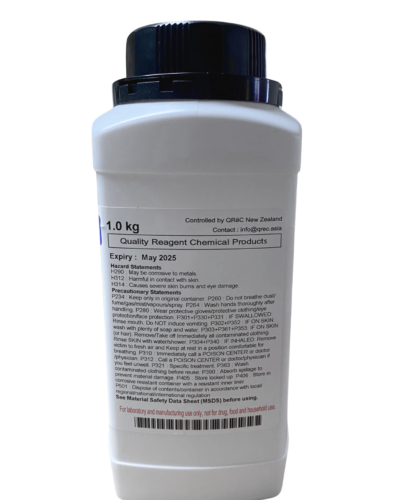
Sodium hydroxide Pellets 99% or Caustic soda or Sodium hydrate
Product Overview & Quality
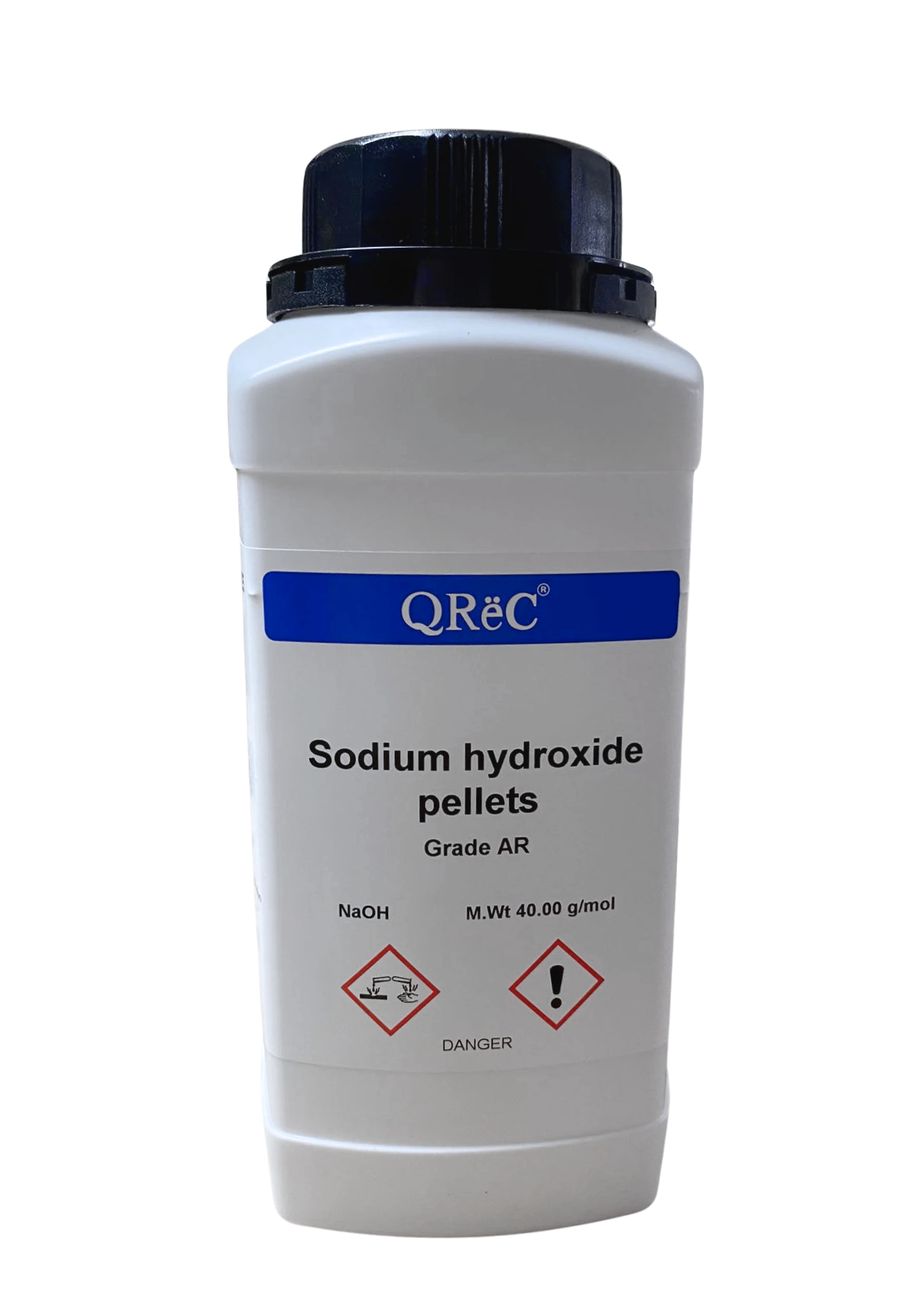
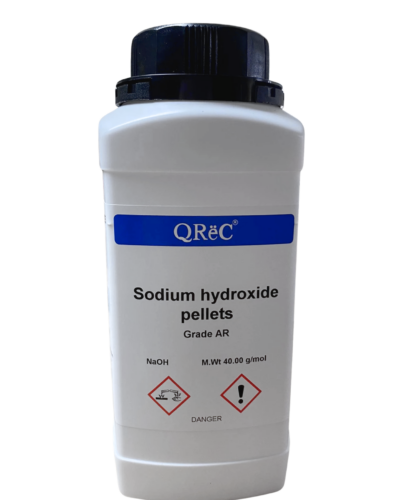
- Product Name: Sodium hydroxide Pellets 99% or Caustic soda or Sodium hydrate
- Brand: QReC (Product Code: QR-S5158-1-1000)
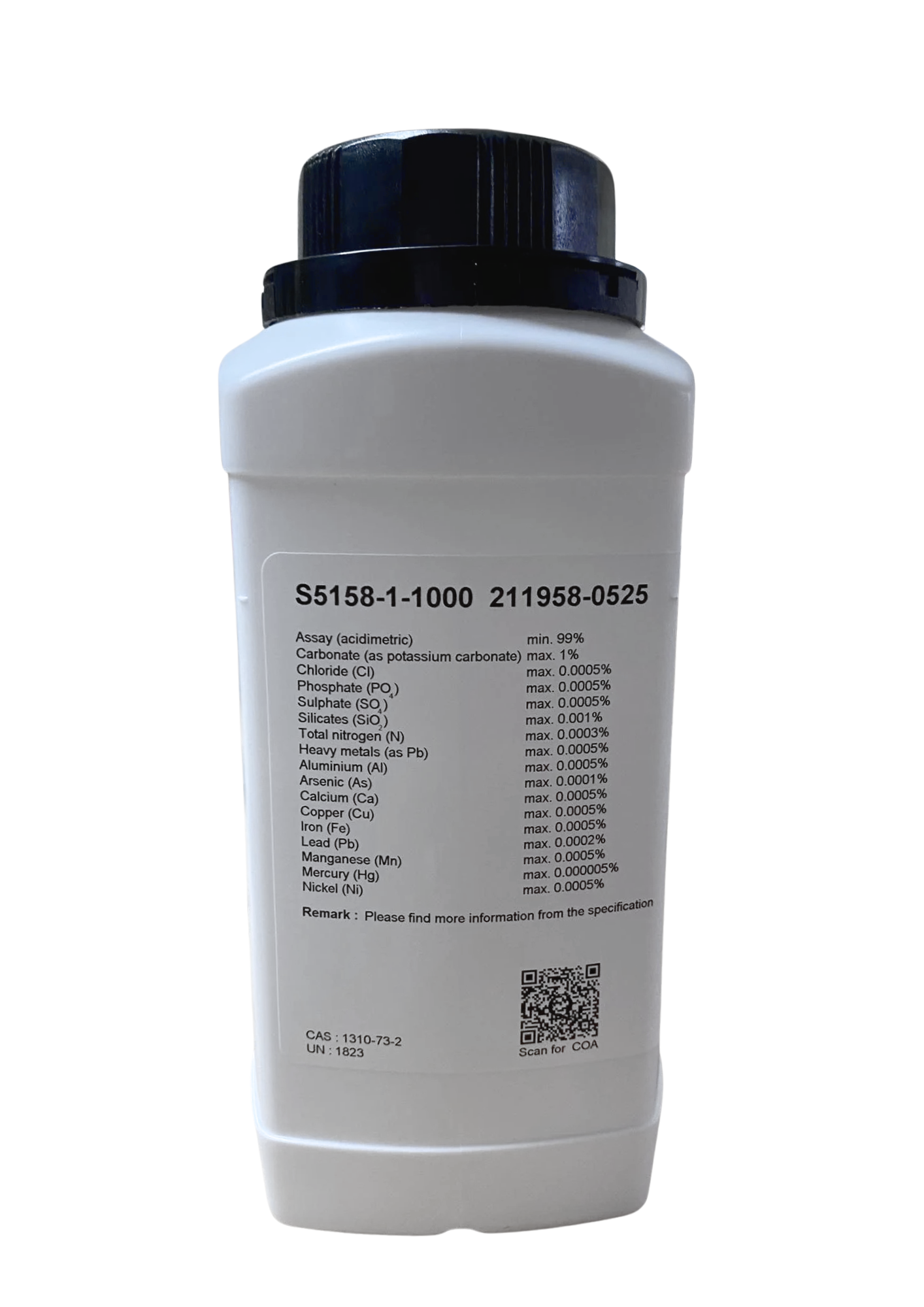
- Grade: Analytical Reagent (AR Grade) featuring a certified chemical assay of not less than 99 percent total alkali. Manufactured and pelletized under strict QReC global laboratory specifications. Rigorously regulated to maintain exceptionally low thresholds of atmospheric carbonate uptake (sodium carbonate strictly below 1 percent). Analyzed for minimal ppm levels of chlorides, sulfates, phosphates, silicates, total nitrogen, alkaline earth metals (calcium and magnesium), and trace heavy metals (such as iron, lead, nickel, copper, and arsenic). Dry, uniform, hard pellets dissolve cleanly and completely in water without turbidity or particulate residue. Packaged in a heavy-duty, high-density chemical-resistant polymer container featuring a double-seal closure for moisture and air exclusion.
- Physical Properties: White, opaque, hemispherical or oval-shaped pellets. Odorless. Extremely deliquescent, rapidly absorbing atmospheric moisture and carbon dioxide upon air exposure to form a concentrated caustic film. Non-combustible alone. Aqueous solutions are strongly basic, slippery to the touch, and exert severe, destructive corrosive action on biological tissues and light metals.
- Solubility: Readily and highly soluble in water (dissolution is a violently exothermic process releasing substantial heat); freely soluble in ethanol, methanol, and glycerol; insoluble in diethyl ether.
- Key Use: Heavily utilized as the foundational primary volumetric reagent for preparing standardized alkaline titrants in acid-base quantitative titrations across pharmaceutical, food, and environmental testing. Extensively applied as a dependable pH adjusting agent and alkaline buffer component in chemical, biochemical, and clinical assays. Widely used for precipitation of metal hydroxides in qualitative inorganic schemes and gravimetric analytical determinations. Essential in molecular biology for nucleic acid extraction protocols, notably alkaline lysis procedures for bacterial plasmid isolation by denaturing chromosomal DNA and cellular proteins. Widely used for the saponification and hydrolysis of fats, oils, and esters, and serves as an effective alkaline degreasing and cleaning agent for persistent organic residue on laboratory glassware.
Safety & Hazards (Critical, Severe Corrosive & Tissue Destruction)
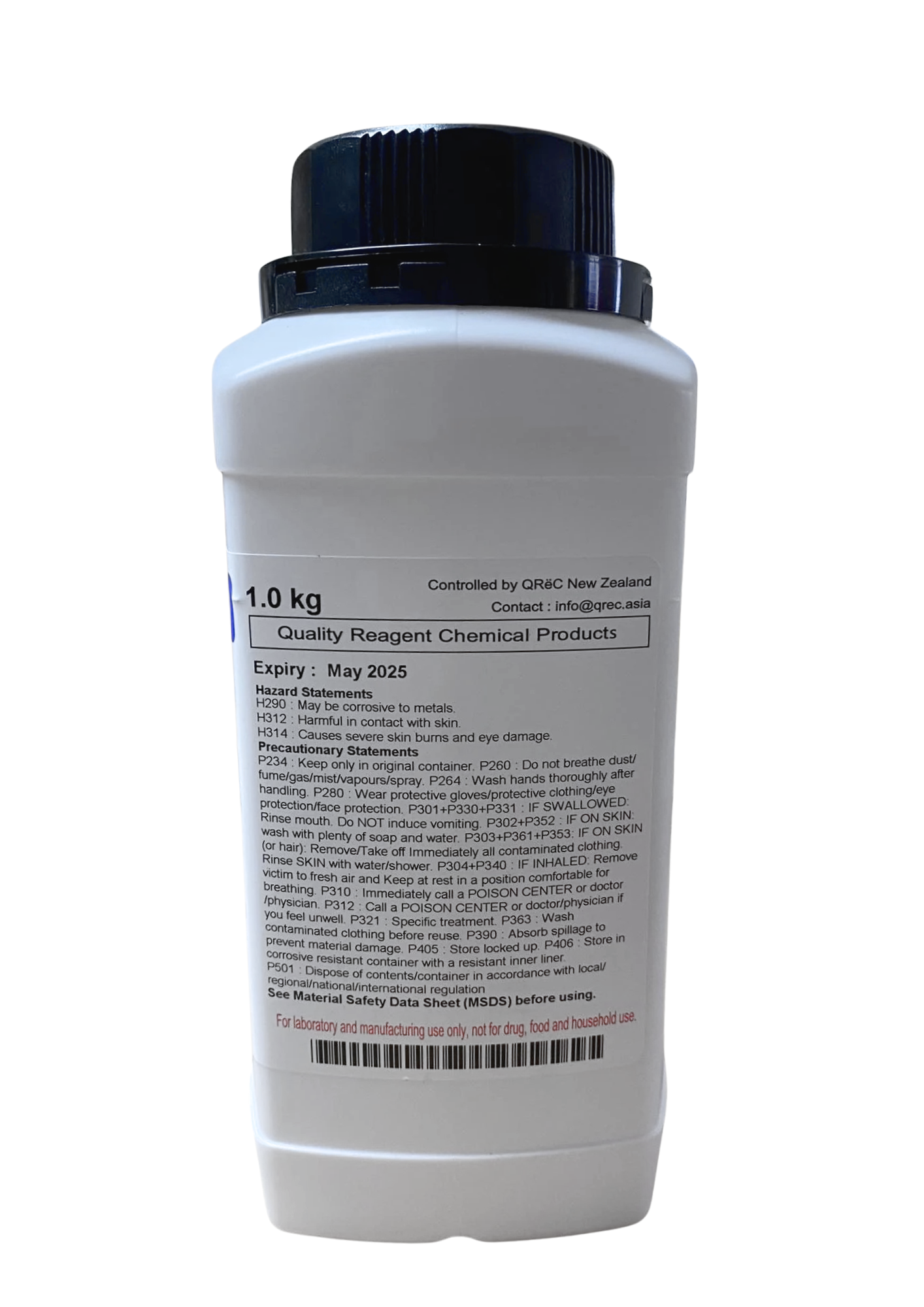
- Classification: Causes severe skin burns and eye damage. Causes serious eye damage. May be corrosive to metals. Harmful if swallowed.
- Health Risks: As a strong alkali, sodium hydroxide causes destructive liquefaction necrosis by saponifying cellular lipids and solubilizing tissue proteins, allowing rapid and deep penetration into biological tissue. Direct ocular exposure triggers instantaneous corneal opacification, deep ulceration, conjunctival burns, and permanent blindness. Dermal contact induces deep, penetrating chemical burns, necrotic sloughing, severe ulceration, and intractable pain. Inhalation of particulate dust or caustic aerosols severely corrodes the respiratory tract, inducing violent coughing, choking, dyspnea, chemical bronchitis, and acute pulmonary edema. Ingestion causes catastrophic caustic perforation of the oral cavity, pharynx, esophagus, and stomach, accompanied by massive internal hemorrhaging, shock, and potentially fatal systemic collapse.
- First Aid Measures: Immediately flush affected eyes or skin with an abundant stream of clean flowing water for at least 15 to 20 minutes while stripping all contaminated garments. In case of dust inhalation, rapidly transfer the victim to fresh air. If accidentally swallowed, do NOT induce vomiting and do NOT attempt acid neutralization; thoroughly rinse mouth, administer water in moderate amounts if conscious, and seek immediate, urgent emergency medical attention.
Handling & Storage
- Storage: Extremely Deliquescent and Aggressive Alkaline Corrosive. Readily absorbs moisture and carbon dioxide to form inactive carbonates. Must be preserved in its original, tightly closed QReC plastic container. Store in a cool, strictly dry, and well-ventilated dedicated chemical store at stable room temperature (below 30 degrees Celsius), protected from humidity. Keep strictly segregated from moisture, water, strong mineral acids, strong oxidizers, and reactive metals (such as aluminum, zinc, and tin, with which it reacts aggressively to liberate highly flammable hydrogen gas).
- Precautions: Comprehensive specialized PPE is mandatory, including heavy alkali-resistant rubber or nitrile gloves, splash-proof safety goggles or a full-face safety shield, and a protective lab coat. “Critical Dissolution Protocol: Always add sodium hydroxide pellets slowly and incrementally to water with continuous stirring; NEVER pour water onto solid pellets, as localized boiling and violent splashing will occur due to intense exothermic heat generation.” Tighten container caps immediately after dispensing.