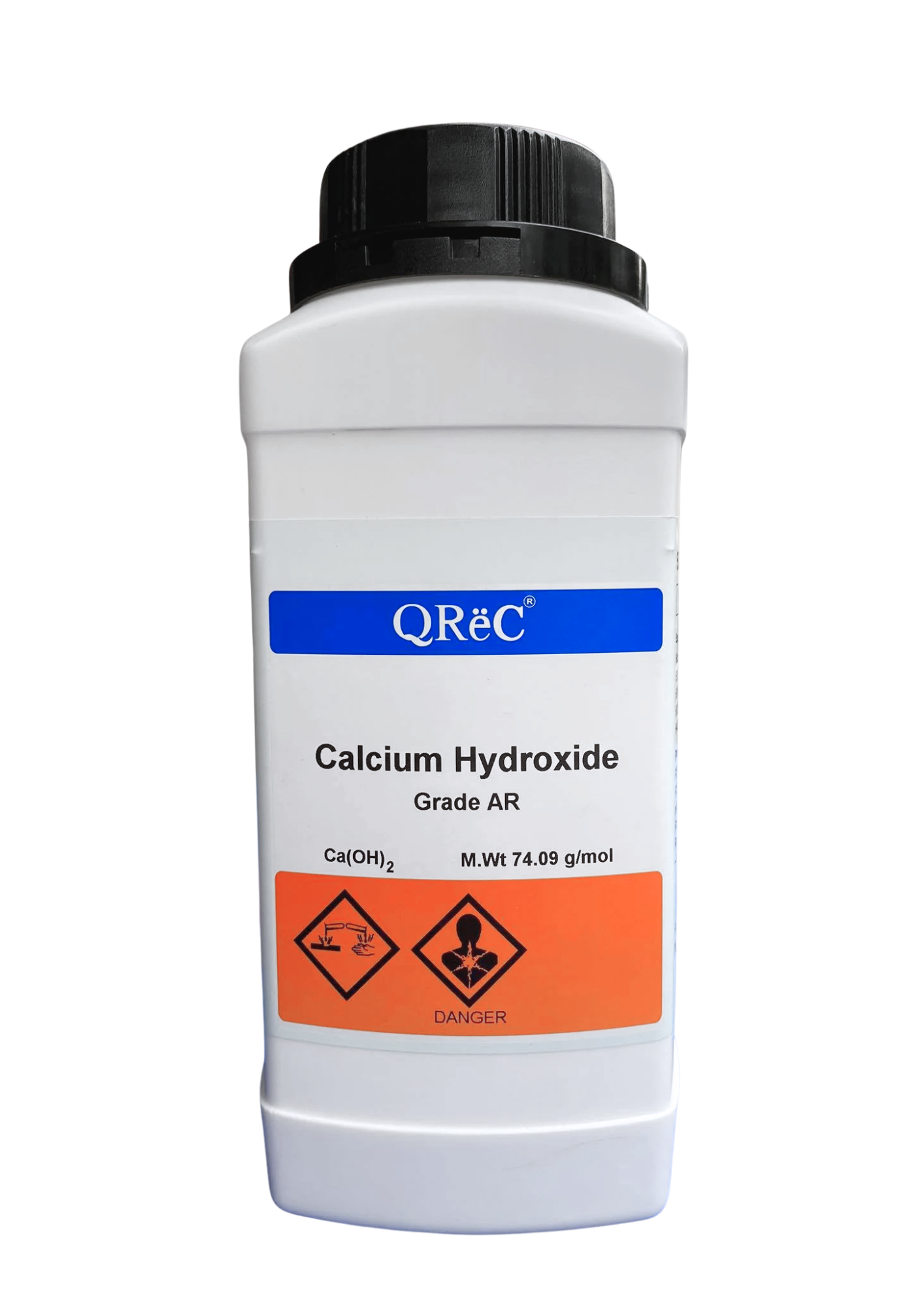
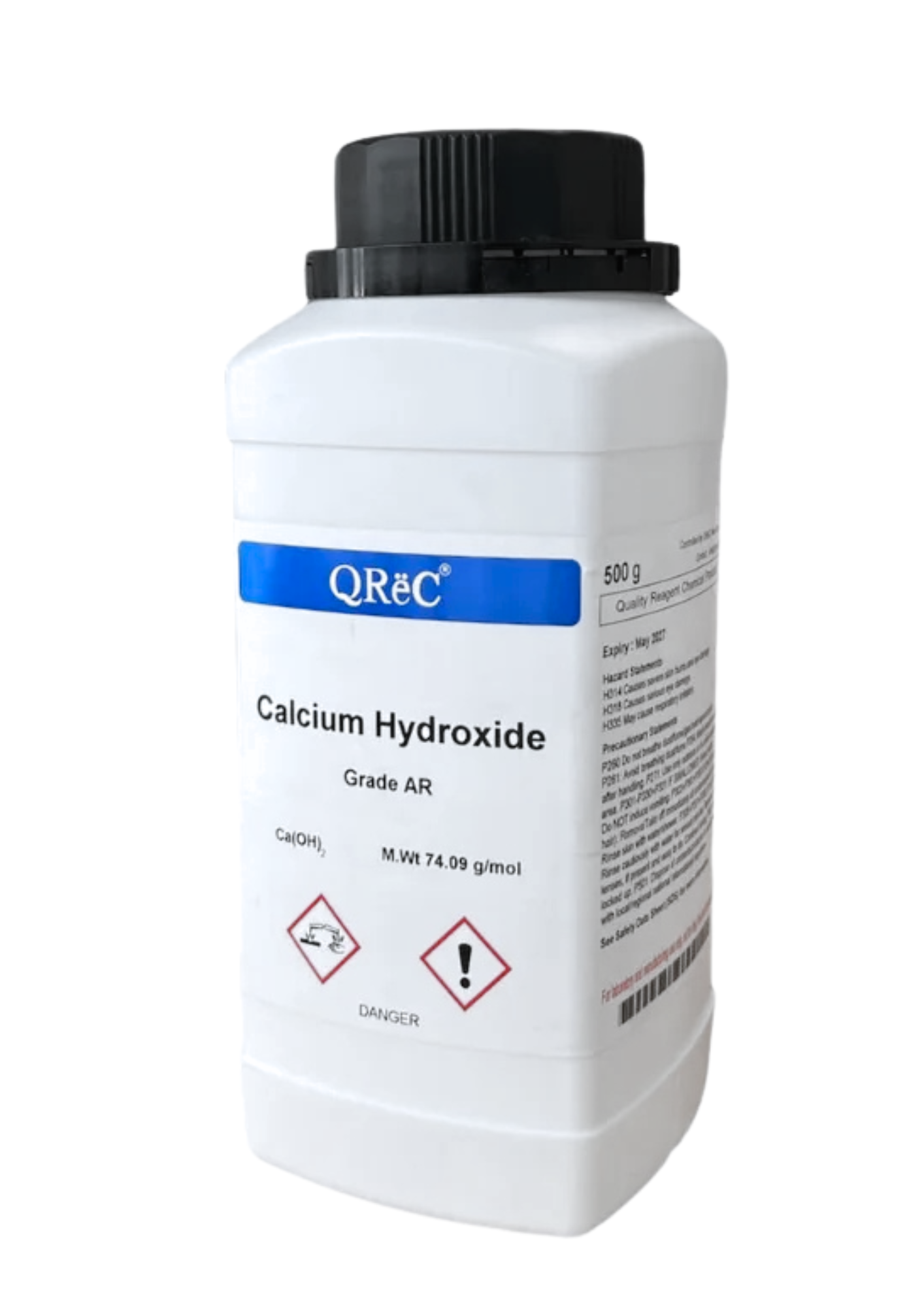
Calcium hydroxide 96% or Slaked lime or Hydrated lime or Calcium dihydroxide
Product Overview & Quality
- Product Name: Calcium hydroxide 96% or Slaked lime or Hydrated lime or Calcium dihydroxide
- Brand: QReC (Product Code: QR-C1073-1-0500)
- Grade: Analytical Reagent (AR Grade) featuring a high certified chemical assay of not less than 96.0 percent. Manufactured and refined under strict QReC global laboratory specifications. Strictly regulated to minimize carbonate formation (calcium carbonate). Rigorously analyzed to enforce minimal ppm limits of chloride, sulfate, hydrochloric acid-insoluble matter, silica, magnesium, alkali salts, and trace heavy metals (such as iron, lead, copper, arsenic, and zinc). Soft, uniform powder matrix yields a crystal-clear, sediment-free saturated limewater solution upon basic filtration. Packaged in a heavy-duty, chemical-resistant polymer container equipped with an airtight double-seal closure to prevent ambient carbon dioxide and moisture uptake.
- Physical Properties: Fine, soft, white powder. Odorless. Slowly absorbs atmospheric carbon dioxide to convert into calcium carbonate. Non-combustible inorganic base. Saturated aqueous solutions (limewater) exhibit strong basicity (pH approximately 12.4 to 12.6 at room temperature) and exert caustic irritant actions on biological tissues and ocular surfaces.
- Solubility: Sparingly soluble in water (approximately 0.17 grams per 100 milliliters at 20 degrees Celsius; exhibits retrograde solubility, becoming less soluble as temperature increases); insoluble portions form an opaque white suspension known as milk of lime; readily soluble in acids (with exothermic heat release) and aqueous glycerol solutions; practically insoluble in ethanol.
- Key Use: Heavily utilized to prepare saturated limewater solutions, the classical diagnostic analytical reagent for the qualitative detection of carbon dioxide gas (reacting instantly to produce a milky white calcium carbonate precipitate). Extensively applied as a strong alkaline neutralizer to neutralize acidic waste streams and regulate reaction pH in organic and inorganic synthesis. Universally employed as an effective precipitating agent for removing heavy metal cations, fluoride, phosphate, and sulfate in water treatment and environmental research. Serves as an inorganic base catalyst in specialty condensation reactions and as an essential calcium precursor in synthesizing hydroxyapatite and biomaterial cements for dental and orthopedic research. Frequently utilized in gas purification loops as an acidic gas scrubber for sequestering carbon dioxide and sulfur dioxide.
Safety & Hazards (Critical, Severe Eye Damage & Alkaline Irritant)
- Classification: Causes serious eye damage. Causes skin irritation. May cause respiratory irritation. Harmful if swallowed in substantial amounts.
- Health Risks: As a strong alkaline substance, it induces rapid liquefactive necrosis of sensitive mucosal tissues. Direct ocular contact triggers instantaneous caustic injury, severe conjunctival ulceration, corneal opacification, intense burning pain, and permanent blindness. Dermal contact in the presence of ambient perspiration generates caustic irritation, erythema, localized burning sensations, scaling, and potential alkaline burns. Inhalation of airborne particulate dust severely irritates mucous membranes of the respiratory tract, inducing violent sneezing, nasal stinging, coughing, dyspnea, and bronchial discomfort. Ingestion causes caustic irritation of the oral cavity, esophagus, and gastrointestinal tract, accompanied by severe abdominal cramping, nausea, and vomiting.
- First Aid Measures: Immediately flush affected eyes with an abundant stream of clean flowing water for at least 15 to 20 minutes while holding eyelids wide open to dislodge trapped particles; remove contact lenses promptly. Wash exposed skin thoroughly with soap and water. In case of dust inhalation, rapidly relocate the victim to fresh air. If accidentally swallowed, do NOT induce vomiting; thoroughly rinse mouth, administer water in moderate amounts if conscious, and seek immediate, urgent emergency medical attention.
Handling & Storage
- Storage: Carbon Dioxide-Sensitive Strong Alkaline Base. Atmospheric exposure causes spontaneous carbonation, forming calcium carbonate and diminishing effective alkalinity. Must be preserved in its original, tightly sealed QReC polymer container. Store in a clean, dry, cool, and well-ventilated dedicated chemical store at controlled temperatures (below 25 to 30 degrees Celsius), sheltered from excessive humidity and direct sunlight. Keep strictly segregated from strong mineral acids (which produce violent exothermic neutralization reactions), strong oxidizing agents, and reactive metals (such as aluminum).
- Precautions: Standard specialized PPE is mandatory, including chemical-resistant gloves, splash-proof safety goggles, a certified particulate dust mask, and a protective lab coat. Minimize dust generation during weighing and dispensing. Re-seal container cap tightly immediately after sampling to prevent atmospheric carbonation.