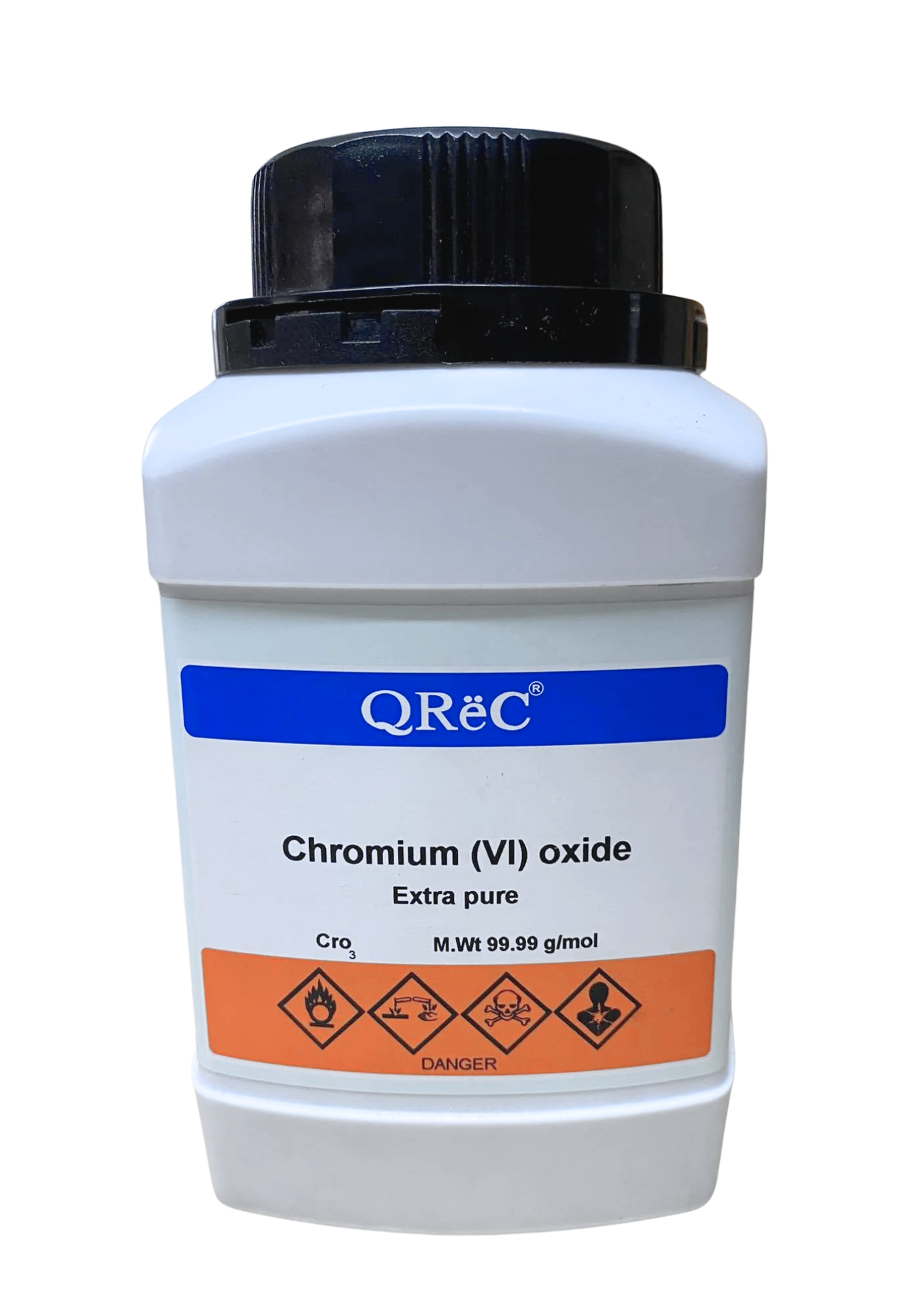
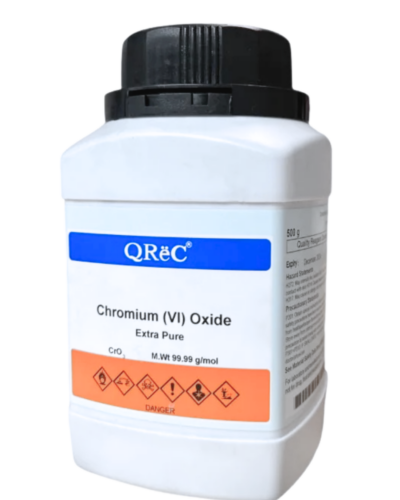
Chromium (VI) oxide 99% or Chromium trioxide or Chromic anhydride
Product Overview & Quality
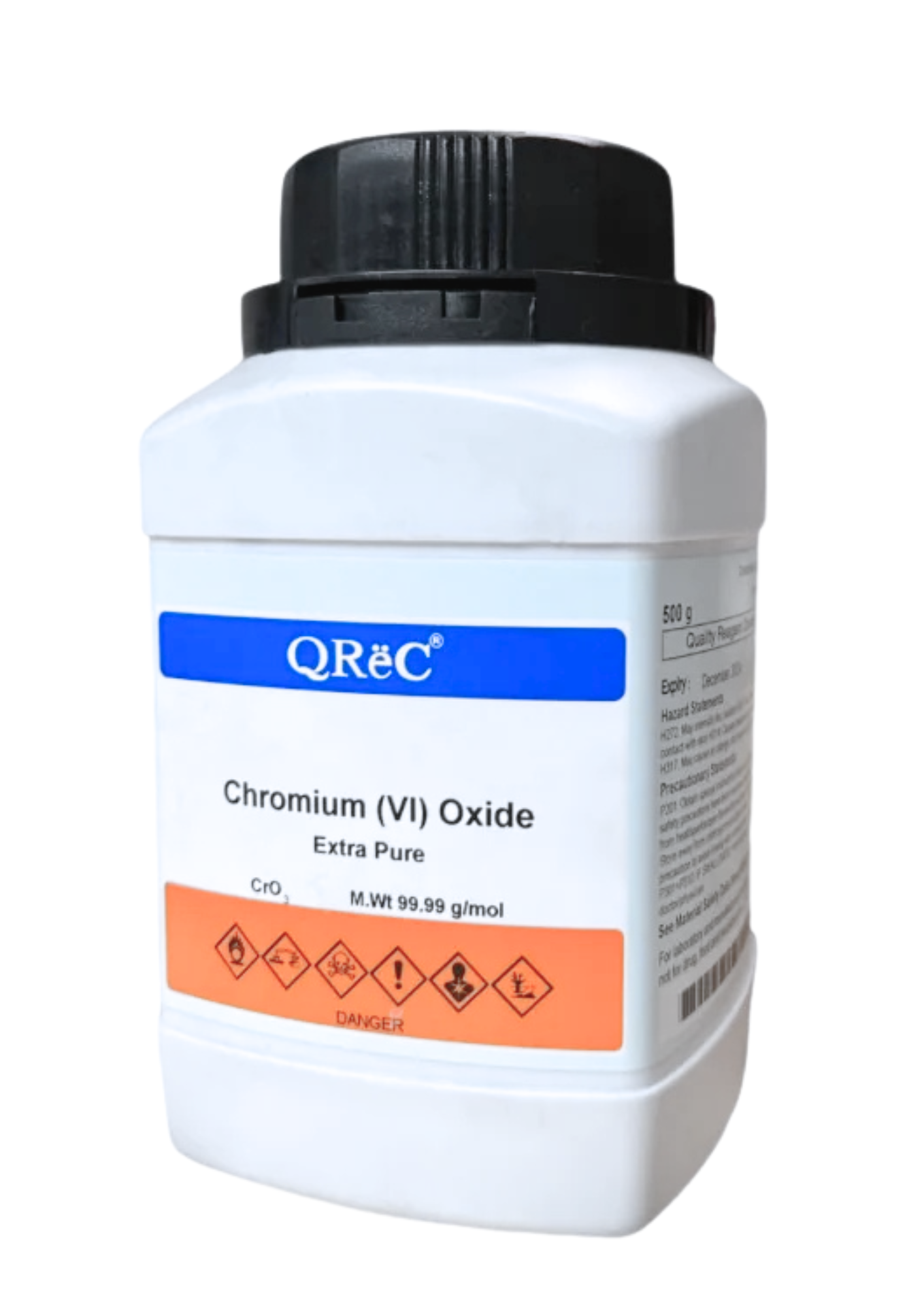
- Product Name: Chromium (VI) oxide 99% or Chromium trioxide or Chromic anhydride
- Brand: QReC (Product Code: QR-C6002-1-0500)
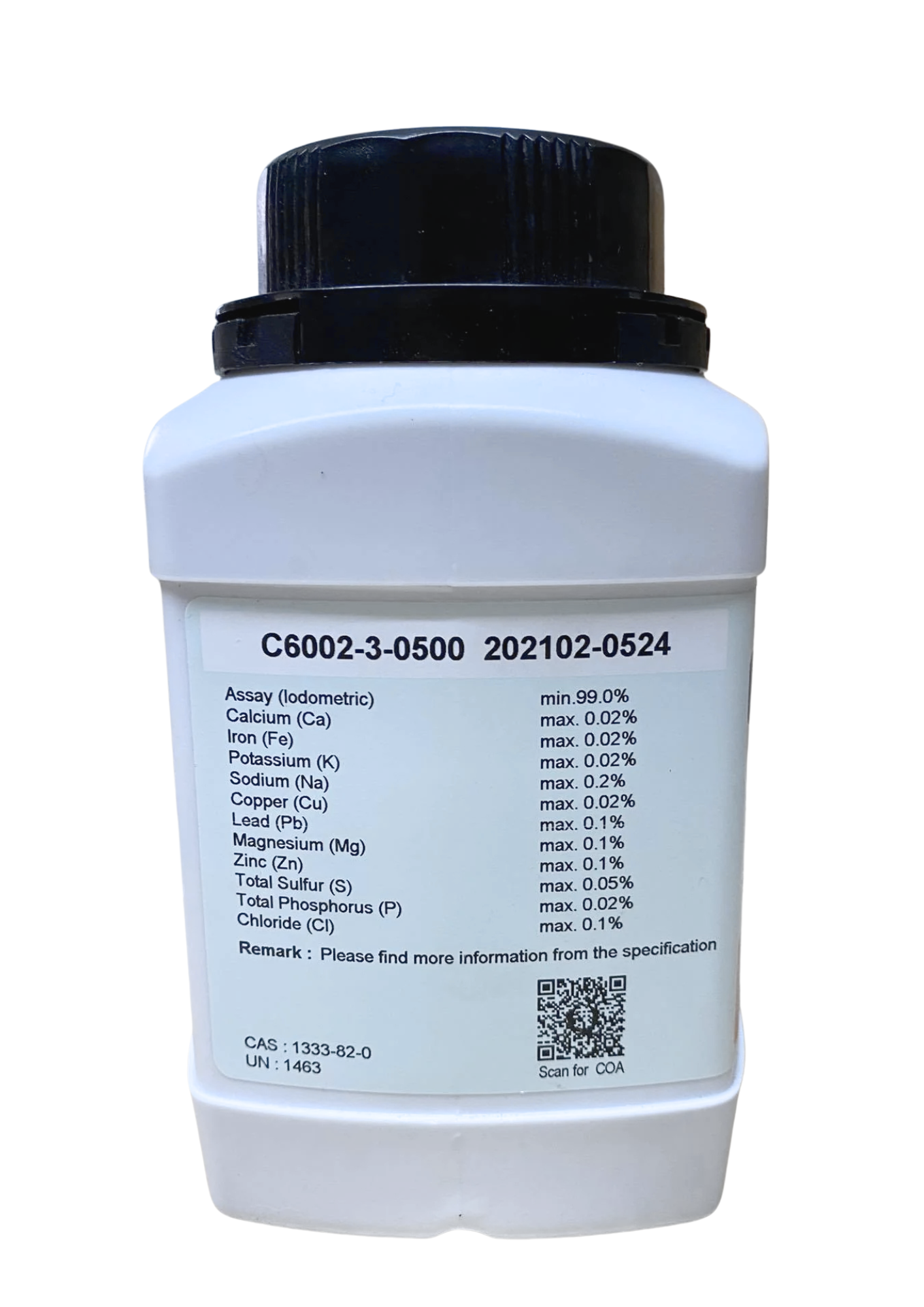
- Grade: Analytical Reagent (AR Grade) featuring a high certified chemical assay of not less than 99.0 percent. Manufactured and refined under strict QReC global laboratory specifications. Rigorously tested to enforce minimal ppm limits of sulfate, chloride, water-insoluble matter, nitrogen compounds, and trace heavy metals (such as iron, lead, aluminum, calcium, magnesium, and arsenic). Displays uniform, dark red flakes that dissolve rapidly and completely in water, yielding clear, intensely dark red-orange chromic acid solutions free of insoluble precipitates. Packaged in a heavy-duty, corrosion-resistant polymer container equipped with an airtight hermetic seal to prevent deliquescence.
- Physical Properties: Dark red to brownish-red flakes, crystals, or lustrous purplish-red scales. Odorless. Highly deliquescent, absorbing ambient atmospheric moisture rapidly. Non-combustible solid itself, but functions as a powerful, aggressive oxidizing agent that can spontaneously ignite combustible materials and organic solvents upon contact. Aqueous solutions are strongly acidic and intensely corrosive to biological tissues and metallic structures.
- Solubility: Readily and highly soluble in water (approximately 165 to 170 grams per 100 milliliters at 20 degrees Celsius, dissociating to form chromic and dichromic acids); soluble in concentrated sulfuric acid and nitric acid. Must NEVER be mixed directly with organic solvents (such as ethanol, acetone, or diethyl ether), as violent deflagration or explosions will occur.
- Key Use: Heavily utilized as the primary oxidizing agent for preparing Jones Reagent (chromium trioxide in dilute aqueous sulfuric acid and acetone) in organic synthesis, efficiently oxidizing primary alcohols to carboxylic acids and secondary alcohols to ketones. Historically employed in formulating chromic acid cleaning solutions for stripping organic residues and silicones from glassware (largely superseded by safer alternatives). Widely used as a primary chemical precursor in hard and decorative chromium electroplating, anodizing processes, and corrosion-resistant chromate conversion coatings (passivation) in materials science. Serves as an industrial oxidation catalyst, an analytical reagent in wet chemical oxidations, and an inorganic precursor for synthesizing specialized chromate and dichromate coordination compounds.
Safety & Hazards (Critical, Powerful Oxidizer, Human Carcinogen, Mutagen & Fatal Inhalation)
- Classification: Oxidizing solid (May intensify fire). May cause cancer (Carcinogen Category 1A). May cause genetic defects (Germ Cell Mutagenicity Category 1B). May damage fertility or the unborn child. Fatal if inhaled. Toxic if swallowed. Causes severe skin burns and eye damage. Causes serious eye damage. May cause an allergic skin reaction or asthma symptoms. Very toxic to aquatic life with long lasting effects.
- Health Risks: Direct ocular contact causes instantaneous, destructive chemical ulceration of the conjunctiva and cornea, resulting in excruciating pain, deep burns, and permanent blindness. Dermal contact causes severe, deep, penetrating chemical burns, stubborn and slow-healing ulcerations (chrome sores), erythema, and severe allergic contact dermatitis. Inhalation of particulate dust or aerosols violently attacks the respiratory tract, inducing nasal burning, epistaxis, choking, coughing, chest tightness, chemical bronchitis, and life-threatening pulmonary edema. Critical Chronic Hazard: Occupational inhalation of hexavalent chromium is a proven direct cause of lung, nasal, and sinus cancers, as well as ulceration and perforation of the nasal septum. Ingestion produces violent corrosive gastroenteritis, severe epigastric pain, hematemesis, acute renal tubular necrosis, severe hepatic necrosis, circulatory shock, and death.
- First Aid Measures: Immediately flush affected eyes or skin with an abundant stream of clean flowing water for at least 15 to 20 minutes while stripping contaminated clothing. In case of dust inhalation, rapidly relocate the victim to fresh air and maintain complete rest (immediate observation for delayed pulmonary edema is critical). If accidentally swallowed, do NOT induce vomiting; thoroughly rinse mouth, administer water in moderate amounts if conscious, and seek immediate, urgent emergency medical attention.
Handling & Storage
- Storage: Extremely Dangerous Oxidizer, Severe Corrosive, and Certified Human Carcinogen. Contact with organic solvents, reducing agents, or combustible substances triggers violent spontaneous combustion or explosion. Must be preserved in its original, tightly closed QReC container placed in secondary chemical containment inside a dedicated, locked hazardous chemical storage cabinet. Store in a cool, strictly dry, and excellently ventilated dedicated storage area at controlled temperatures (below 25 degrees Celsius), sheltered from humidity, thermal sources, and direct solar radiation. Keep strictly segregated from organic solvents (such as acetone, ethanol, and ethers), reducing agents, sulfur, phosphorus, strong bases, strong mineral acids, and all powdered metals.
- Precautions: Comprehensive specialized PPE is mandatory, including heavy-duty chemical-resistant gloves (butyl or heavy nitrile), splash-proof safety goggles paired with a full-face shield, a certified HEPA/toxic dust respirator, and an impermeable protective apron/lab coat. Handling, weighing, and reagent preparation must ALWAYS be performed exclusively within a certified, properly functioning laboratory fume hood. NEVER handle outside of containment. Keep chemical spill kits readily accessible. Never discharge chromium-containing solutions or rinsates into municipal drains; collect exclusively in dedicated hexavalent-chromium hazardous waste containers for chemical reduction to trivalent chromium prior to certified hazardous disposal.