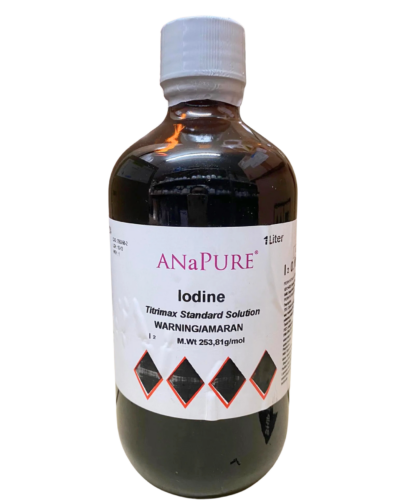
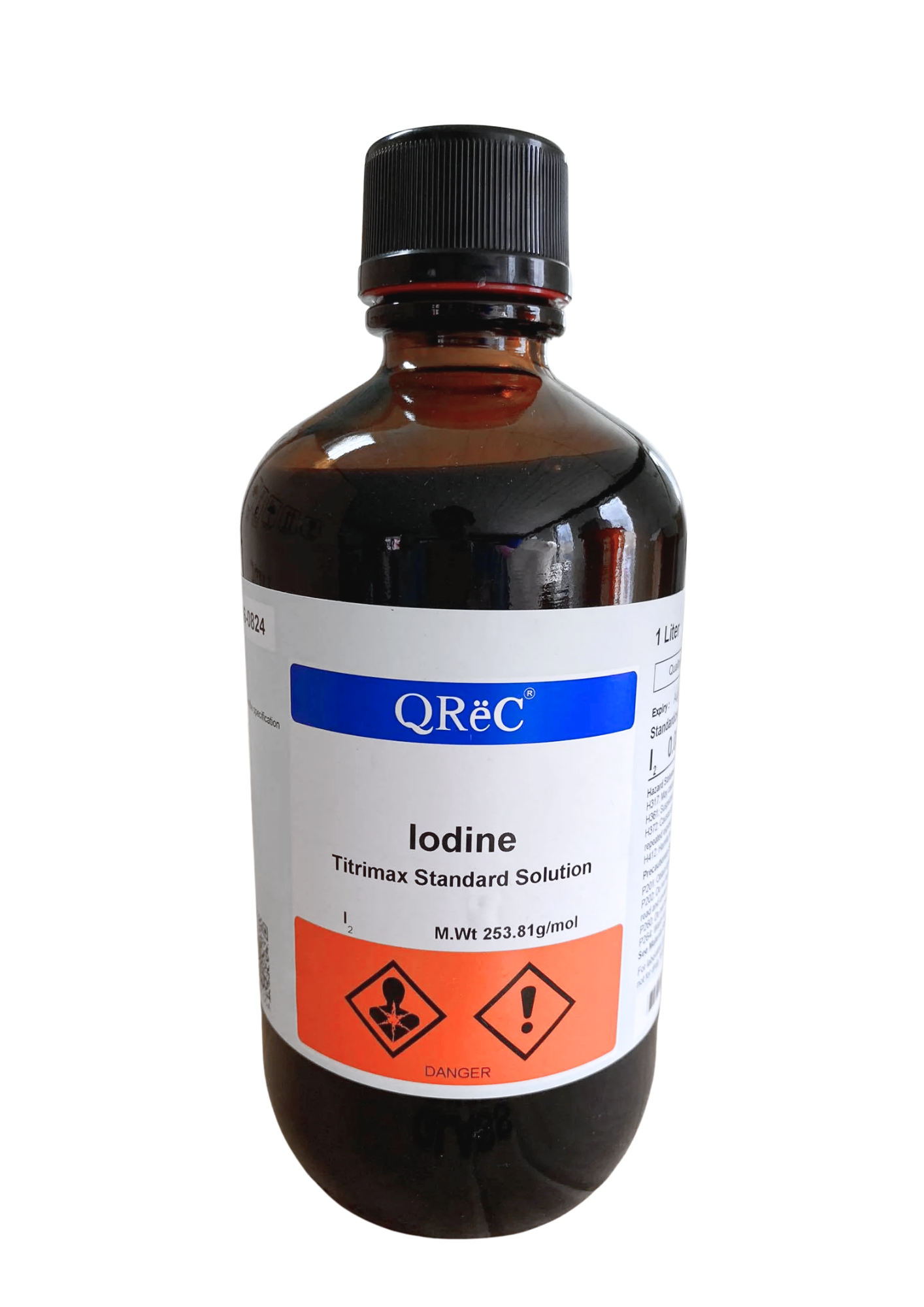
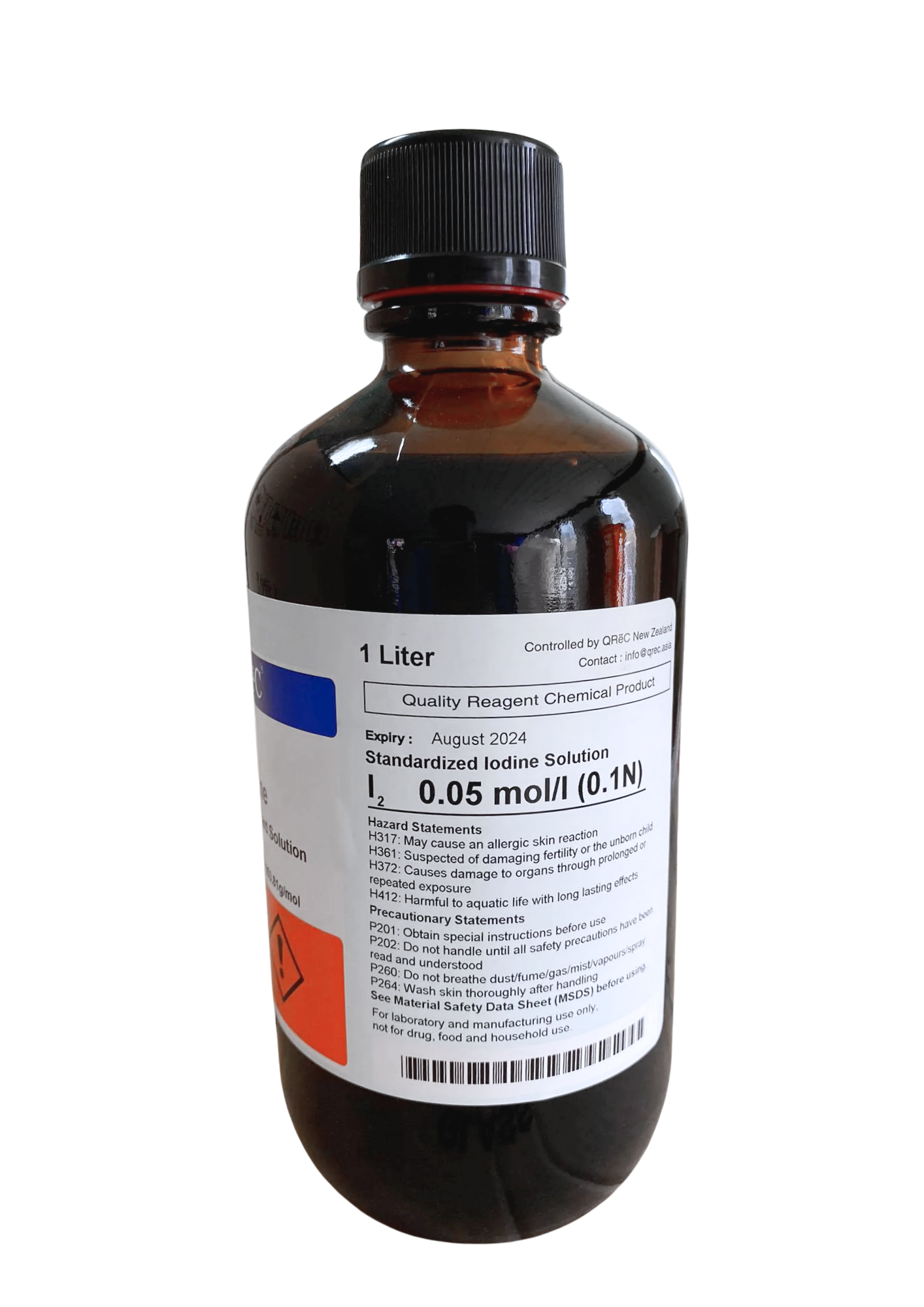
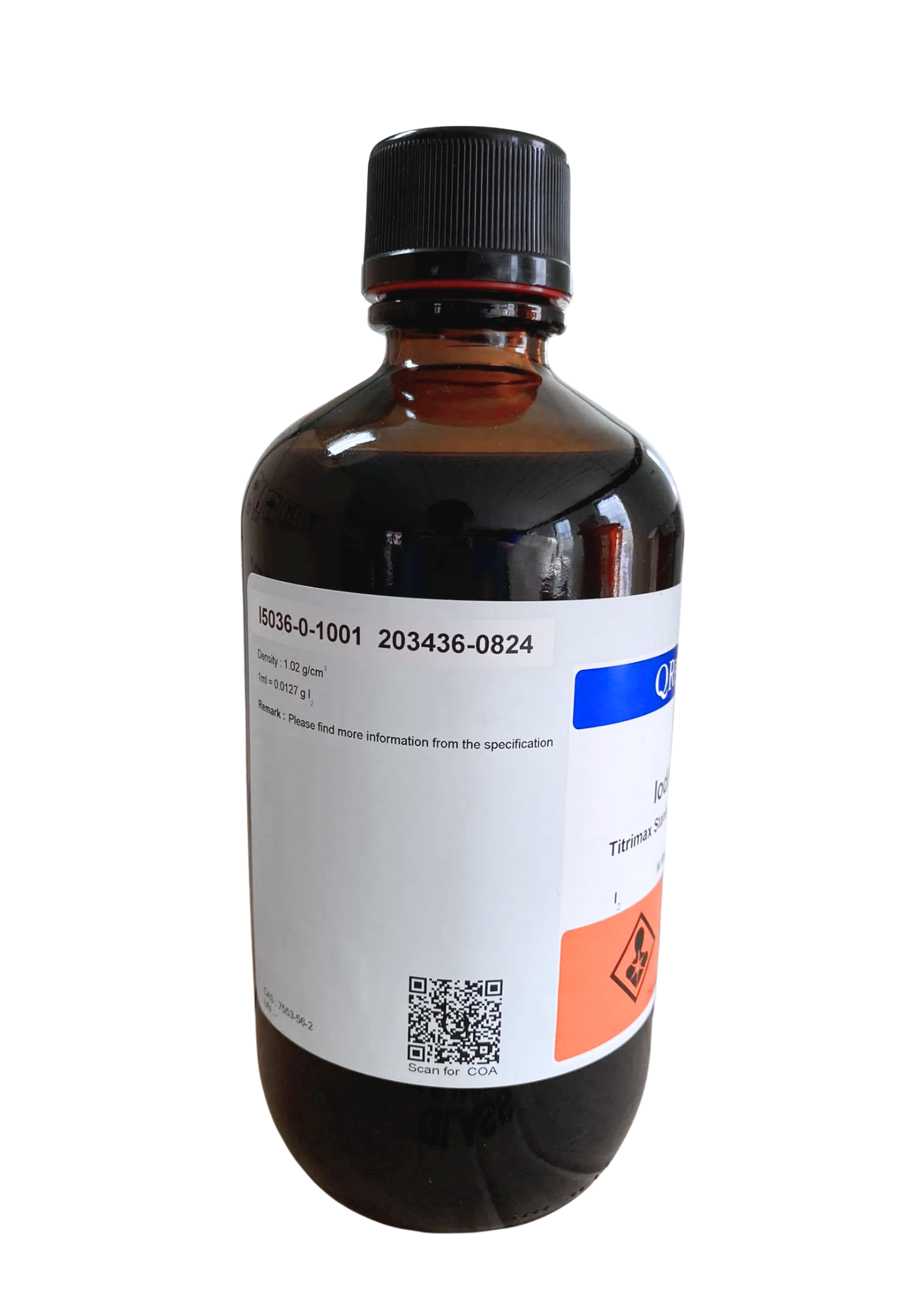
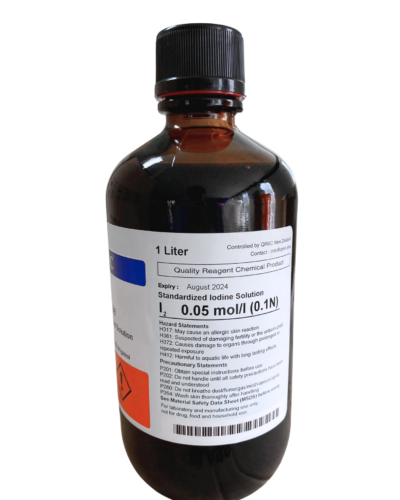
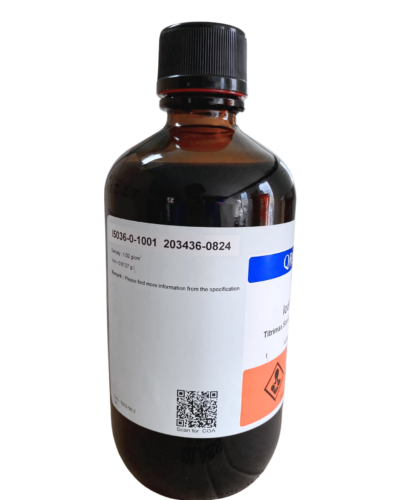
Iodine solution 0.05 mol/L or Standard iodine solution for titration or Triiodide solution 0.1N
Product Overview & Quality
- Product Name: Iodine solution 0.1N or 0.05 mol/L or Standard Volumetric Iodine Solution or Triiodide solution 0.1 Normal
- Brand: QReC (Product Code: QR-I5036-0-1001)
- Grade: Volumetric Standard Analytical Grade (AR Grade) precisely standardized to an exact titer factor within 0.999 to 1.001 at 20 degrees Celsius, certified to four decimal places. Formulated and quality-controlled under strict QReC global laboratory specifications, directly traceable to National Institute of Standards and Technology (NIST) primary reference standards. Compounded from high-purity crystalline elemental iodine and analytical-grade potassium iodide in high-resistivity, deionized water. Enforces ultra-low thresholds for trace heavy metals and particulate matter. Displays exceptional shelf stability in sealed containers, delivering ready-to-use precision titrant without requiring manual dissolution or preliminary standardization. Packaged in a heavy-duty, light-protective 1,000 mL (1 L) amber glass or opaque polymer bottle fitted with a tamper-evident hermetic vapor closure.
- Physical Properties: Clear, intensely deep brown, reddish-brown, or dark amber liquid. Distinctive, pungent, characteristic iodine odor. Stable at room temperature in airtight light-resistant containers, but vaporizes toxic brownish-purple iodine vapors if left unsealed, undergoing gradual photolytic degradation upon direct exposure to solar radiation or elevated heat. Non-flammable aqueous solution. Exhibits weakly acidic to neutral pH (approximately 4.5 to 6.0 at room temperature). Readily produces deep brown stains upon contact with dermal tissue and porous surfaces.
- Solubility: Fully miscible with water in all proportions; completely miscible with lower aliphatic alcohols (ethanol and methanol).
- Key Use: Universally utilized as a certified Primary Titrant in volumetric iodimetric analysis for directly titrating reducing agents, notably quantifying ascorbic acid (Vitamin C) across pharmaceuticals, dietary supplements, and fruit juice matrices using soluble starch indicator at the intense blue-black endpoint. Extensively applied in determining the Iodine Value (Iodine Number) of vegetable oils, animal fats, and industrial lipids to assess the degree of fatty acid unsaturation according to standardized international methods. Heavily used for quantifying sulfites, sulfur dioxide preservatives, thiol groups, and reducing sugars in food and beverage quality control. Serves as a standard chromogenic reagent in biology, botanical cytology, and histology for detecting starch granules and linear amylose chains through the formation of an intensely dark blue-violet inclusion complex. Functions as an analytical calibration standard for redox electrodes and automated potentiometric titrators.
Safety & Hazards (Specific Thyroid Target Organ Toxicity, Skin & Serious Eye Irritation)
- Classification: May cause damage to organs (Thyroid gland) through prolonged or repeated exposure (Specific Target Organ Toxicity – Repeated Exposure Category 2). Causes skin irritation (Skin Irritation Category 2). Causes serious eye irritation (Eye Irritation Category 2). Harmful to aquatic life with long-lasting effects.
- Health Risks: Direct ocular contact triggers acute burning pain, conjunctival redness, corneal irritation, lacrimation, and brown staining of ocular membranes. Prolonged or repeated dermal contact causes localized irritation, stinging, erythema, dryness, and stubborn deep-brown discoloration of the epidermis. Inhalation of vaporized iodine fumes irritates the mucous membranes of the respiratory tract, causing coughing, sneezing, nasal irritation, and throat tightness. Critical Cumulative Health Risk: Chronic excessive absorption of systemic iodine disrupts endocrine equilibrium, triggering thyroid dysfunction (iodism), characterized by salivation, metallic taste, tachycardia, goiter, and cutaneous eruptions. Ingestion causes gastrointestinal irritation, caustic burning sensations in the mouth, pharynx, and esophagus, severe abdominal pain, nausea, vomiting, and diarrhea.
- First Aid Measures: Immediately flush affected eyes with an abundant stream of clean flowing water for at least 15 minutes while stripping contaminated clothing; remove contact lenses promptly and seek medical attention if irritation persists. Wash exposed skin thoroughly with soap and water (dilute sodium thiosulfate solution can be applied to discharge stubborn iodine stains). In case of vapor inhalation, relocate the individual to fresh air. If accidentally swallowed, do NOT induce vomiting; thoroughly rinse mouth, immediately administer copious amounts of starch solution (cornstarch or flour suspended in water) or milk to complex residual iodine, and seek immediate medical attention.
Handling & Storage
- Storage: Light-Sensitive, Volatile Standard Titrant. Elevated temperatures and actinic light drive iodine sublimation and titer degradation. Must be preserved in its original, tightly closed QReC amber bottle. Store in a clean, strictly dry, cool, and well-ventilated dedicated chemical store at controlled temperatures (between 15 and 25 degrees Celsius), sheltered from direct sunlight and thermal sources. Keep strictly segregated from strong reducing agents (such as sodium thiosulfate, sulfites, and ascorbic acid), concentrated aqueous ammonia (contact can synthesize shock-sensitive, contact-explosive nitrogen triiodide), reactive metal powders, and organic combustibles.
- Precautions: Standard laboratory PPE is mandatory, including protective nitrile gloves, splash-proof safety goggles, and a protective lab coat. Re-seal container cap tightly immediately after sampling to prevent iodine volatilization and preserve volumetric titer accuracy. Periodically re-standardize the solution against primary standard sodium thiosulfate. Prevent accidental spills due to intensive staining properties, and never discharge concentrated iodine solutions directly into municipal wastewater systems.