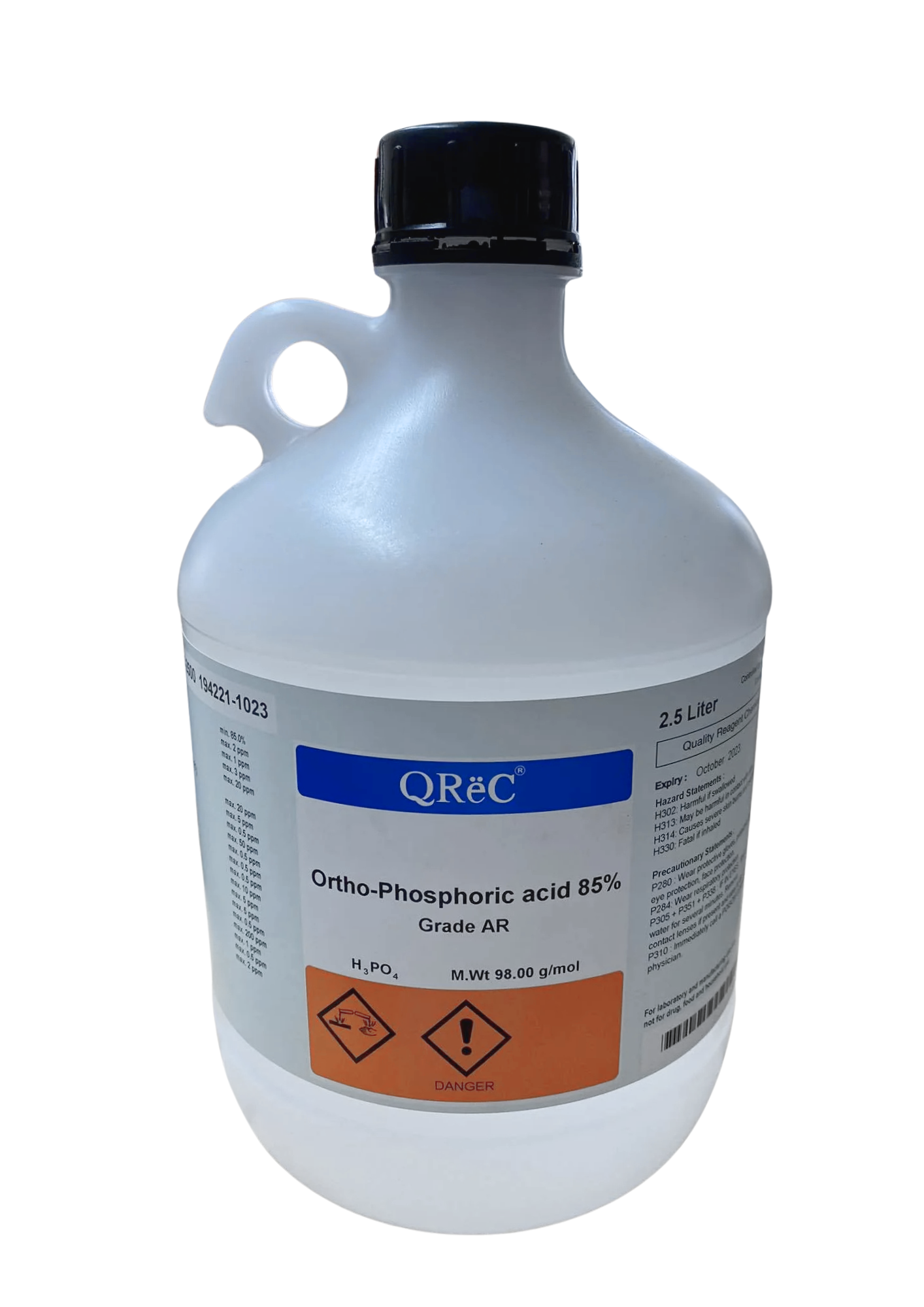
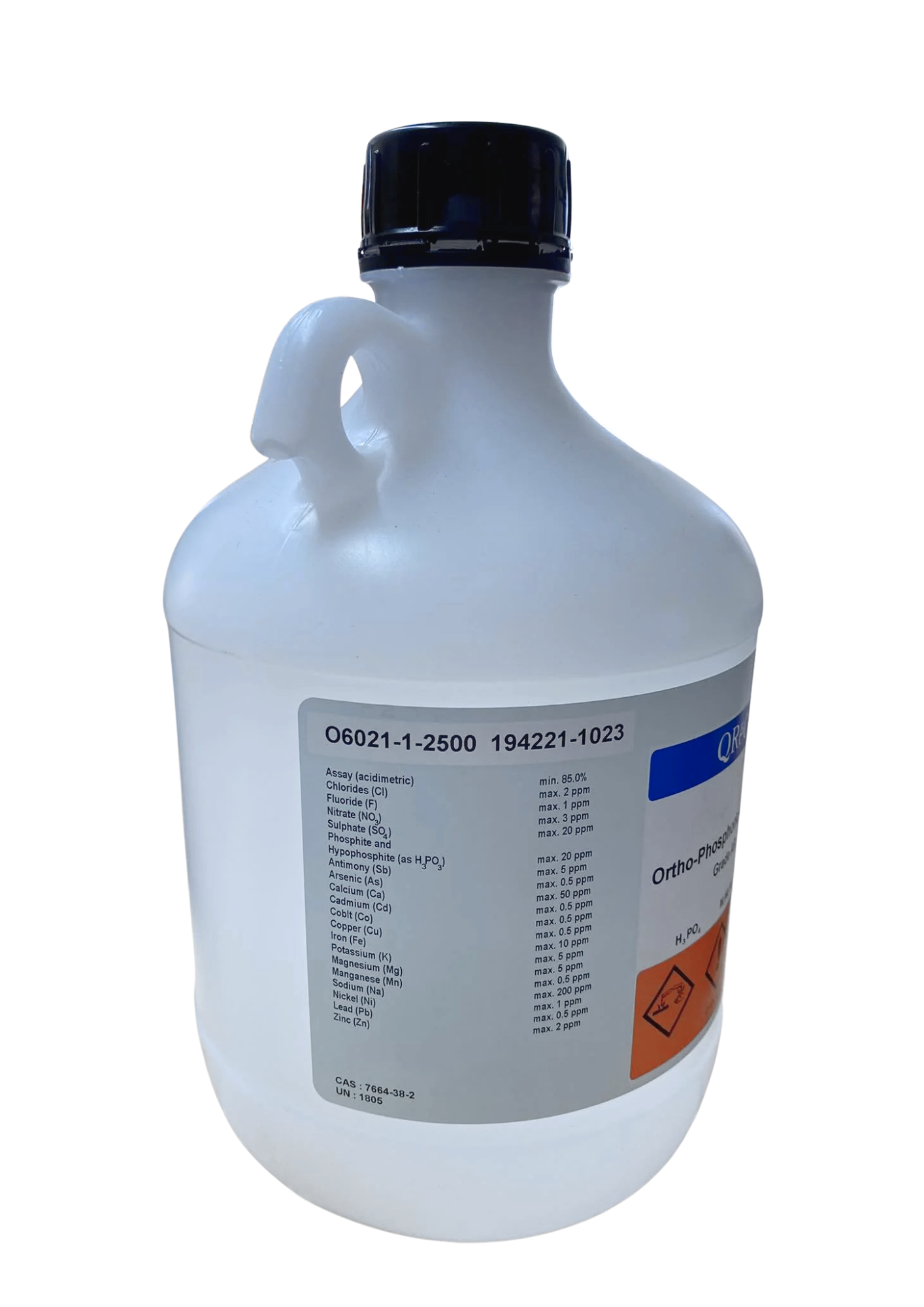
Phosphoric acid 85% or Orthophosphoric acid or Hydrogen phosphate
Product Overview & Quality
- Product Name: Phosphoric acid 85% or Orthophosphoric acid or Hydrogen phosphate
- Brand: QReC (Product Code: QR-O6021-1-2500)
- Grade: Analytical Reagent (AR Grade) featuring a certified chemical assay of not less than 85 percent. Manufactured and refined under strict QReC global laboratory specifications. Rigorously regulated to maintain exceptionally low ppm levels of chlorides, sulfates, nitrates, fluorides, other phosphorus oxides, and trace heavy metals (such as iron, lead, copper, arsenic, and zinc). Exhibits superior optical clarity and low ultraviolet absorption, ensuring reliable baseline stability when used as an HPLC eluent modifier. Packaged in a heavy-duty, chemically resistant dedicated polymer container engineered for safe corrosive containment.
- Physical Properties: Clear, colorless, viscous, syrupy liquid. Odorless. Extremely low volatility at ambient temperature. Non-combustible liquid matrix; strongly acidic and intensely corrosive to biological tissues and reactive metals.
- Solubility: Completely miscible in all proportions with water and ethanol (dilution with water generates moderate exothermic heat).
- Key Use: Heavily utilized as an essential acidic mobile phase modifier in High-Performance Liquid Chromatography (HPLC) to suppress analyte ionization, sharpen chromatographic peaks, and eliminate peak tailing in pharmaceutical, food, and environmental sample analysis. Universally applied as the primary inorganic precursor for formulating phosphate buffer solutions across extensive physiological and analytical pH ranges. Extensively used as a non-oxidizing acid catalyst in organic synthesis, notably in alcohol dehydration to synthesize alkenes and in esterification pathways. Widely used for the acid digestion of minerals, rocks, metallurgical alloys, and geological specimens in quantitative elemental spectroscopy. Frequently employed in metal finishing, rust removal, and surface passivation (phosphating) in materials science.
Safety & Hazards (Critical, Severe Corrosive & Metal Destruction)
- Classification: Causes severe skin burns and eye damage. Causes serious eye damage. May be corrosive to metals. Harmful if swallowed.
- Health Risks: Direct ocular exposure triggers instantaneous chemical burns, severe conjunctival ulceration, corneal opacification, and permanent vision loss. Dermal contact produces deep, penetrating coagulative caustic burns, severe blistering, skin necrosis, and intractable pain. Inhalation of generated mists or aerosols aggressively corrodes the mucous membranes of the respiratory tract, causing coughing, choking, dyspnea, laryngospasms, chemical bronchitis, and acute pulmonary edema. Ingestion induces catastrophic caustic destruction of the oral cavity, esophagus, and stomach, accompanied by violent abdominal pain, hematemesis, internal perforation, and circulatory collapse.
- First Aid Measures: Immediately flush affected eyes or skin with an abundant stream of clean flowing water for at least 15 to 20 minutes while stripping all contaminated garments. In case of aerosol inhalation, rapidly relocate the victim to fresh air. If accidentally swallowed, do NOT induce vomiting; thoroughly rinse mouth, administer water in moderate amounts if conscious, and seek immediate, urgent emergency medical attention.
Handling & Storage
- Storage: Aggressive Corrosive Inorganic Acid. Generates highly flammable hydrogen gas upon prolonged contact with active metals. Must be preserved in its original, tightly closed QReC container placed on secondary containment trays. Store in a dedicated acid-resistant corrosive storage cabinet in a cool, dry, and well-ventilated chemical store at controlled temperatures (below 25 to 30 degrees Celsius), sheltered from direct solar radiation. Keep strictly segregated from strong bases, strong oxidizing agents, active metals (such as aluminum, zinc, and iron), chlorides, and cyanides.
- Precautions: Full specialized PPE is mandatory, including heavy acid-resistant rubber or nitrile gloves, splash-proof safety goggles, a full-face safety shield, and an impervious lab coat. “Critical Dilution Rule: Always add concentrated phosphoric acid slowly and incrementally into water with continuous stirring; NEVER add water into concentrated acid to prevent localized boiling and violent acid splashing.” Dispense within a properly functioning laboratory fume hood.