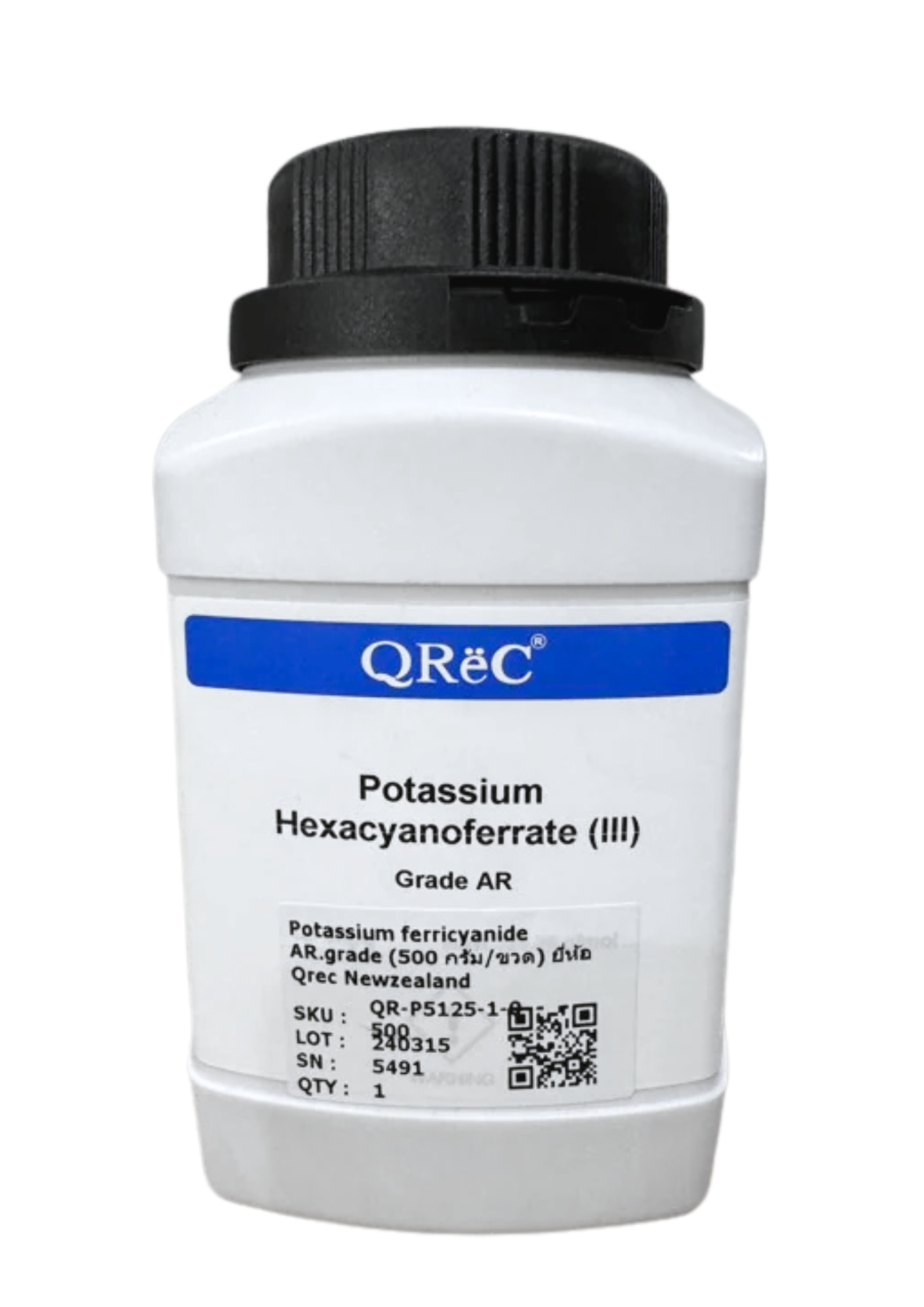
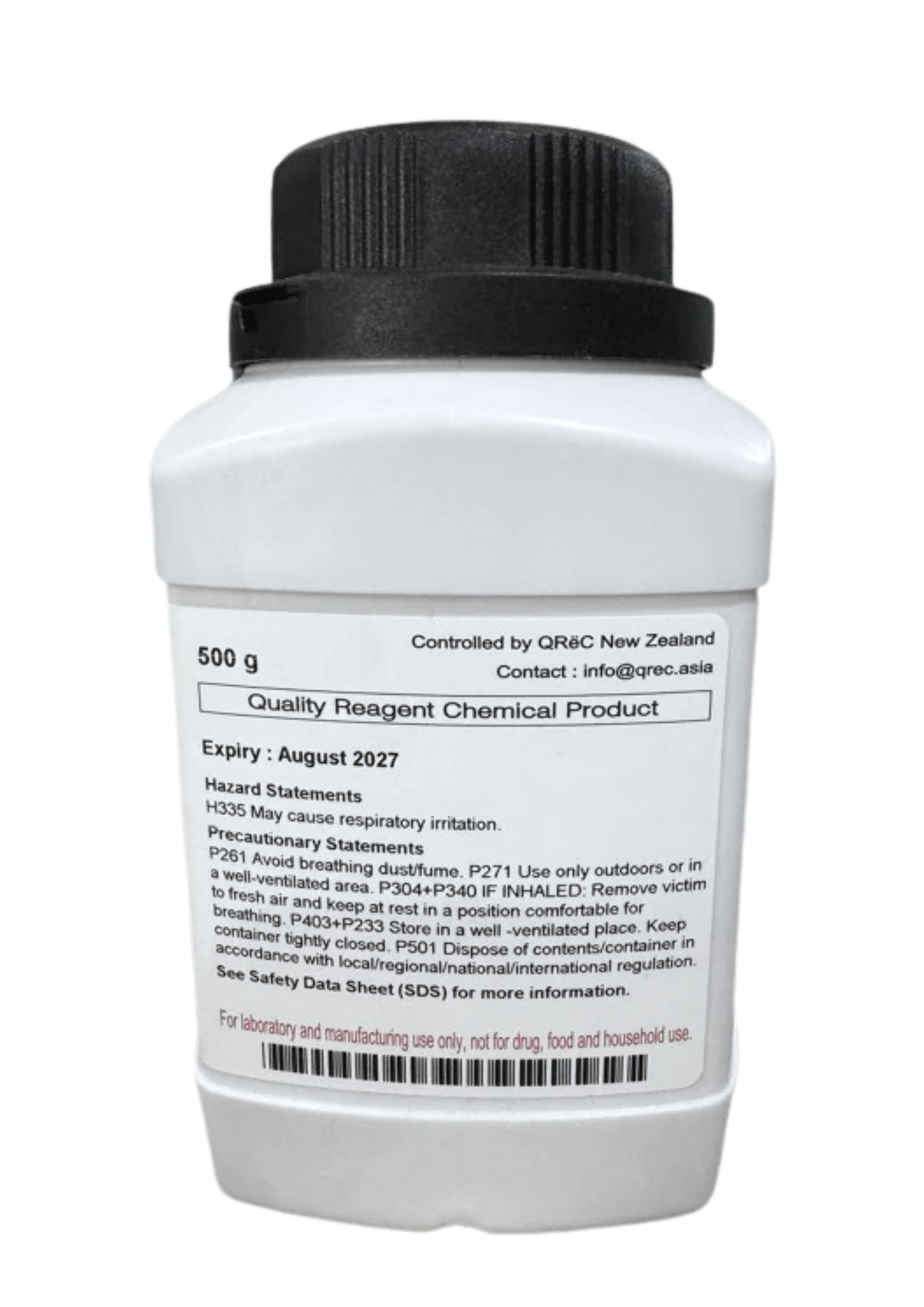
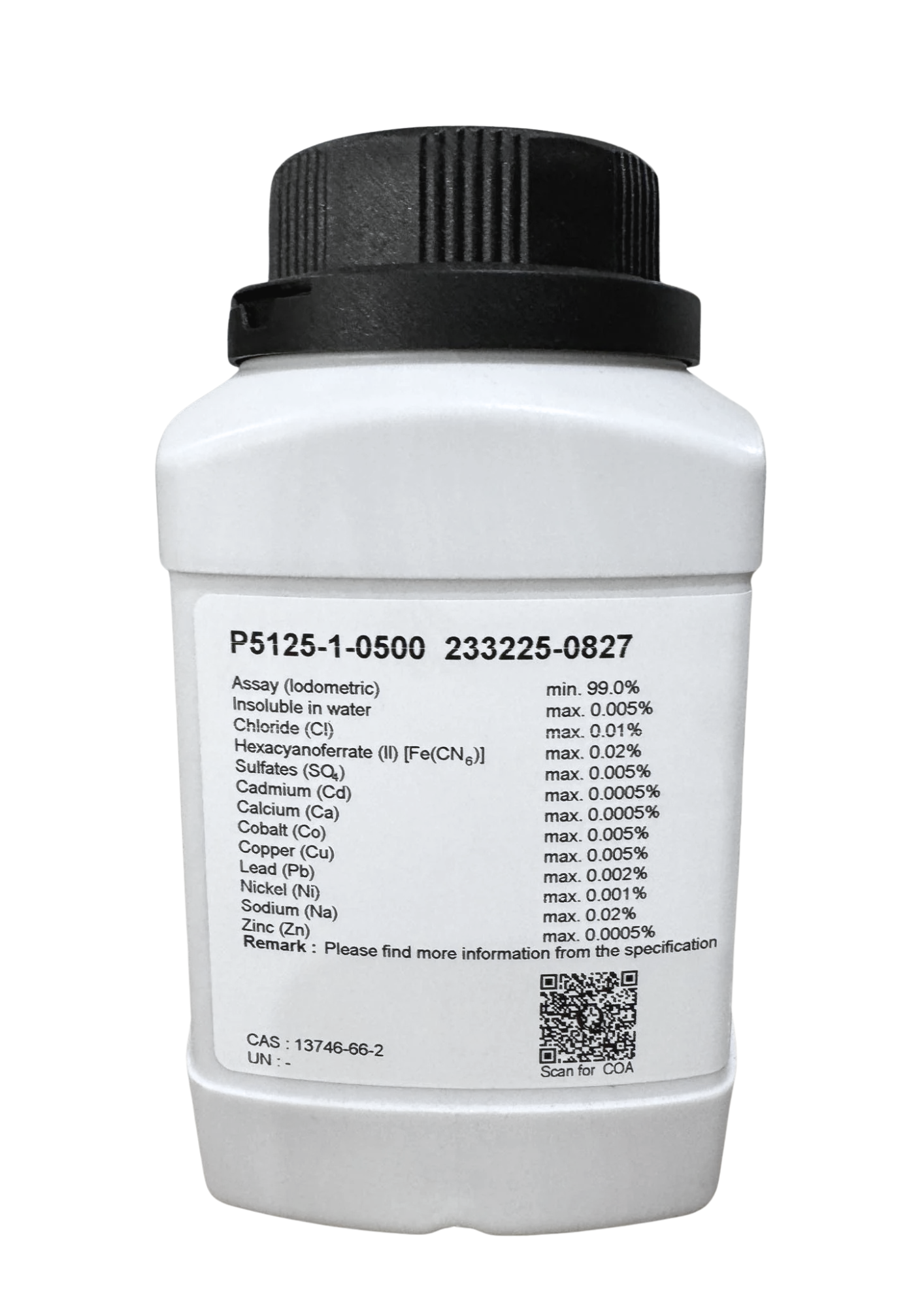
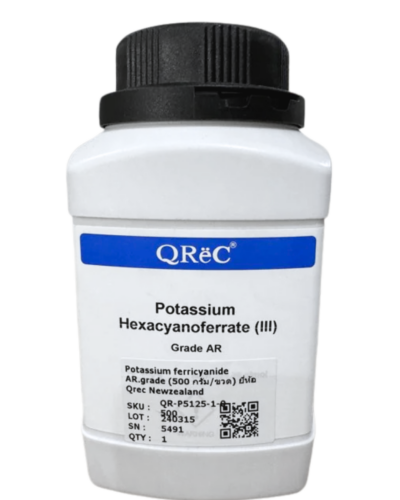
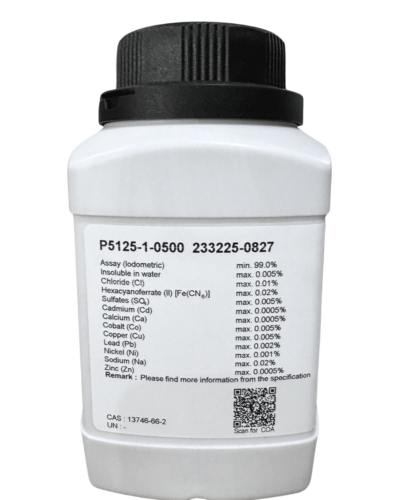
Potassium ferricyanide or Potassium hexacyanoferrate (III) or Red prussiate of potash
Product Overview & Quality
- Product Name: Potassium ferricyanide or Potassium hexacyanoferrate (III) or Red prussiate of potash
- Brand: QReC (Product Code: QR-P5125-1-0500)
- Grade: Analytical Reagent (AR Grade) featuring a certified chemical assay of not less than 99 percent. Manufactured and multi-recrystallized under strict QReC global laboratory specifications. Rigorously tested to enforce exceptionally low ppm thresholds of chloride, sulfate, ferrocyanide (iron II complex), water-insoluble matter, and trace heavy metals (such as lead, copper, cadmium, and zinc). Exhibits a dry, uniform crystal profile that dissolves rapidly and completely in water, yielding a brilliant yellow-orange to ruby-orange solution without insoluble particulates. Packaged in a heavy-duty, chemically resistant polymer container designed for moisture exclusion and light protection.
- Physical Properties: Ruby-red, deep red, or orange-red lustrous crystals or crystalline powder. Odorless. Stable in dry ambient air. Aqueous solutions are yellow to orange and slowly undergo photochemical dissociation under direct sunlight. Non-combustible solid.
- Solubility: Freely and highly soluble in water (approximately 33 grams per 100 milliliters at room temperature; increases to nearly 70 grams in hot water); slightly soluble in ethanol; insoluble in diethyl ether.
- Key Use: Heavily utilized as the definitive qualitative and colorimetric analytical reagent for detecting ferrous iron (Iron II ions), reacting to yield an intense deep-blue precipitate classically designated as Turnbull blue, widely employed in corrosion monitoring and metallographic testing. Universally applied as a foundational outer-sphere electrochemical redox probe in Cyclic Voltammetry (CV) and electrochemical impedance spectroscopy (EIS) for electrode characterization and biosensor validation. Acts as a mild, selective oxidizing agent in organic synthesis and catalytic protocols, notably as a catalyst in luminol chemiluminescence assays paired with hydrogen peroxide. Extensively used in specialized histological staining protocols, metallurgical etching, and historical photographic printing processes (cyanotype printing).
Safety & Hazards (Critical Acid Reactivity & Environmental Hazard)
- Classification: Low acute toxicity under standard handling because the cyanide groups are tightly coordinated to the central ferric ion; however, CONTACT WITH ACIDS LIBERATES VERY TOXIC HYDROGEN CYANIDE GAS (Critical Hazard). Causes skin irritation. Causes serious eye irritation. Toxic to aquatic life with long lasting effects.
- Health Risks: Direct eye contact triggers mechanical stinging, conjunctival redness, and tearing. Prolonged dermal contact may cause mild dryness or superficial irritation. Inhalation of particulate dust causes minor upper respiratory irritation, sneezing, or coughing. Ingestion of large amounts produces gastrointestinal discomfort, nausea, and vomiting. Critical Risk: Ingestion or contact with acidic media causes decomposition that generates deadly hydrogen cyanide gas, which halts cellular respiration, causing rapid unconsciousness, convulsions, and cardiovascular collapse.
- First Aid Measures: Immediately flush affected eyes or skin with an abundant stream of clean flowing water for at least 15 minutes while stripping contaminated clothing. In case of dust inhalation, relocate the individual to fresh air. If accidentally swallowed, rinse mouth thoroughly, administer water, and seek medical attention. If exposure to acidic reaction gas (hydrogen cyanide) occurs, immediately remove the victim to fresh air, administer oxygen, and seek urgent emergency medical resuscitation.
Handling & Storage
- Storage: Light-Sensitive Coordination Complex and Acid-Reactive Substance. Solutions undergo gradual photochemical degradation upon light exposure. Must be preserved in its original, tightly closed QReC container. Store in a cool, dry, dark, and well-ventilated dedicated chemical store at controlled temperatures (below 25 to 30 degrees Celsius), sheltered from direct solar radiation. KEEP STRICTLY SEGREGATED FROM ALL MINERAL ACIDS, STRONG ACIDIC REAGENTS, AND STRONG OXIDIZING AGENTS.
- Precautions: Standard laboratory PPE is mandatory, including protective chemical-resistant gloves, splash-proof safety goggles, and a protective lab coat. “Mandatory Safety Rule: Never allow this substance or its solutions to mix with acids, as deadly hydrogen cyanide gas will be generated immediately.” Prepare aqueous solutions freshly or store in dark bottles away from light. Never discharge concentrated waste residues into municipal drains.